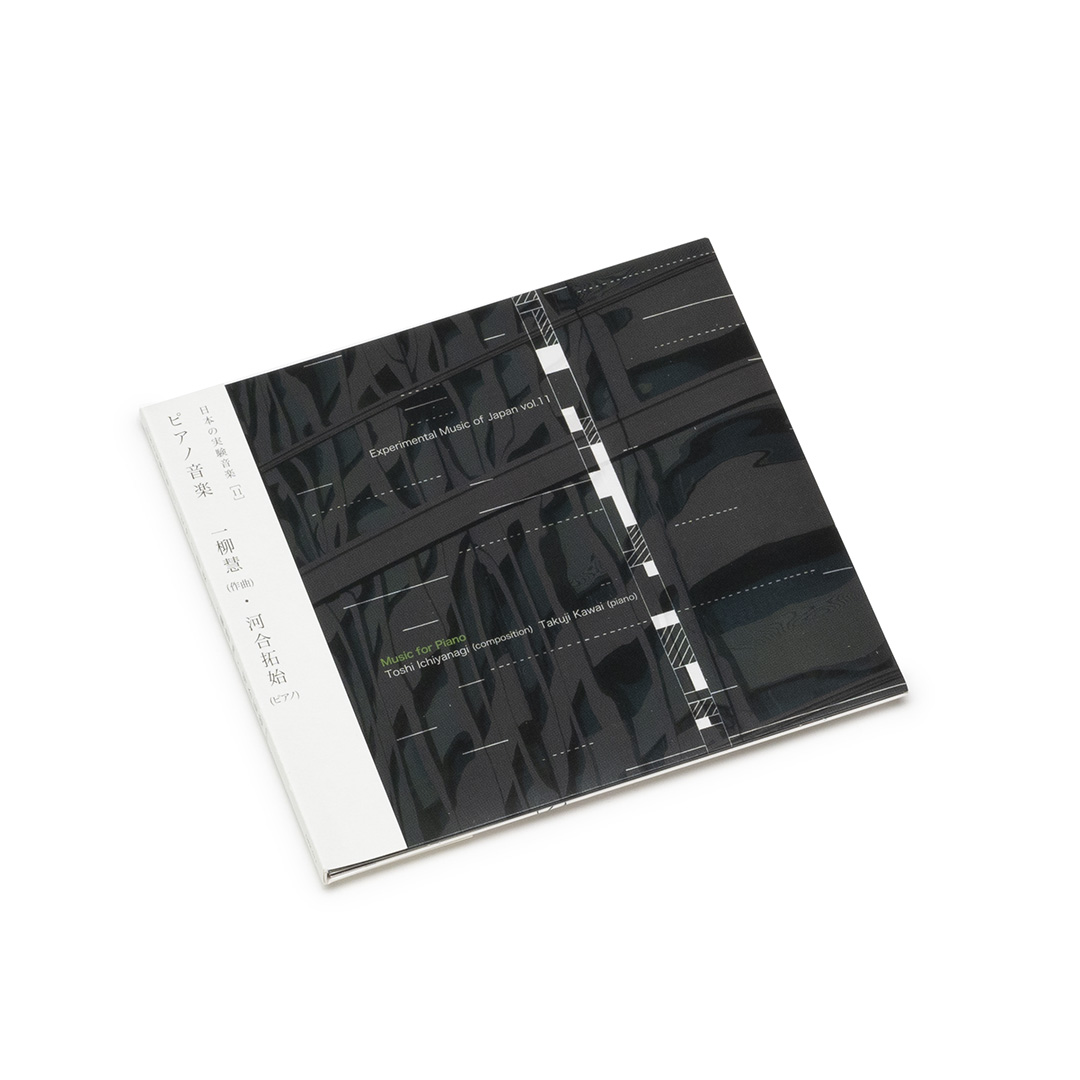
Toshi Ichiyanagi
Music for Piano (1959-1961)
FormatCDLabelEdition Omega PointSeriesExperimental Music Of JapanGenreExperimental
Out of stock
Tracked express shipping from Italy, no customs or import VAT in the EU. Shipping costs
The Music for Piano series was written under John Cage's influence in his New York years. This CD is the premiere complete recording without simultaneous playing. The series was played and recorded by pianist Takuji Kawai at KEN in Tokyo in October 27, 2012. "Music for Piano No. 1-No. 7" was composed between 1959 and 1961. All the works were written using graphic notations (No. 1, No. 2, No. 5 and No. 6) and instructions (No. 3, No. 4 and No. 6). "This period of my compositions such as 'Music for Electric Metronomes,' 'Stanzas for String Instrument,' 'Duet for Piano and String Instrument,' and 'Sapporo' were all written by graphic notations, which expanded my idea of space in music in later compositions.
The premiere of 'Music for Piano No.2' took place in 1959, performed by David Tudor at Living Theatre in New York. No. 5 was by Yuji Takahashi, No. 4, No. 6 and No. 7 were by myself. This is the first time collecting all seven pieces played open to the public and recorded at the same time. Various techniques as well as different qualities of the sounds were created in an amazing manner by pianist Takuji Kawai through my graphic notations. He played all the noises and concrète sounds without using any electronic device but with live natural sounds only to reflect 1950s to early '60s social situations." --Toshi Ichiyanagi
Format
Liner notes in Japanese and English
Played and recorded by pianist Takuji Kawai at KEN in Tokyo on October 27, 2012.
The Music for Piano series was written under John Cage's influence in his New York years. This CD is the premiere complete recording without simultaneous playing. The series was played and recorded by pianist Takuji Kawai at KEN in Tokyo in October 27, 2012. "Music for Piano No. 1-No. 7" was composed between 1959 and 1961. All the works were written using graphic notations (No. 1, No. 2, No. 5 and No. 6) and instructions (No. 3, No. 4 and No. 6). "This period of my compositions such as 'Music for Electric Metronomes,' 'Stanzas for String Instrument,' 'Duet for Piano and String Instrument,' and 'Sapporo' were all written by graphic notations, which expanded my idea of space in music in later compositions. The premiere of 'Music for Piano No.2' took place in 1959, performed by David Tudor at Living Theatre in New York. No. 5 was by Yuji Takahashi, No. 4, No. 6 and No. 7 were by myself. This is the first time collecting all seven pieces played open to the public and recorded at the same time. Various techniques as well as different qualities of the sounds were created in an amazing manner by pianist Takuji Kawai through my graphic notations. He played all the noises and concrète sounds without using any electronic device but with live natural sounds only to reflect 1950s to early '60s social situations." --Toshi Ichiyanagi
Release notes
Liner notes in Japanese and English Played and recorded by pianist Takuji Kawai at KEN in Tokyo on October 27, 2012. The Music for Piano series was written under John Cage's influence in his New York years. This CD is the premiere complete recording without simultaneous playing. The series was played and recorded by pianist Takuji Kawai at KEN in Tokyo in October 27, 2012. "Music for Piano No. 1-No. 7" was composed between 1959 and 1961. All the works were written using graphic notations…
| 1 | Music For Piano No. 1 | 4:05 | |
| 2 | Music For Piano No. 2 | 8:56 | |
| Music For Piano No. 3 | |||
| 3 | 1st Movement | 5:59 | |
| 4 | 2nd Movement | 5:06 | |
| 5 | Music For Piano No. 4 | 6:00 | |
| 6 | Music For Piano No. 5 | 9:08 | |
| 7 | Music For Piano No. 6 | 1:01 | |
| 8 | Music For Piano No. 7 | 14:47 | |
- Toshi Ichiyanagi
- Composed By, Liner Notes
- Takuji Kawai
- Piano, Liner Notes, Recorded By


