
Reissues
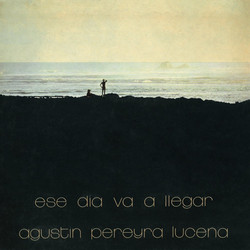
Ese Dia Va A Llegar
Far Out continues its exploration into the singular catalogue of Argentine guitarist and songwriter Agustin Pereyra Lucena with a special Record Store Day edition of his most celebrated album Ese Dia Va A Llegar. Agustín Pereyra Lucena was one of South America’s outstanding guitarists. Hailing from Buenos Aires but obsessed with the music of neighbouring Brazil, Agustin abandoned his architecture studies to pursue music full-time, earning friendship and collaborations with Brazilian music's grea…

Einsjaeger & Siebenjaeger
Among the most luminous records ever issued by Popol Vuh, and one of the high points in the singular spiritual arc traced by Florian Fricke across more than three decades of work. Esoteric, reissuing the album on vinyl on July 31st, 2026 in a fresh cut prepared at AIR Studios, London, returns to print one of the essential statements of 1970s German music.
By the time Fricke entered the studio in Munich in 1974 with Daniel Fichelscher on guitars and percussion, Djong Yun on vocals, and Olaf Küble…
Sold Out
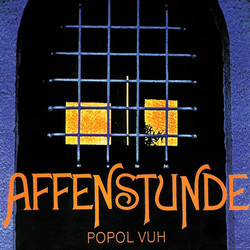
Affenstunde
A foundational record. The opening chapter of one of the most singular spiritual journeys in European music. Esoteric returns Affenstunde, the 1970 debut of Popol Vuh, to vinyl on July 31st, 2026, freshly cut at AIR Studios in London, with the original cover artwork restored and an accompanying poster. When Florian Fricke brought a Moog III modular synthesiser into a Munich studio in 1970, alongside percussionist Holger Trülzsch and engineer Frank Fiedler, he was working with one of only a handf…
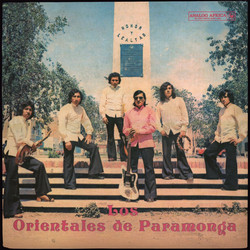
Los Orientales de Paramonga 1972-1976
In the late 1960s, the coastal city of Paramonga, just a three-hour drive north of Lima, gave rise to a vibrant music scene shaped by surf, rockabilly, and tropical sounds. Among its protagonists were two musicians, Víctor Ramírez and Maximiliano Chávez, who, with their psychedelic guitars, Fender amplifiers, and wah-wah pedals, would define not only their own sound but also shape the musical identity of the region. Under the mentorship of their manager, Néstor “Romanito” Robles, the two guitari…

A Dance More Sweetly Played
Join the Kyle Shepherd Trio on “A Dance More Sweetly Played” as they explore, collaborate and improvise on the ‘songs we like to play’. The album’s title is a dedication to the celebrated South African artist William Kentridge, with whom Shepherd collaborated on a joint-work “Waiting for Sybil” that has toured world-wide. In addition to ten Shepherd originals, perhaps most unexpected is the inclusion of an exquisite reading of Massive Attack’s ‘Teardrop’ and a deconstructed take of Journey’s ‘Do…

A Serpent Called Emit
*100 copies limited edition* Museum Of No Art is the pseudonym of the artist and musician Mona Steinwidder. The pieces on the album A Serpent Called Emit document a two-year engagement with the clarinet and other woodwind instruments. In the search for simplicity, one encounters complexity. But the Museum discovers connections between the poles and lets them circle around each other. Impurities have found their place in it and hard cuts are intended to underline the volatility of the moment, t…

The Human Race Was Restored To Life Repeatedly / Yoshinotsune / Hadayro (3LP Bundle)
Across three decades of uncompromising sound, this series of vinyl reissues traces a raw and evolving lineage within Japanese noise. From the mid-1980s underground to the turn of the millennium, these works capture a continuous process of transformation—where noise is not only pushed to its limits, but constantly redefined.
Beginning with Solmania and the 1985 cassette H·A·D·A·Y·R·O, we encounter a foundational moment: a fiercely physical and experimental approach where self-built instruments, t…

I.A.V.C. Tapes
Limited edition of 33 copies in black cardboard boxset. 1980. Working alone from his home in the Mantuan town of Pomponesco, twenty-four years old, equipped with little more than an analogue synthesiser, a tape machine, and a small bank of effects, Maurizio Bianchi closed the chapter of his earlier Sacher-Pelz project and inaugurated, almost overnight, the body of work that would place him at the heart of European industrial music. Across roughly twelve months he produced an extraordinary run of…
Sold Out
Industrial tape
This is where it begins. Recorded in May 1980 and self-released the same year as catalogue number 01, Industrial Tape is the founding document of the MB project, the first cassette Maurizio Bianchi issued under his new name after closing the Sacher-Pelz chapter. Working alone in his home in the Mantuan town of Pomponesco, twenty-four years old, equipped with little more than an analogue synthesiser, a tape machine, and a small bank of effects, Bianchi laid down four pieces that would set in moti…

Voyeur Tape
101 Copies. Recorded in July 1980 and issued shortly thereafter on Andrew Cox's YHR Tapes with the catalogue number YHR 005, Voyeur Tape was the first MB cassette to cross the Channel into the British industrial underground, preceding by a matter of months its companion Cold Tape, which would follow on the same imprint as YHR 006 before year's end. Together the pair formed Maurizio Bianchi's decisive entry into the small mail-order network through which European industrial music was circulating …

Cold Tape
101 Copies. Recorded in the autumn of 1980 and originally issued the same year on Andrew Cox's YHR Tapes in the United Kingdom, Cold Tape marks the moment Maurizio Bianchi's music first crossed the Channel into the British industrial underground. After a feverish run of self-released cassettes that spring and summer under the MB name, working from his home in the Mantuan town of Pomponesco, Bianchi entered into correspondence with the small network of European cassette imprints that had begun to…
Atomique Tape
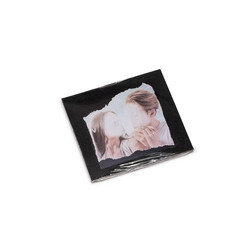
Edition of 101 copies. Recorded in June 1980 and self-issued the same year on cassette, Atomique Tape belongs to the legendary first wave of releases under the MB name, the moniker Maurizio Bianchi adopted that spring after closing his earlier project Sacher-Pelz. Across roughly twelve months, working from his home in the Mantuan town of Pomponesco, Bianchi produced an extraordinary run of self-released tapes that would, almost immediately, place him at the centre of the international industrial…

Hadayro
* Edition of 199 copies * Originally released on cassette in 1985, H·A·D·A·Y·R·O is a landmark of Japanese noise music. It documents the early vision of Solmania and the singular sonic approach of Masahiko Ohno. For years, it remained a cult artifact among collectors and underground enthusiasts. This vinyl edition renews its impact, feeling more like a rebirth than a simple reissue. Solmania was far more than a band; it was Masahiko Ohno’s personal sound laboratory. At the heart of the album are…

Yoshinotsune
* Edition of 199 copies * Between 1999 and 2000. By the early 2000s, Merzbow had entered a markedly new phase. The tape collages, junk electronics, and analogue chains that had defined his work across the 1980s and 1990s gave way to a digital practice built around laptop, software processing, and a rigorously composed approach to harsh noise. Across releases such as Merzbeat (2002), Animal Magnetism (2003), and the present album, Masami Akita reorganised his vocabulary around dense, sculpted str…

The Human Race Was Restored To Life Repeatedly
* Edition of 199 copies * Government Alpha, the project of Yasutoshi Yoshida, is one of the central figures in Japanese harsh noise, emerging from Tokyo's early 1990s underground scene. Through his Xerxes label, he developed a style that is both extreme and meticulously constructed, balancing ferocity and precision with remarkable control. Even at its most chaotic, every sonic eruption feels carefully placed.
Originally released on cassette in 1994, The Human Race Was Restored To Life Repeatedly…
Delitto sull'Autostrada
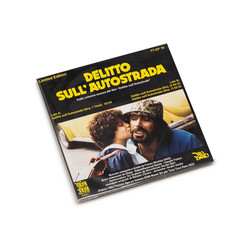
Tava Tava Rare is pleased to announce the first release on 7" of Franco Micalizzi's main theme to the film “Delitto Sull'Autostrada”, directed by Bruno Corbucci and starring the Italian-Cuban-American actor Tomas Milian. Eclectic, innovator, full of life and energy, out of the ordinary, the composer is best known for his scores in poliziotteschi films such as “Roma A Mano Armata”, “Napoli Violenta” or “Italia A Mano Armata”, whose theme was used also in Quentin Tarantino's “Death Proof”. The mus…

Italia a Mano Armata
*100 copies limited edition* A driving Italian soundtrack from the height of the cop/crime years – done with really full arrangements by Franco Micalizzi, in a way that easily rivals some of the best American work of the genre in the 70s! This score from 1976 (here reissued on wax) features an amazing band, spacey grooves, some jazz atmospheres, timeless brass-crescendos, the charm of '70s funk and the untameable talent of the maestro! Most of the orchestrations are quite bold – upbeat rhythms w…
Sold Out
17 Re
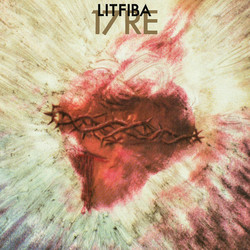
Tip! 17 Re is the third studio album by Italian New Wave band Litfiba, released by I.R.A. Records in December 1986. Although little known outside Italy, It is still considered by many to be Litfiba's stylistic masterpiece. It is part, with the previous Desaparecido (1985) and the following Litfiba 3 (1988), of the so-called "trilogy of power".Initially released as a double album (in France it was released as a single), 17 Re is distinguished by the presence of four sides and sixteen tracks, all …
Electronic Meditation
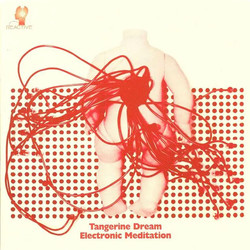
Remastered edition of Tangerine Dream’s classic and legendary debut album ‘Electronic Meditation’. In autumn/winter of 1969 Edgar Froese, founder of Tangerine Dream, met Klaus Schulze and Conrad Schnitzler. This trio formed the line-up of Tangerine Dream to record the debut album Electronic Meditation. The band was supported by two other musicians: Jimmy Jackson (organ) and Thomas Keyserling (flute), but both were mysteriously left out of the credits of the original album. Edgar Froese: "In 1969…
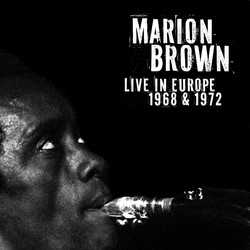
Live in Europe 1968 & 1972
On Live in Europe 1968 & 1972, Marion Brown leads a borderless quartet through two rare European concerts, pairing his singing alto with Gunter Hampel's vibes, Barre Phillips' bass and Steve McCall's drums in a sound that hovers between lyrical free jazz and chamber‑like intimacy.
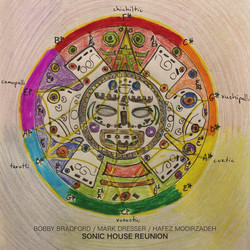
Sonic House Reunion
On Sonic House Reunion, Bobby Bradford, Mark Dresser and Hafez Modirzadeh reconvene a long‑running alliance, turning cornet, five‑string bass and hybrid reeds into a quietly radical chamber unit where Ornette‑rooted lyricism, spectral tuning and deep listening pull the music in multiple directions at once.
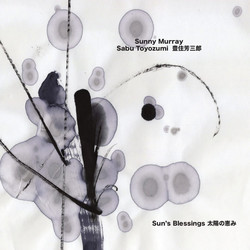
Sun's Blessings
On Sun’s Blessings, Sunny Murray and Sabu Toyozumi meet as a double‑drum frontline, turning a 1999 Sapporo concert into a two‑part ritual where clattering polyrhythms, rolling thunder and sudden hollows of space make free improvisation feel both volcanic and oddly tender.
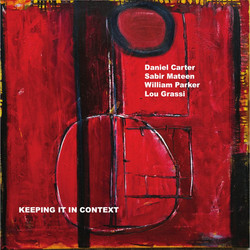
Keeping It In Context
On Keeping It In Context, Daniel Carter, Sabir Mateen, William Parker and Lou Grassi turn a 1996 Context Studios session into a blazing, deep‑listening workshop, with twin reeds, singing bass and restless drums stretching free jazz language without losing its earthy pulse.
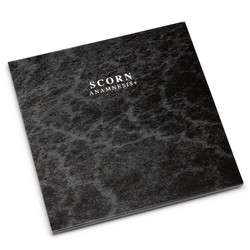
Anamnesis+
Scorn is dead. Mick Harris has said it himself, repeatedly, over the years, but this time the sentence has the weight of finality. Anamnesis, expanded to a four LP set and issued by GOD Records as catalog GOD 80, is the last word. Few projects have travelled the distance Harris travelled. From the blast beats that helped invent grindcore in Napalm Death to the cavernous low end and pulverising patience of Scorn, his career describes one of the strangest arcs in British underground music. Formed …

Schema 1+2
Dowser was formed in the late 1980s by Hiroyuki Nagashima. After numerous lineup changes, the current members are Hiroyuki Nagashima (instruments), Masateru Terai (instruments, voice), and Takashi Miyagawa (design). Dowser combines vintage synthesizers such as Buchla and EMS with virtual instruments to construct a distinctive sonic landscape that merges electronic music, rock, noise, and ambient textures.
Founder and leader Hiroyuki Nagashima is also an accomplished film composer, having created…
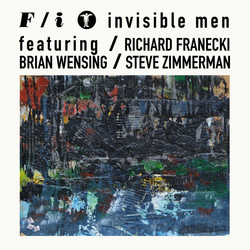
Invisible Men
Birdman Records is proud to be reissuing Invisible Men, the early space explorations of electronic music pioneer F/i. In the mid-80s F/i was on the cutting edge of electronic bombast, producing cassette tapes of late-night interstellar sessions to be traded world over with the handful of heads that were plugged into similar perambulations. As a link between Throbbing Gristle and the Spacemen 3, this period of F/i has been woefully forgotten, until now. Later in the 80s, F/i would morph into Voco…

Wembley 1974
Pink Floyd’s legendary Wembley 1974 performance captures the band at one of the most pivotal moments in their career, as they toured in support of the groundbreaking The Dark Side Of The Moon. Recorded during a period of extraordinary creative momentum, this historic show offers a powerful snapshot of Pink Floyd at the height of their artistic vision, blending atmospheric soundscapes, immersive instrumentation, and the unmistakable sense of experimentation that would come to define an era.
Set a…
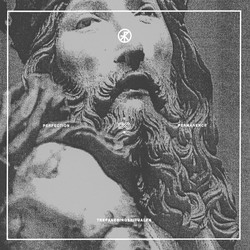
Perfection & Permanence
Trepaneringsritualen explores themes of religion, magick and the hidden realms of consciousness, taking its musical cues from the old school of ritual ambient & death industrial. Rhythmic and seething at times, and oozing forward with a creeping sense of desolation at others, Trepaneringsritualen conjures forth bleak but mesmerizing visions of the end-times.
"Perfection & Permanence": a hymn to Isis; a further exploration of the duality of the holy harlot, the black skinned Magdalen, mother and …
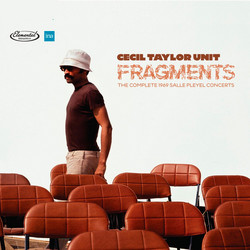
Fragments: The Complete 1969 Salle Pleyel Concerts
On Fragments: The Complete 1969 Salle Pleyel Concerts, The Cecil Taylor Unit detonates across two uncut Paris sets: a newly unearthed, vividly mastered document of Taylor, Sam Rivers, Jimmy Lyons and Andrew Cyrille stretching free jazz into an overwhelming, architectural storm of sound.
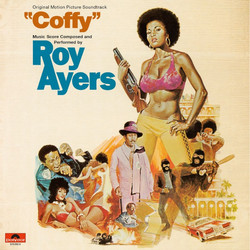
Coffy
On Coffy, Roy Ayers turns Pam Grier’s 1973 vigilante flick into a vibraphone‑driven fever dream, fusing slinky funk, string‑soaked soul and jazz finesse into a soundtrack that’s as deadly on its own as any of the film’s set‑pieces.
John Zorn's Bagatelles Vol. 8
On The Bagatelles Vol. 8, John Zorn hands nine knotty miniatures from his 300‑tune book to the John Medeski Trio, who turn organ, guitar and drums into a shape‑shifting engine of groove, skronk and sly lyricism that makes each Bagatelle feel like a tiny, exploding suite.
John Zorn's Bagatelles Vol. 7
On The Bagatelles Vol. 7, John Zorn hands a batch of his razor‑cut miniatures to pianist Brian Marsella, who turns thirteen terse themes into a 46‑minute solo suite where classical poise, jazz volatility and downtown mischief share the same set of keys.
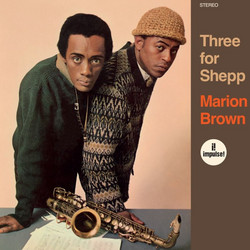
Three For Shepp
On Three for Shepp, Marion Brown leads a blazing American free‑jazz ensemble with Dave Burrell, Norris “Sirone” Jones and Grachan Moncur III, unleashing high‑energy fire music that shows the Impulse! era at full boil yet still somehow under‑sung.
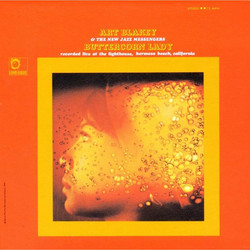
Buttercorn Lady
On Buttercorn Lady, Art Blakey leads a brief but blazing mid‑60s Jazz Messengers lineup at The Lighthouse, launching a young Keith Jarrett and Chuck Mangione in a hard‑bop set that feels both like a proving ground and a joyous passing of the torch.

Spaces
'Spaces' is an ode to the joy of live performance. It expresses Frahm’s love for experimentation and answers the call from his fans for a record that truly reflects what they have witnessed during his concerts. Breaking the convention of a traditional live album, 'Spaces' was recorded over the course of two years in different locations and on various mediums, including old portable reel-to-reel recorders and cassette tape decks. The decision to select takes that have people coughing and cell pho…
Found Songs
In April 2009, Iceland’s neo-classical export Ólafur Arnalds created the 7-song series Found Songs – recording a song a day for 7 days and instantly making each track available via Twitter. With artwork contributions from fans via Flickr, this modern release awakens memories of a tradition that seemed lost in the digital age we live in. Born in 1987, Ólafur hails from the suburban Icelandic town, Mosfellsbær, just a few kilometres outside of Reykjavík. He has immersed himself completely in a wor…

Inception
Using the crème de la crème of sound engineers and the unsurpassed production quality of Quality Record Pressings, the Acoustic Sounds series is mastered from the original tapes, pressed on 180-gram vinyl and packaged in high-quality gatefold covers produced by Stoughton Printing Co., where — as was customary on records of the era — the printed paper sheet is applied to the cardboard (so the cardboard itself is not directly inked). All this is overseen by Chad Kassem, CEO of Acoustic Sounds, the…
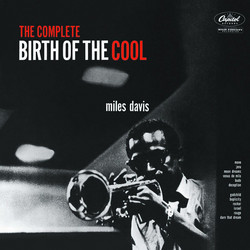
The Complete Birth of the Cool
*2026 repress* "With the reissue of the Miles Davis' Birth of the Cool sessions, accompanied by recordings of this seminal nonet’s slightly earlier live dates at New York City’s Royal Roost, we now have as complete as possible an account of this still fresh sounding and beautiful music. The array of talent alone is startling: Miles Davis in transition between his earlier bebop stylings, and his later gorgeous tone and sparer choice of notes; Lee Konitz on alto sax playing startling melodic inven…

Ascenseur pour l'échafaud
*2026 repress!* Representing a more intimate and spontaneous side of Miles Davis, this expanded re-release of the soundtrack to Ascenseur pour l'échafaud is a welcome event. Louis Malle was already a jazz fan when Jean-Claude Rappeneau suggested to him that Miles, who was in France for a brief tour, be asked to record the soundtrack; he readily agreed. By creating a relaxed environment in the studio, where the musicians could view main scenes of the film in a loop and then improvise in response …
Sold Out

Jazz Harpist
*2026 repress!* This is Dorothy Ashby's debut album, originally released in 1957 by the Regent label. Recognized as the woman who gave the harp a jazz voice, here Ashby is at the head of a highly distinctive combo featuring Frank Wess on flute, Eddie Jones or Wendell Marshall on bass and master Ed Thigpen on drums. The Jazz Harpist is an unprecedented mix of evocative classic sounds and jazz soul, awarded by Allmusic as her first and best album, period!