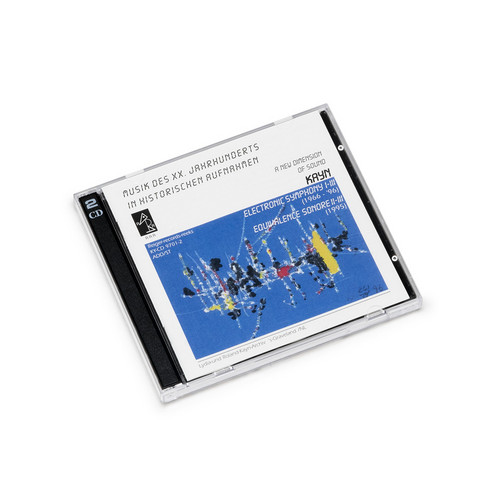
Electronic Symphony I / III
The first instalment of the ten Electronic Symphonies: Symphony I (1966-96), II (1970-96) and III (1971-97), with Equivalence Sonore II and III from 1995. Pieces concreted in real time by a complex autonomous electronic system, a process Kayn documented rather than composed.
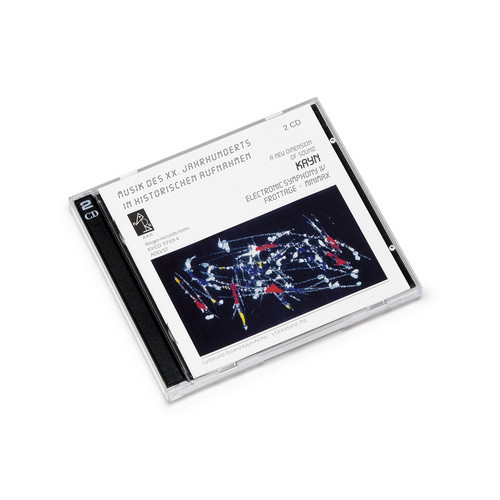
Electronic Symphony IV
Electronic Symphony IV (1988-96) unfolds over four sections across two discs, joined by Frottage and Minimax, both from 1996. Sound generated in real time by an autonomous electronic system: since the process cannot be retraced, the recording itself stands in for the score.
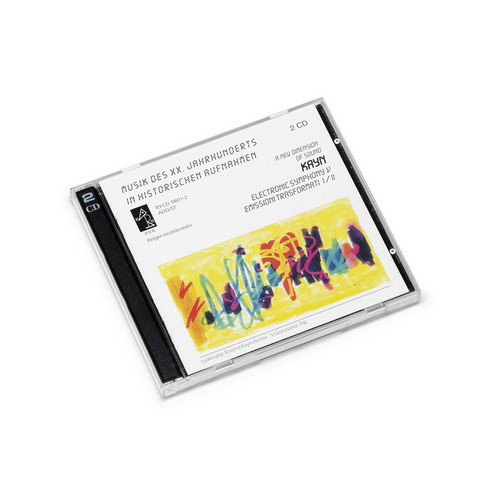
Electronic Symphony V / Emissioni Trasformati I-II
Electronic Symphony V (1977-97) in two sections, one per disc, each paired with one of the Emissioni Trasformati of 1996. Twenty years of revision folded into music that a complex autonomous electronic system concreted in real time, beyond any traceable authorship.
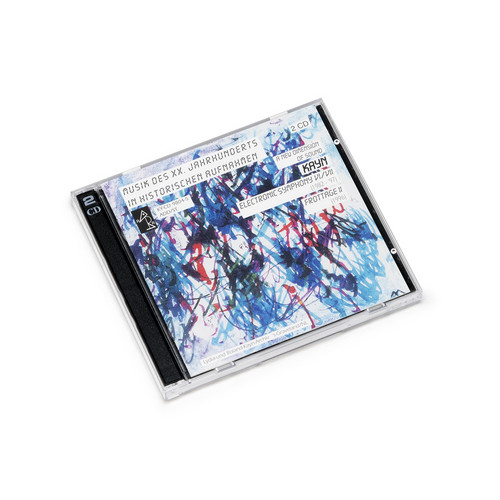
Electronic Symphony VI / VII
Electronic Symphony VI (1982-97) on the first disc, Symphony VII (1984-98) and Frottage II (1996) on the second. Two of the longest gestations in the cycle, worked over fifteen years and left to a self-regulating electronic system to concrete in real time.
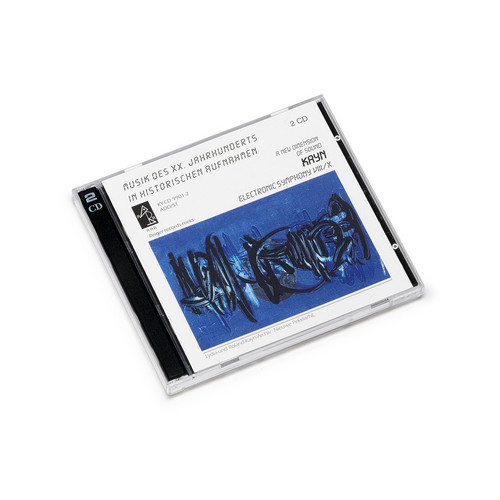
Electronic Symphony VIII / X
The close of the cycle: Electronic Symphony VIII (1978-98) and the single-year Symphony IX (1999) on the first disc, Symphony X (1982-99) in two sections on the second. Thirty years of Kayn's generative studio work arriving at its last and largest statements.
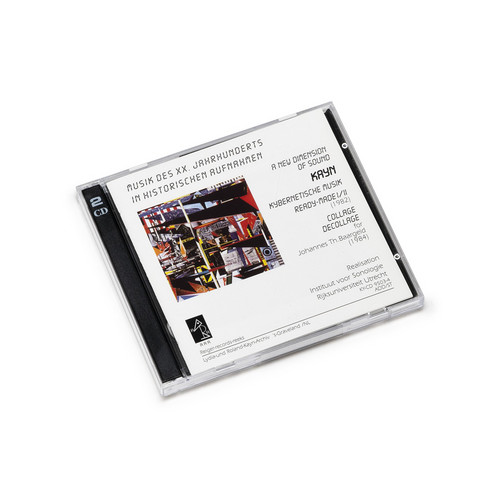
Kybernetische Musik
The first volume of Kayn's cybernetic works: Ready-Made I and II (1982) on one disc, Collage and Decollage (1984) on the other. Four long pieces that arise, in the composer's words, from the interplay of merged control loops setting a process into motion.
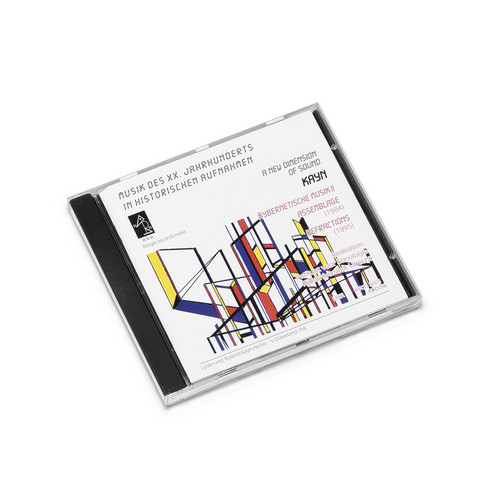
Kybernetische Musik II
The second volume of Kayn's cybernetic works, a single CD holding two long pieces: Assemblage (1984) and Refractions (1995). Music not composed and practised but set going, arising from merged control loops and feedback in a system that can be entirely autonomous.
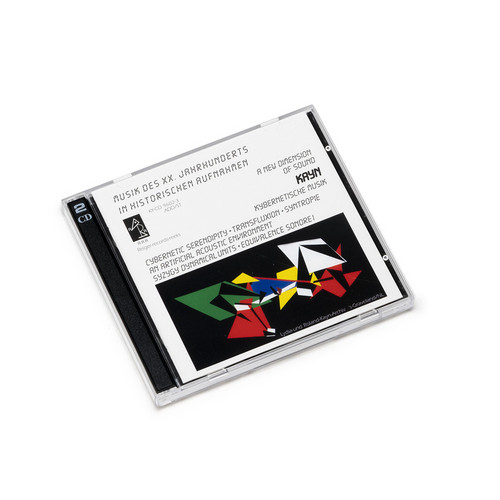
Kybernetische Musik III
The third volume, six pieces from 1986 to 1996 across two discs: Cybernetic Serendipity, Transfluxion and Syntropie on the first, An Artificial Acoustic Environment, Syzygy Dynamical Units and Equivalence Sonor I on the second. A decade of self-regulating systems at work.
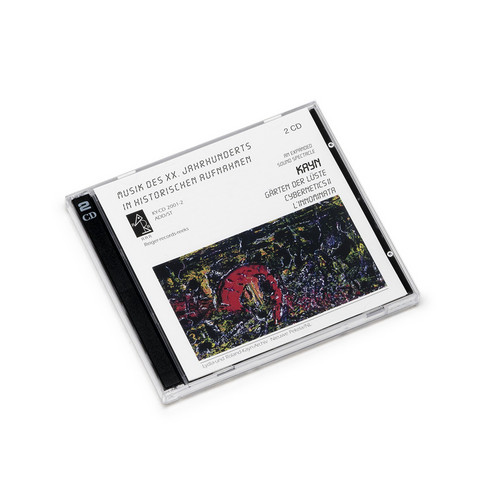
Gärten Der Lüste / Cybernetics II / L'Innominata
Two long pieces from the turn of the millennium, Gärten Der Lüste (1999-2000) and L'Innominata (2000), each in two sections, with the early Cybernetics II (1969) set between them on the first disc. Thirty years of Kayn's electronic practice in a single pairing.
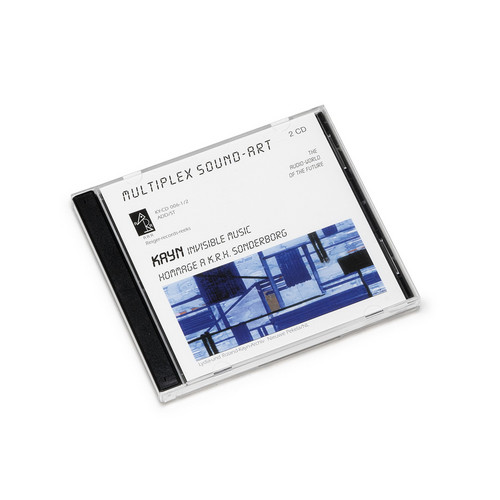
Invisible Music / Hommage a K. R. H. Sonderborg
Invisible Music (2003) spread over three parts across two discs, followed by Hommage a K. R. H. Sonderborg from the same year. Late Kayn, sound with no visible source, left to a self-regulating electronic system to unfold at its own pace.
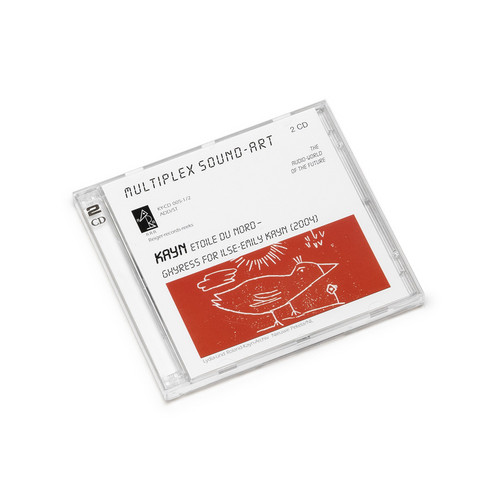
Etoile du Nord / Ghyress Für Ilse-Emily Kayn
Two long pieces from 2004: Etoile du Nord in two parts on the first disc, Ghyress für Ilse-Emily Kayn on the second, named for the daughter who would later reawaken her father's label. Among the last titles Kayn issued on Reiger Records Reeks himself.
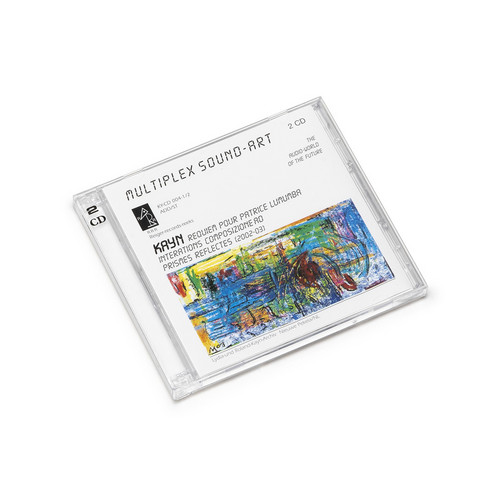
Requiem pour Patrice Lumumba, Interations, Composizione AD
Issued under Kayn's Multiplex Sound-Art heading: Requiem pour Patrice Lumumba (2002) and Interations (2003) on the first disc, the four-section Composizione AD (2002) and Prismes Reflectes (2002) on the second. Among the most recent pieces the composer completed.
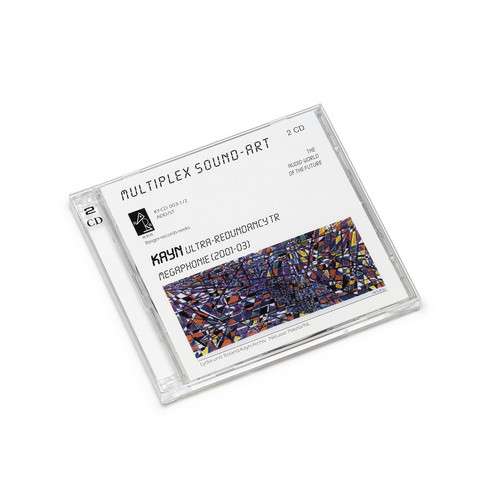
Ultra / Redundancy TR / Megaphonie
Also under Kayn's Multiplex Sound-Art heading: Ultra (2001) and Redundancy TR (2003) on the first disc, the three-section Megaphonie (2001) on the second. Three of the last pieces Roland Kayn completed and released on his own label.
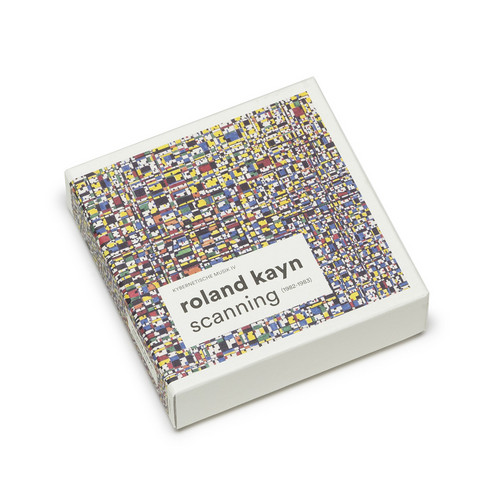
Scanning
Recorded in 1982-83 and heard in public barely once, Scanning is the largest of Kayn's cybernetic works: ten CDs, ten hours, twenty-four moments moving between shimmering harmonic ambience and raw droning distance. Remastered by Jim O'Rourke from the original recordings.
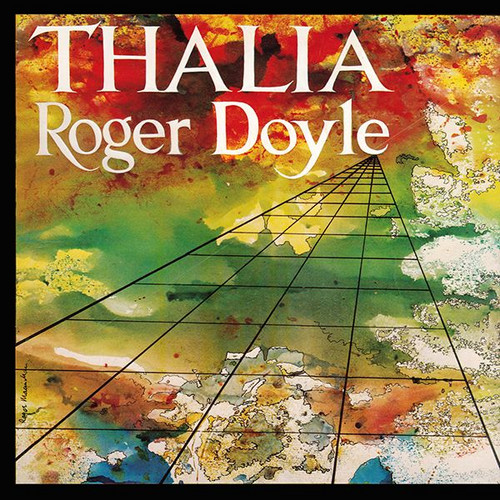
Thalia
The concrète riddle of Thalia is the Nurse With Wound-listed and cultishly desired Roger Doyle album withdrawn by CBS Classics shortly after its release in 1978. Less than 200 copies reached shops some three years after his distinctive debut Oizzo No (1975) - which was reissued by Finders Keepers' Cacophonic label to receptive ears in 2018 - and in retrospect the resurfacing of Thalia follows that wonderfully odd LP to cement Doyle’s place among the outsider pioneers of ‘70s electronic and avant…

The Probability of an Encounter
***100 copies*** In the electroacoustic composition The Probability of an Encounter d'incise attempts to give physicality to electronic sounds, to capture their materiality as piece of cardboard moving - moving back and forth on itself, and moving relatively to microphones in a room. The loudspeaker as concrete manifestation is pushed to its functionning limits to reveal it as it breaths, vibrates, saturates, rattles in contact of other objects. The raw material made of electronic sounds created…
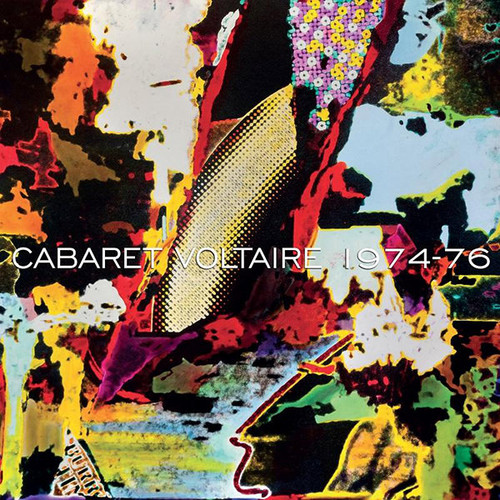
1974-76
* 2LP, originally released on cassette by Industrial Records 1978. Comes with a download code * A selection of material recorded by Cabaret Voltaire during the earlier and formative years of their existence. All of the recordings were done in an attic 10 feet by 6, on a domestic reel to reel tape recorder. A number of the recordings here were part of those which made up the now legendary limited edition cassette released by the band in 1976. "The Cabs’ prescient volley of noisy recordings made i…
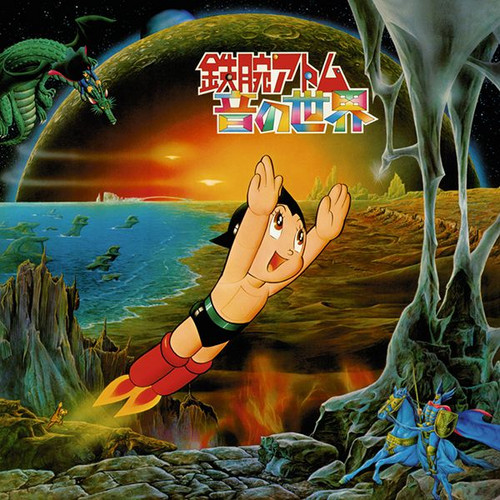
Roots of Electronic Sound
**500 copies with insert** Futuristic synthesizer specialist and sound designer Matsuo Ohno was responsible for the sound design of a broad range of film, television and radio soundtracks, most famously the animation series Astro Boy, which he began working on in 1963, together with his assistant, Takehisa Kosugi. Ohno was born in the heavily-populated Kanda district of central Tokyo in 1930 and was heavily affected by the repeated bombing raids on the city enacted in World War II, which took pl…
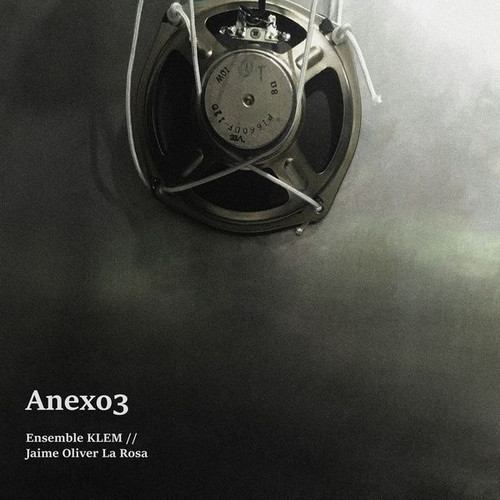
Anexo3
Anexo3 (2017-18) was composed by Jaime Oliver La Rosa and Ensemble KLEM over residencies in Bilbao, Lima, and Santiago de Chile, through elaborated processes of sound design, experimentation, improvisation, recording, and reflection. Often processed beyond recognition, violin, flutes, and saxophones are performed along güiros, motors, and a system of aluminum plates, struck and induced into resonance through feedback processes controlled by microphones, transducers, and computer software and joi…
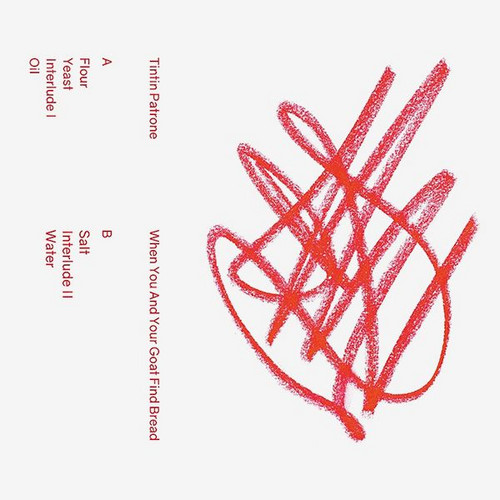
When You and Your Goat Find Bread
When You And Your Goat Find Bread is a thing of it’s own beauty. On her first solo outing, the German-Filipino composer, musician, actress, film and music producer, painter, performance artist and author Tintin Patrone presents seven carefully crafted and emotively played neo-classical compositions for trombone and electronics."A goat is a domestic animal kept to be sacrificed to giants. It is a metaphor for a state of peacefulness. When your goat is with you, you are calm and collected. In earl…