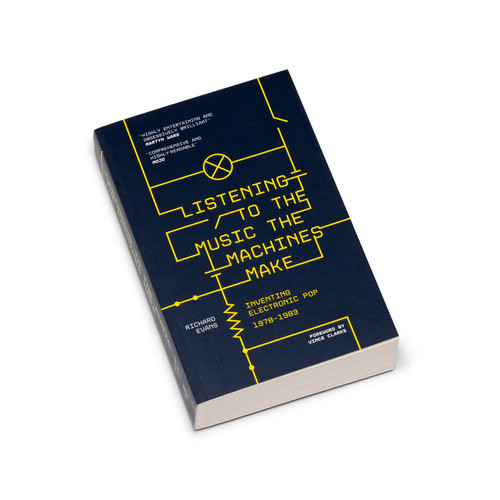
Listening to the Music the Machines Make (Book)
Listening to the Music the Machines Make is the revolutionary story of electronic pop from 1978 to 1983, a true golden age of British music. This definitive account explores how krautrock, disco, glam rock and punk inspired a new generation to rip up the rulebook and venture toward a new frontier of electronic music – one that laid the foundations for Hip-Hop, house, techno and beyond.
Including an extensive collection of archive images throughout, Richard Evans’s kaleidoscopic narrative draws o…
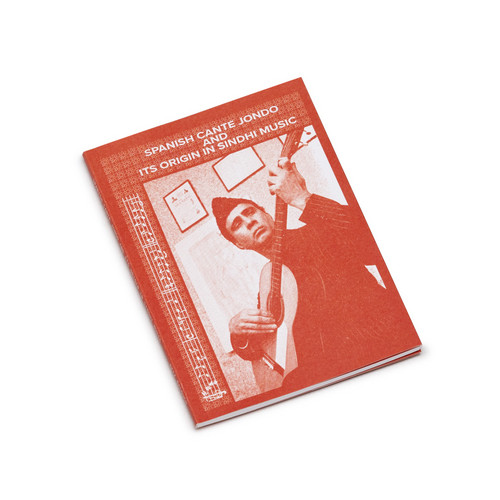
Spanish Cante Jondo and Its Origin in Sindhi Music (Book)
The second outing for our short run book publishing imprint, The End books, takes the form of a reprint of Spanish Cante Jondo and Its Origin in Sindhi Music, originally published in Spanish in 1955 under the name Cante Jondo: Su Origen y Evolución and later in this English translation. Aziz Balouch presents his theory on the roots of flamenco's 'deep song' in modern-day Pakistan, a cultural journey that mimics the routes of his own life, having been brought up among the Islamic mysticism and de…
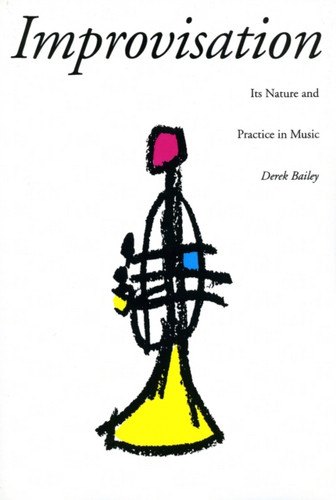
Improvisation : Its Nature And Practice In Music (Book)
Derek Bailey's Improvisation , originally published in 1980, and here updated and extended with new interviews and photographs, is the first book to deal with the nature of improvisation in all its forms,Indian music, flamenco, baroque, organ music, rock, jazz, contemporary, and "free" music. By drawing on conversations with some of today's seminal improvisers,including John Zorn, Jerry Garcia, Steve Howe, Steve Lacy, Lionel Salter, Earle Brown, Paco Peña, Max Roach, Evan Parker, and Ronnie Scot…
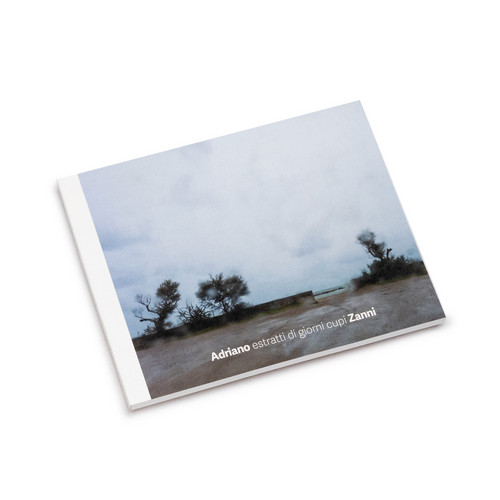
Estratti Di Giorni Cupi (Book)
Excerpts from gloomy days is an intimate journey through the winters of the province of Ravenna, captured from the window of my car between 2015 and 2017, wandering between the city, the countryside, the industrial areas and reaching the coast. The photos, taken through fogged up windows and raindrops, tell of blurred landscapes, deserted roads, and melancholic atmospheres, suspended between the real and the dreamlike. A tale of moments stolen from time, where rain becomes a brush and the fogge…
Sequenze Di Fabbrica (Book)
Adriano Zanni is well known here at Boring Machines. Our collaboration started in 2008 with the album "Piallassa (red desert chronicles)", an album inspired by a simple but meaningful coincidence. In 1964 Michelangelo Antonioni shot his first color film "Il Deserto Rosso" (Leone d'Oro at Venice Film Festival) inside and around the huge assembly of petro-chemical factories in the outskirts of Ravenna, known at that time as ANIC. Adriano Zanni was born in 1964 in Ravenna.
In the last 25 years he…

Genesis Of A Music (Book)
Among the few truly experimental composers in our cultural history, Harry Partch’s life (1901-1974) and music embody most completely the quintessential American rootlessness, isolation, pre-civilized cult of experience, and dichotomy of practical invention and transcendental visions. Having lived mostly in the remote deserts of Arizona and New Mexico with no access to formal training, Partch naturally created theatrical ritualistic works incorporating Indian chants, Japanese kabuki and Noh, Poly…
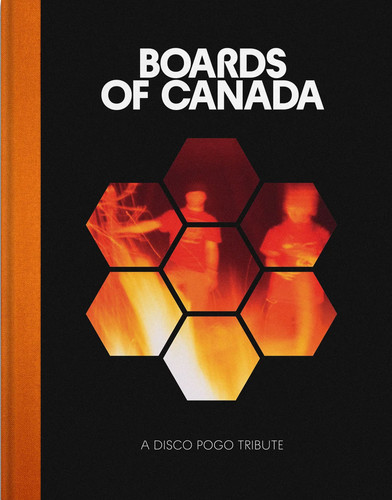
A Disco Pogo Tribute (Book)
Hardback cover, richly illustrated. A full-length book on Boards of Canada, the Scottish duo of Michael Sandison and Marcus Eoin, published by Disco Pogo with the approval of the band and of Warp. It is the fifth volume in the magazine's Tribute series, after Daft Punk, Aphex Twin, LCD Soundsystem and Andrew Weatherall, and the artist readers had been requesting most since the series began. Ships 10 November 2026.
Sandison and Eoin started recording in the Pentland Hills outside Edinburgh in the…
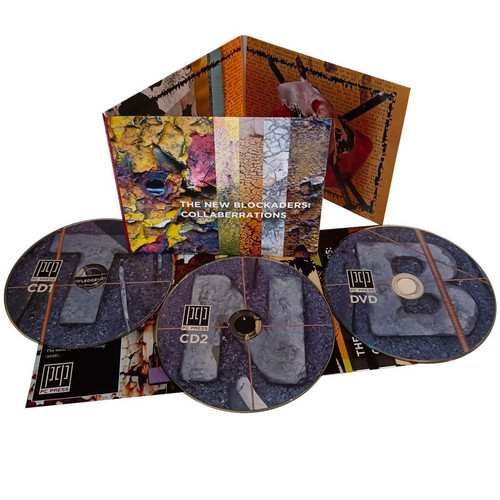
Collaberrations (2CD + 1DVD)
For a group founded on refusal, The New Blockaders have collaborated a great deal. It is less a contradiction than it looks. Where most collaborations in music amount to two recognisable personalities meeting and reinforcing each other, TNB's have always worked in the opposite direction: material is passed over, altered, buried, returned, and what emerges belongs to nobody in particular. Paul Hegarty has described the process as one in which individuality gets swamped, the sound cut loose from a…
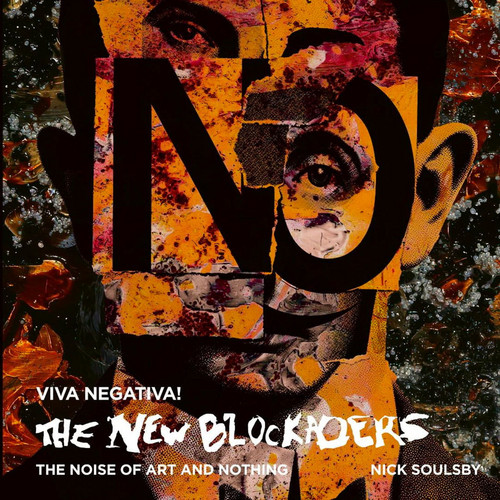
Viva Negativa! The New Blockaders: The Noise of Art and Nothing (Book)
Few gestures in the history of recorded sound have been as absolute as the one Richard and Philip Rupenus made in a garden shed in rural Newcastle in 1982, when – as The New Blockaders – they committed Changez Les Blockeurs to tape and, with it, drew the founding line of noise as an art of pure negation. From the outset TNB armed the music with a manifesto: blockade as resistance, an anti-music and anti-art set against every convention of composition, performance, and even personality, the sound…
Viva Negativa! The New Blockaders: The Noise of Art and Nothing
Few gestures in the history of recorded sound have been as absolute as the one Richard and Philip Rupenus made in a garden shed in rural Newcastle in 1982, when – as The New Blockaders – they committed Changez Les Blockeurs to tape and, with it, drew the founding line of noise as an art of pure negation. From the outset TNB armed the music with a manifesto: blockade as resistance, an anti-music and anti-art set against every convention of composition, performance, and even personality, the sound…
White Bicycles (Book)
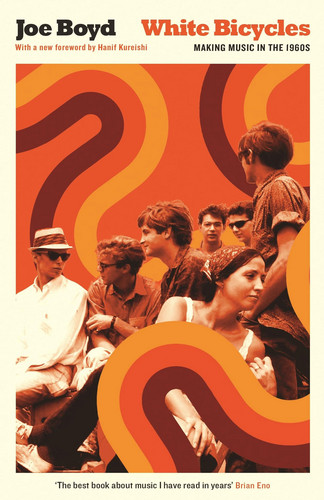
304 pages, paperback. Serpent's Tail Classics edition, with a foreword by Hanif Kureishi. Originally published in 2006. The sixties began in the summer of 1956, ended in October 1973, and peaked just before dawn on 1 July 1967, during a set by Tomorrow at the UFO Club in London. That is Joe Boyd's thesis, delivered in the opening pages with a precision that is obviously a joke and obviously not. He was in the room. He built the room.
This is the sixties memoir that survives re-reading, and the r…
Punk Flyers (1975-2020
234 pages, paperback, 14 x 17cm. Over 200 flyers, compiled by Masala Noir, Paris. Nobody was supposed to keep these. A flyer is made to be handed out on a Tuesday, read once, and dropped in the street on the way to the show. It has a job, the job lasts about four days, and then it is rubbish. That is the whole reason this book exists and the whole reason it is worth having: what you are looking at is the accidental survival of a form designed to be thrown away.
And what a form. No budget, no cli…
Switched On Bob Moog and the Synthesizer Revolution (Book)
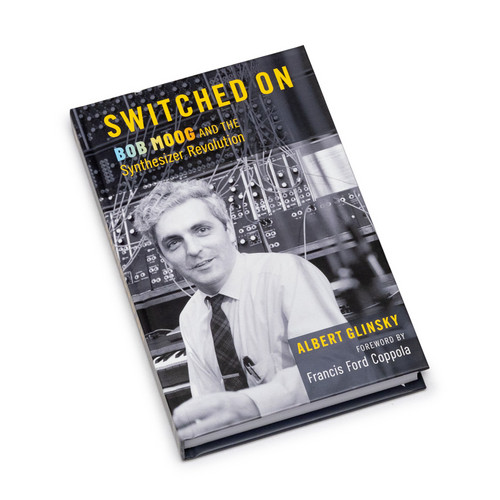
490 pages, hardback, with 60 black and white photographs. Foreword by Francis Ford Coppola. Published by Oxford University Press. Voltage control. Two words, and everything downstream of them: the oscillator that tracks a keyboard, the envelope that shapes a note's attack and decay, the ladder filter that gives a sawtooth its wet, vocal edge. These are the grammar of the instrument, and they are almost all his. Anyone who has turned a cutoff knob has touched Bob Moog's thinking. He died in 2005 …
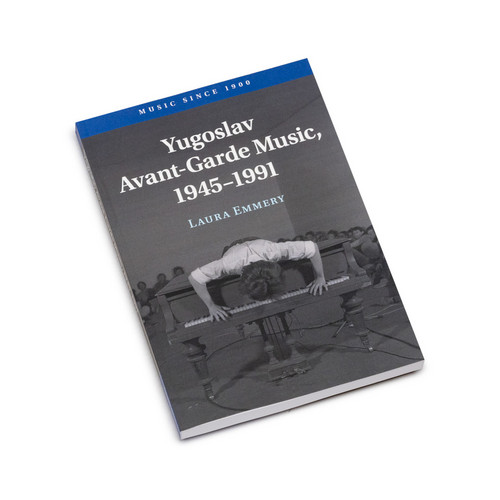
Yugoslav Avant-Garde Music, 1945–1991 (Book)
292 pages, 244 x 170mm, with figures and music examples. Published by Cambridge University Press in the Music since 1900 series, paperback. Zagreb, June 1961. On the programme: Karlheinz Stockhausen, Pierre Schaeffer, Mauricio Kagel, Witold Lutosławski, the Darmstadt serialists, the tape pieces coming out of Paris, Milan and Cologne, and the experiments of John Cage. In a communist country that had spent the previous fifteen years under socialist realism, with closed borders and almost no contac…
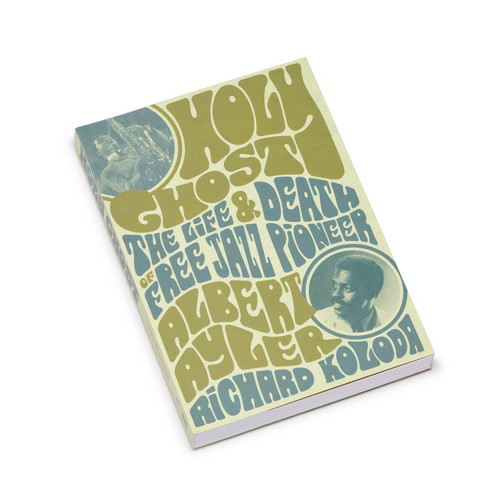
Holy Ghost: The Life & Death of Free Jazz Pioneer Albert Ayler (Book)
312 pages, paperback, with 8-page photo insert. 150 x 215mm. The first extended biography of Albert Ayler ever published in English, and it took twenty years to build. Part life story, part case file, and long overdue. Richard Koloda is a musicologist and a practising lawyer, and both trades show on every page. He was a long-time friend of Donald Ayler, Albert's trumpet-playing younger brother; a consultant on Revenant Records' ten-CD retrospective Holy Ghost: Rare And Unissued Recordings (1962…

From the Ruins of the Literal: Critical Organology, Timbre, and the Poetics of Affect (Book)
Sarah Davachi's first book, From the Ruins of the Literal: Critical Organology, Timbre, and the Poetics of Affect, published by her own Late Music imprint. The title is borrowed from Paul Ricoeur, whose account of metaphor locates meaning at the point where literal sense gives way. Davachi turns that idea on the study of instruments and timbre, disciplines she sees as long governed by empirical, neuro-cognitive and modernist assumptions. Her objection is not that measurement is wrong but that it…
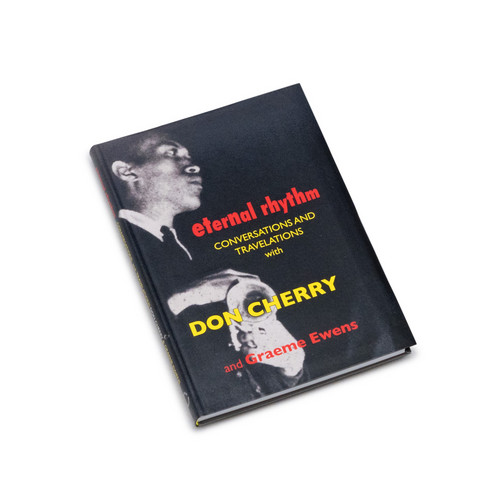
Eternal Rhythm: Conversations and Travelations with Don Cherry and Graeme Ewens (Book)
Eternal Rhythm: Conversations and Travelations with Don Cherry and Graeme Ewens is the book on Don Cherry we have been waiting for - not a biography written from the outside, but a portrait built from the inside, from hours of cassette-taped conversations recorded since 1979 by writer Graeme Ewens, a confidant, travel companion, and close friend of Cherry. Published by Ars Nova Workshop, this is an intimate, free-flowing document of one of the most unique and innovative voices to emerge from the…
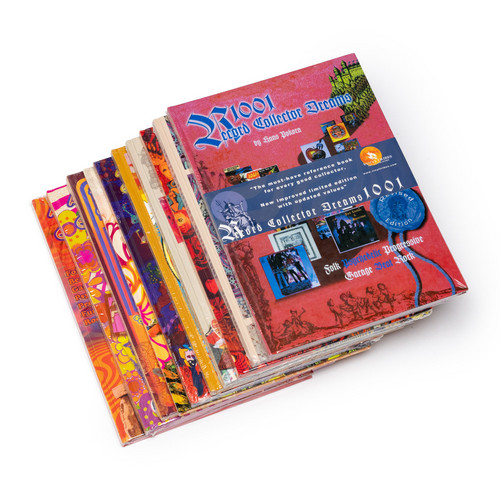
10001 Records Collector Dreams (10xBook Set)
There are price guides, and then there is Hans Pokora. Since the late nineties, his Record Collector Dreams series has been the secret handbook passed between the most obsessive diggers on the planet, the reference you reach for when a sleeve you have never seen surfaces and you need to know exactly what you are holding. This is the complete set: ten hardcover volumes, from 1001 through 10001 Record Collector Dreams, each one a different and exclusive window onto the rarest and most expensive co…
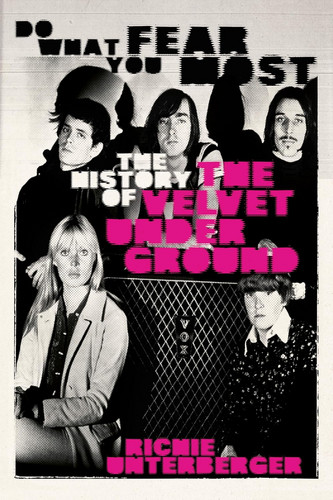
Do What You Fear Most: The History of the Velvet Underground
Few groups have exerted an influence so out of proportion to their commercial fortunes as The Velvet Underground. Formed in New York in 1965, the band sold modestly across four studio albums and had effectively dissolved by the end of the decade, yet the sound it built - the drone, the controlled noise, the plain-spoken songs about subjects pop had left untouched - became one of the foundations on which the next half-century of rock was laid.
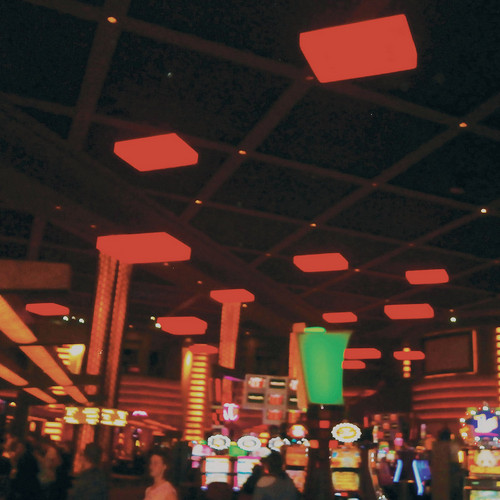
Slot Machine Music, Vol. 1 & 2: Field Recordings from Middle American Casinos
"Video gambling addicts, academic researchers, and industry professionals alike describe the trancelike state into which problem gamblers suspend themselves with remarkable consistency: they unanimously call it the machine “zone,” a kind of inner experience during which the rhythmic flow of human-machine collusion borders on mysticism. Time is abolished in the act of contemporary video gambling—simulated slot reels roll, virtual poker decks deal, and all worldly concerns are lost—leaving only th…