David Tudor
In the world of American experimental music, David Tuor (1926-1996) was something of a legend. For a number of years following the Second World War, he was the only performer to devote himself systematically to this music. In doing so, Tudor became a touchstone for some of the most radical musical activity of the 20th century.
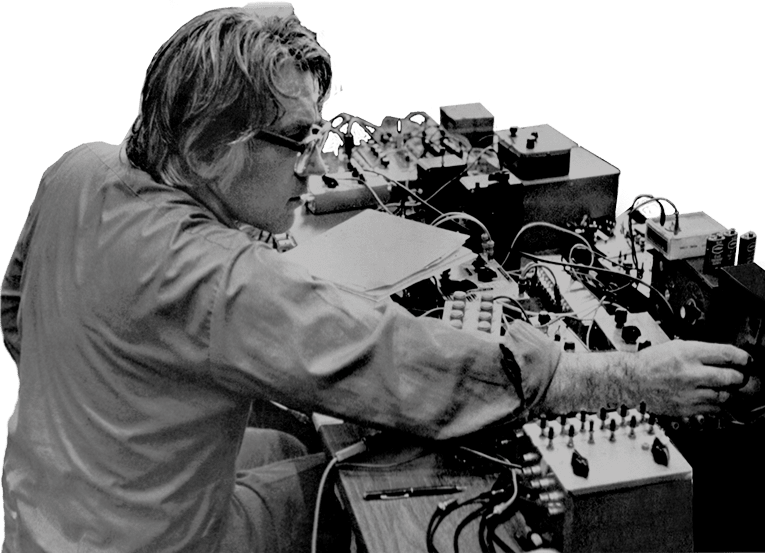
In the world of American experimental music, David Tuor (1926-1996) was something of a legend. For a number of years following the Second World War, he was the only performer to devote himself systematically to this music. In doing so, Tudor became a touchstone for some of the most radical musical activity of the 20th century.
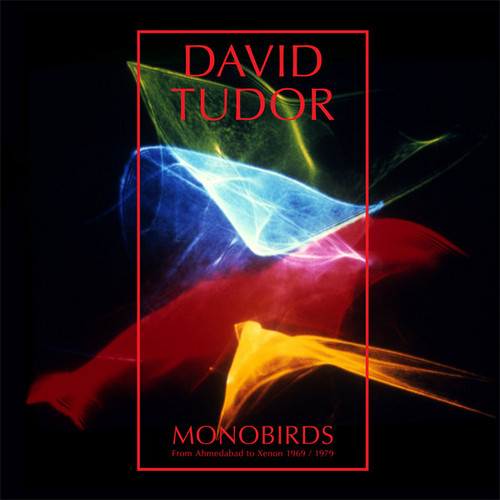
Monobirds
From the Danish imprint Topos, comes one of the most historically important archival releases of the year, a never before issued work - "Monobirds (From Ahmedabad to Xenon)" created by David Tudor between 1969 and 1979. A truly visionary expanse of pure electronic abstraction, stretching across a beautiful double LP accompanied by a 24-page large booklet, its thrilling sounds encounter one of the 20th Century's most important musical minds at the height of his powers, and radically expands our a…
Rainforest IV
** Six panel wallet with one CD. Binaural audio best heard with headphones ** Few artists within the canons of 20th Century avant-garde and experimental music can be regarded as important or influential as the pianist and composer David Tudor. His name rings out across the years. Yet, despite Tudor’s place in history, his legacy largely remains under the shadow of the artists that he worked with, most notably John Cage, while the majority of his own output as a composer - a handful of releases p…
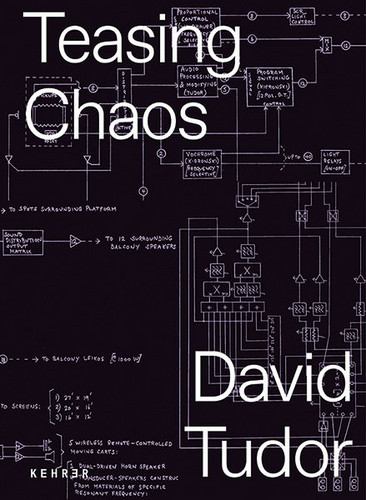
Teasing Chaos (Book)
Restock due soon * 224 pages 110 color and b/w illustrations * David Tudor (1926–1996) was one of the leading pianists and interpreters of contemporary music in Europe and the USA in the 1950s. His ability to respond to the indeterminate character of demanding scores by composers such as John Cage, Karlheinz Stockhausen, and Christian Wolff and to execute their at times ambiguous instructions was unique and fascinated his contemporaries. In the early 1960s, he made the transition from interprete…
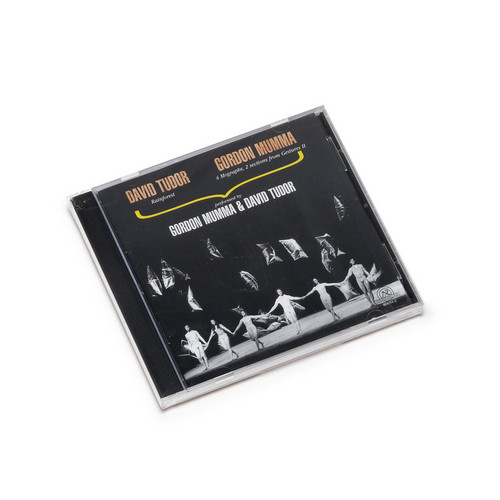
Music of David Tudor and Gordon Mumma
This historic recording features the first-ever release of the two earliest surviving recordings of David Tudor's seminal work, Rainforest. Sandwiched in between are six keyboard works by Gordon Mumma in recordings featuring the composer and his close collaborator, Tudor. Together, these works constitute a fascinating and historically important document of the 1960s avant-garde in America.
In early 1968, Merce Cunningham created a new dance whose apparent impetus was Colin Turnbull's The Forest …

Variations IV, Vol. II
A 1965 journey into found sound; this is John Cage. Another seminal volume of indeterminate music, from an icon of experimental sounds. Reissued for the first time and thematically on gorgeous clear vinyl! It could be argued that there is no more controversial figure in music history as avant-garde electronic composer John Cage. Perhaps best known for his composition “4'33"" which consisted of Cage sitting at a piano for four-plus minutes of total silence, Cage was both loved and loathed …
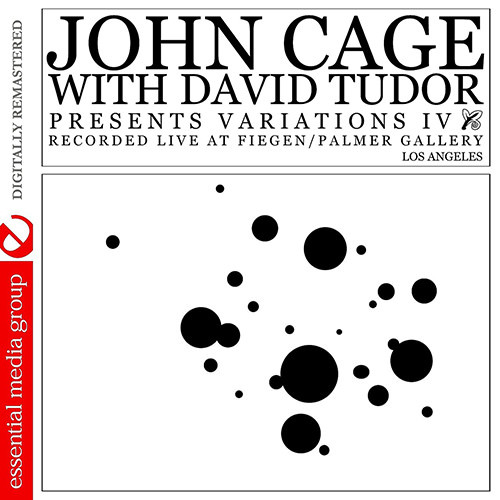
Variations IV, Vol. I
"Due to unprecedented demand" for the first volume of Everest's 1965 release of John Cage's Variations IV (perhaps unique at the time given the experimental nature of the material), a second selection of music culled from Cage and associate David Tudor's marathon six-hour concert at the Feigen-Palmer Gallery in Los Angeles was released. Whereas the first volume indicated roughly at what moment of the performance the recordings were sourced from (its four extracts document events taking place in …
San Francisco Museum Of Art, January 16th, 1965
Recorded live by KPFA Radio in the halls of the sculpture court of the San Francisco Museum of Art on January 16, 1965, the day of 39th birthday of fellow pianist and longtime associate David Tudor, this historic concert with John Cage opens with a duet for Cymbal with contact microphones agitated by a wide gamut of objects and concludes with Variations IV in which loudspeakers outside the performance space interacted with speakers next to the audience. First release on vinyl for a very importan…

Variations IV
Anything can happen and often does. This is John Cage. A seminal example of indeterminate music from an icon on experimental sounds. This work was originally used as music for the choreographed piece by Merce Cunningham, "Field Dances," with stage and costume design in the original version by Robert Rauschenberg (from 1967 the designer was Remy Charlip). Variations IV is the second work in a group of three of which Atlas Eclipticalis is the first (representing 'nirvana', according to Hidekaz…

Music from the Tudorfest: San Francisco Tape Music Center, 1964
In the spring of 1964 Pauline Oliveros organized a festival celebrating the work of pianist David Tudor, which featured compositions by Oliveros, George Brecht, Toshi Ichiyanagi, Alvin Lucier, and John Cage. The Tudorfest was a watershed event in the brief history of the San Francisco Tape Music Center, which not only provided its members with an opportunity to collaborate with Tudor, but also to promote their own work. Co-sponsored by KPFA, the Tudorfest demonstrated the artistic diversi…

Music Of Changes
The title is a double pun. The score is the first that John Cage devised allowing the hexagrams of the I Ching to fully determin e how the music would procee d, event by event, gesture by gesture—the musical details (pitch, duration, dynamic s, density, tempi) being painstakingly, albeit fortuitously, derived through point-by-point con sultation from charts of possi bilities designed by the composer. (Christian Wolff, Cage’s young friend and musical associate, had presented Cage with a co…

The Art Of David Tudor 1963-1992
Milestone release! David Tudor's (1926-1996) identity morphed seamlessly from interpreter of mainly acoustic music to composer-performer of predominately electronic music over a period of about ten years, from the mid-1950s to the mid-1960s. This set of seven CDs, the first truly comprehensive survey of Tudor's work as a composer, goes beyond any previous attempt to document that process of transformation. It captures his touch and sensitivity and offers an expansive, previously unavailable view…
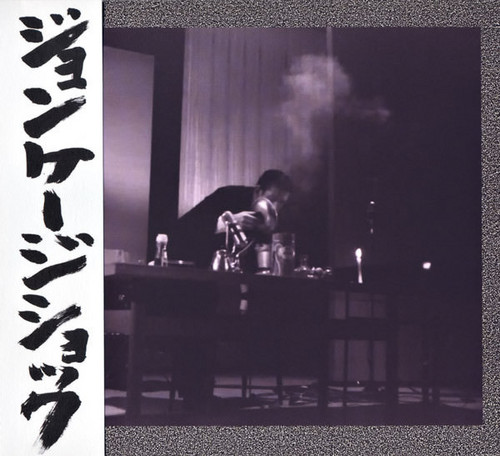
John Cage Shock Vol. 2
Volume 2 in EM Records' John Cage Shock series lifts off with a fiery example of David Tudor's piano virtuosity, his mastery of dynamics well-evident in a performance of Klavierstücke X (1961) by Karlheinz Stockhausen. The titular shock of this series is delivered even more forcefully with the next piece, John Cage's 26'55.988" for 2 Pianists and a String Player (1961), which was first performed the year before in Darmstadt by Tudor and Kenji Kobayashi, a combination of two of Cage's solo piece…
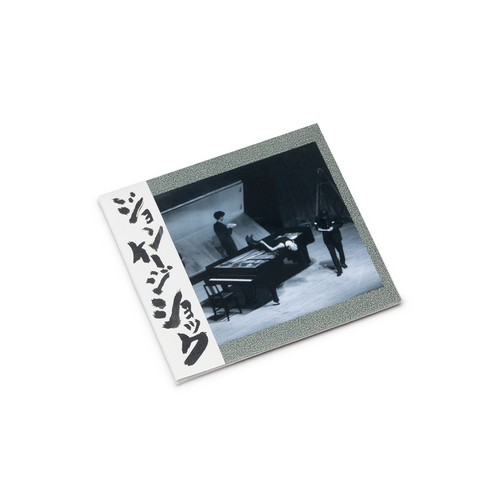
John Cage Shock Vol. 3
The final CD of the John Cage Shock series features John Cage's 0'00" (1962), also referred to as 4'33" No. 2, performed by the composer, with daily activities such as writing and drinking coffee amplified by contact microphones into sonic abstraction, following the score's directions: "with maximum amplification (no feedback), perform a disciplined action." Next is Composition II for 2 Pianos (1960/1961) by Michael von Biel, lovely and sparse, performed by David Tudor and Toshi Ichiyanagi. …
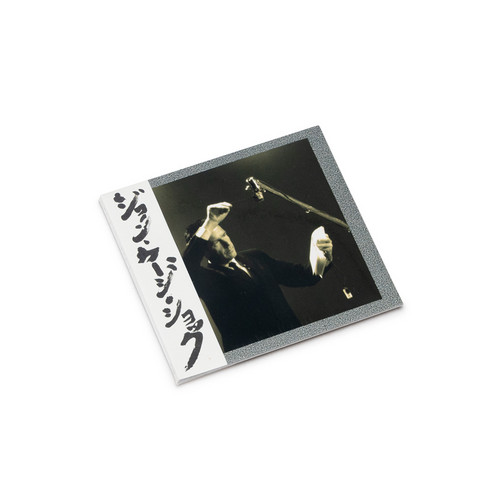
John Cage Shock Vol. 1
In October 1962, John Cage and his great interpreter/co-visionary David Tudor visited Japan, performing seven concerts and exposing listeners to new musical worlds. This legendary "John Cage Shock," as it was dubbed by the critic Hidekazu Yoshida, is the source of this series of releases -- three CDs and a "best hits" double LP compilation. Recorded primarily at the Sogetsu Art Center in Tokyo on October 24, 1962 (with two performances from October 17 at Mido-Kaikan in Osaka), all recordin…
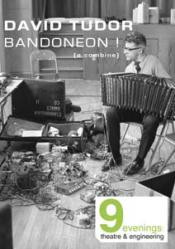
Bandoneon! (A Combine)
In 1966 ten New York artists and thirty engineers and scientists from Bell Telephone Laboratories collaborated on a series of innovative dance, music and theater performances, 9 Evenings: Theatre & Engineering, held in October at the 69th Regiment Armory, New York City. The artists included were John Cage, Lucinda Childs, Öyvind Fahlström, Alex Hay, Deborah Hay, Steve Paxton, Yvonne Rainer, Robert Rauschenberg, David Tudor and Robert Whitman. Archival material has been assembled into ten films, …

Music For Merce Cunningham
Rare artist's record, with an amazing versions of Tudors electronic environment masterpiece, performed by David Tudor and Takehisa Kosugi for the Merce Cunningham Dance Company. Numbered edition of 200 copies. Packaged in plain black jacket with insert and obi, and pressed on red vinyl. New and unplayed, one copy available
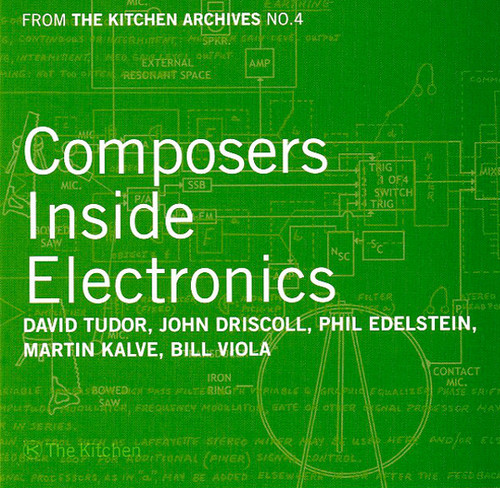
From The Kitchen Archives No.4: Composers Inside Electronics
From The Kitchen Archives No. 4: Composers Inside Electronics continues a series of CD releases featuring recently discovered audio recordings of concert performances at The Kitchen dating from the mid-1970s to the early 1980s. The electronic innovation of the time is illustrated here by tracks from David Tudor, John Driscoll, Phil Edelstein, Martin Kalve and Bill Viola." All recordings from this CD are from 1977/78. The Kalve piece is from 1978 and is performed by John Driscoll, Martin Kalve, T…
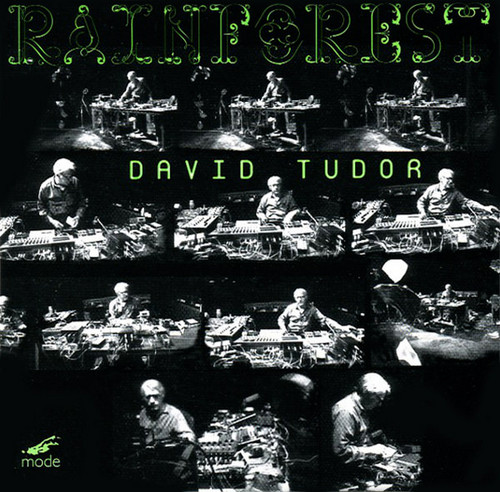
Rainforest
Two versions of David Tudor's electronic environment masterpiece, the first performed in 1968 by Tudor and Takehisa Kosugi for the Merce Cunningham Dance Company; the 2nd is an electro-acoustic environment from 1973. "'Rainforest' blends music and sculpture by placing music in space in extraordinary ways. The idea is to channel electronic output through an object rather than through the usual device, a loudspeaker. Dozens of unique and unlikely objects are suspended from the ceiling at about ear…
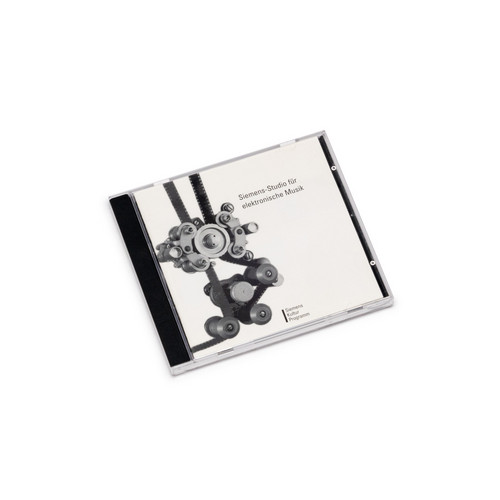
Siemens-Studio Für Elektronische Musik
Easily among the most important documents of electronic music's early history, Siemens-Studio Für Elektronische Musik assembles 19 compositions created between the late 1950s and mid-1960s at the legendary Siemens Studio for Electronic Music in Munich - the first programmable recording studio ever built - under the artistic direction of Josef Anton Riedl. Originally issued on CD in 1998 by the Siemens Kultur Programm and compiled by Riedl himself, this remarkable collection gathers works by Herb…
Morton Feldman
Beautiful collection of Morton Feldman's earliest, shorter piano works from the early 50s, going through the late 70s