We use cookies on our website to provide you with the best experience. Most of these are essential and already present.
We do require your explicit consent to save your cart and browsing history between visits. Read about cookies we use here.
Your cart and preferences will not be saved if you leave the site.

John Cage

John Cage (1912 to 1992) was an American composer, writer, philosopher and printmaker, and the figure who did most to widen the idea of what music can be. Educated in California and on a study tour of Europe, he studied with Henry Cowell and Arnold Schoenberg, gave up painting for music in 1934 and in 1940 devised the prepared piano, inserting bolts and rubber between the strings so that one instrument became a percussion orchestra. From Music of Changes (1951) he composed with chance operations drawn from the I Ching, so that his own taste would no longer decide the notes, and with 4'33" (1952) he framed silence and the sounds around it as a piece.
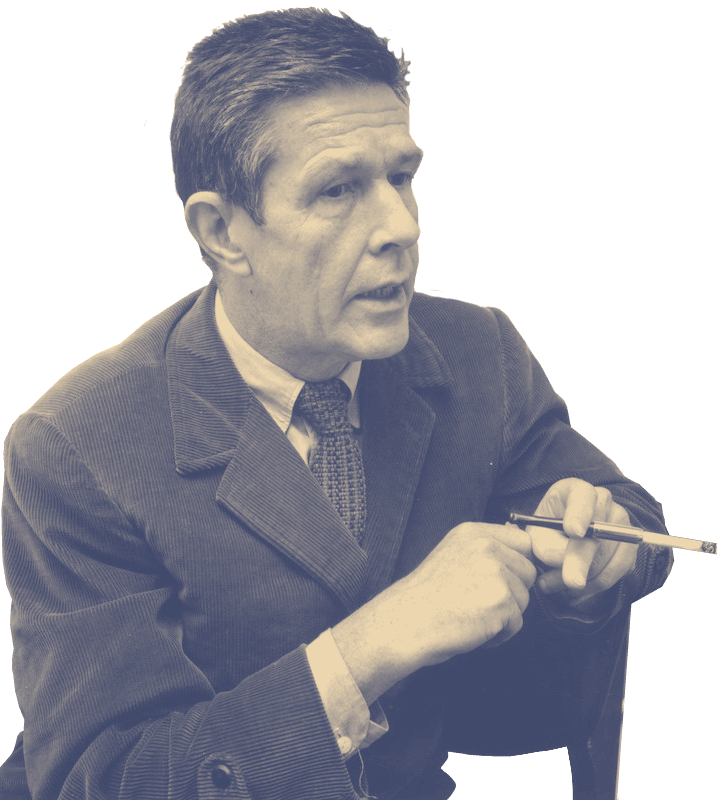
John Cage (1912 to 1992) was an American composer, writer, philosopher and printmaker, and the figure who did most to widen the idea of what music can be. Educated in California and on a study tour of Europe, he studied with Henry Cowell and Arnold Schoenberg, gave up painting for music in 1934 and in 1940 devised the prepared piano, inserting bolts and rubber between the strings so that one instrument became a percussion orchestra. From Music of Changes (1951) he composed with chance operations drawn from the I Ching, so that his own taste would no longer decide the notes, and with 4'33" (1952) he framed silence and the sounds around it as a piece.
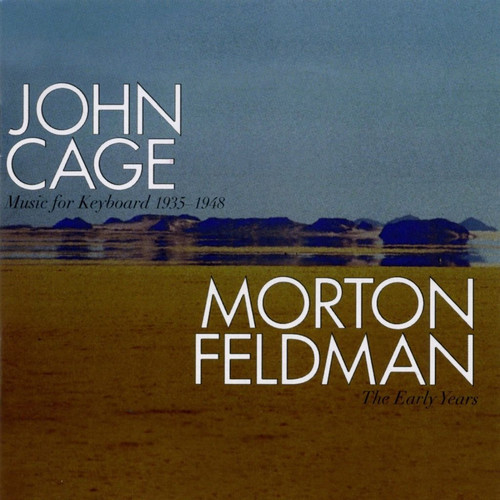
Music For Keyboard 1935-1948 / The Early Years
This double-CD set combines two of the key titles of Columbia Records's legendary "Music of Our Time" series curated by David Behrman. Jeanne Kirstein's recording of Cage's early keyboard works remains a touchstone of Cagean interpretation notwithstanding the passage of time. Christian Wolff recalls, "I remember Cage saying that Jeanne Kirstein's playing caught the spirit in which the pieces were written at the time he wrote them-a kind of simple excitement and enthusiasm (also, surely, ou…
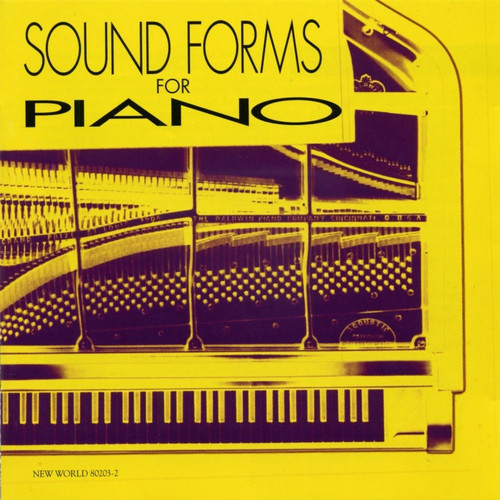
Sound Forms for Piano: Cage/ Cowell/ Johnston/ Nancarrow
“... in the past, the point of disagreement has been between dissonance and consonance, it will be, in the immediate future, between noise and so-called musical sounds.” — John Cage  The most characteristic features of American music are its eclecticism and innovation. The works presented here are perfect examples; their only common feature is that they were written for a piano altered in some way. The disc opens with the eerie, wailing cries of Henry Cowell’s (1897-1965) The Banshee. In order …
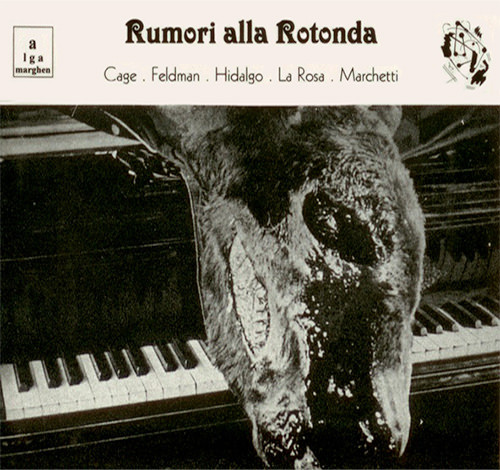
Rumori alla Rotonda
Live recording at the Rotonda del Pellegrini, Milan, January 21st, 1959 featuring John Cage, Morton Feldman, Juan Hidalgo, Leopoldo La Rosa, and Walter Marchetti. Among all the events involving John Cage during the long stay in Europe that followed his controversial appearance at Darmstadt Ferienkurse in September 1958, the concert he held in Milan on January 21st perhaps represents a less well known episode. Featuring Cage's intervention both as composer and performer of one's own work as well …
Silent Pieces - Live At Dacapo II
1995 release ** Special members-only edition for the sponsors' circle of dacapo. Music by: Anton Webern, Morton Feldman, John Cage, Hans Otte, Malcolm Goldstein, Dietrich Eichmann, Yoshikazu Iwamoto.
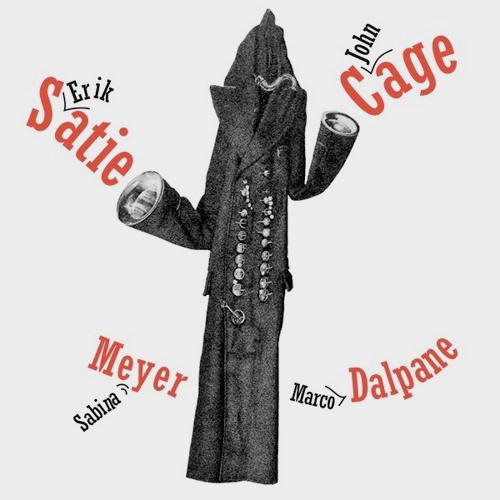
Cabaret per Nulla
This album comes from the love for Music. Contemporary music, but also Songs. From the love for History and People. From the observation of a stage before and after a concert. And from Friendship and Collaboration.Erik Satie and John Cage were two musicians of great influence and supreme coherence. In their rigorous path they choose the road to astonishment. On the road to their artistic ideal they met the “music”, when others only loosely saw it. Satie and Cage are, now historically, two compos…
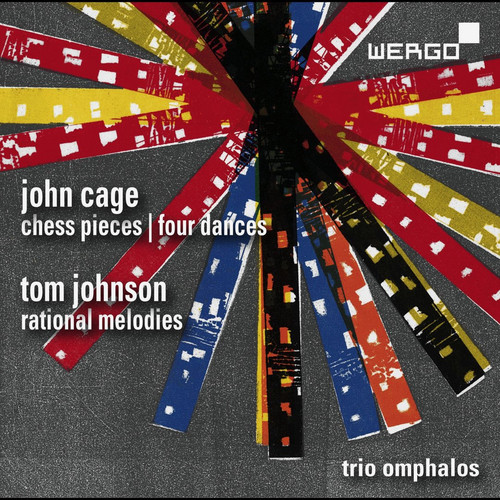
John Cage: Chess Piece / John Cage: Four Dances / Tom Johnson: Rational Melodies
Trio Omphalos (Stefan Hülsermann, clarinet; Olaf Pyras, percussion; Ji-Youn Song, piano) plays its own arrangements of John Cage's Chess Pieces and Four Dances and of thirteen of Tom Johnson's Rational Melodies, plus Johnson's Counting Duets No. II.
John Cage: Organ2/ASLSP; Toshio Hosokawa: Cloudscape; Sen IV
Organist Dominik Susteck plays John Cage's Organ²/ASLSP and Toshio Hosokawa's Cloudscape and Sen IV, with three of his own improvisations using mobile MIDI instruments by Gerhard Kern, at Kunst-Station Sankt Peter, Cologne. Deutschlandfunk, 2015.
Amiable Conversation
Piano music by Henry Cowell and John Cage (1912-1948), including The Banshee, Aeolian Harp, The Perilous Night and Dream, played by Sabine Liebner; recorded at Bayerischer Rundfunk, Munich, December 2014.
Cage After Cage
Six works by John Cage for solo percussion, among them Variations I, Child of Tree, Inlets and 27'10.554", performed by Matthias Kaul on some ninety instruments and objects; recorded at Deutschlandfunk, Cologne, April 2014.
One7 / Four6
John Cage's Number Pieces One7 and Four6 (both 1990) in their first recordings for piano, by Sabine Liebner, who plays all four layers of Four6 by overdubbing. Recorded 2012 and 2013, coproduced with Bayerischer Rundfunk.
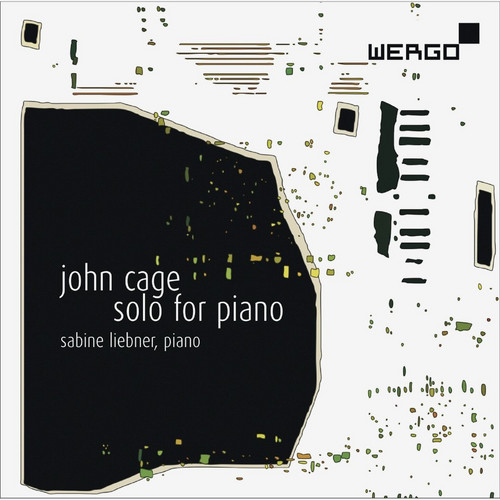
Solo for Piano
John Cage's Solo for Piano, the piano part of the Concert for Piano and Orchestra (1957/58), in a 70-minute realisation by Sabine Liebner, co-produced with Bayerischer Rundfunk.
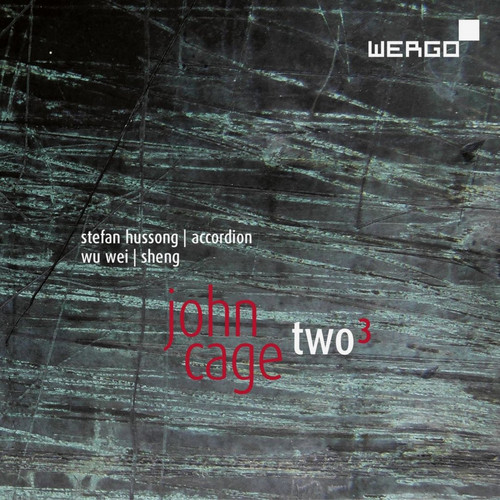
Two³
John Cage's Two3 (1991), one of his late Number Pieces for shō and five water-filled conch shells, performed by Wu Wei (sheng, conch shells) and Stefan Hussong (accordion, conch shells) over two CDs.
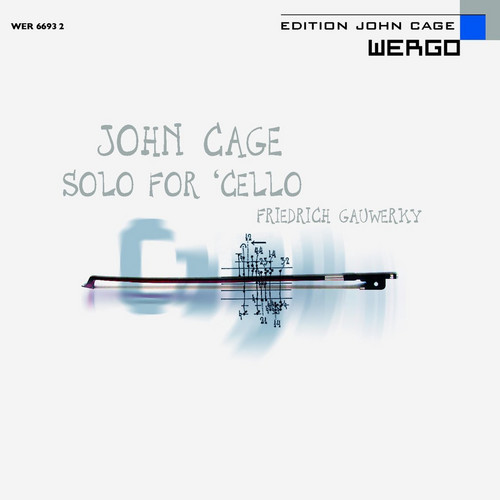
Solo for Cello ...
Works for cello by John Cage from 1953 to 1978, including Solo for Cello, 59 1/2 Seconds for a String Player, Atlas Eclipticalis for two cellos, Variations I and Etudes Boréales, played by Friedrich Gauwerky, coproduced with Bayerischer Rundfunk.
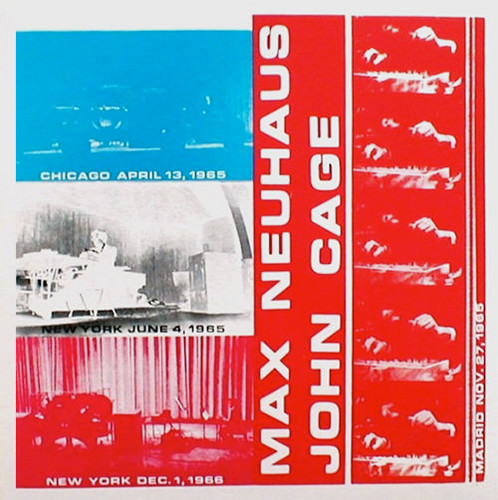
Fontana mix-feed
Rare and now long out of print LP, originally released on Mass Art, performed and realized by Max Neuhaus.  Technically, this LP consists of four realizations of John Cage’s 1958 Fontana Mix, an indeterminate graphic score originally intended to be used for a tape piece, with or without additional instruments. To say that, though, is not really to capture the unique nature of this music, or the unique nature of percussionist and electronic music pioneer Max Neuhaus’ take on Cage’s material.…
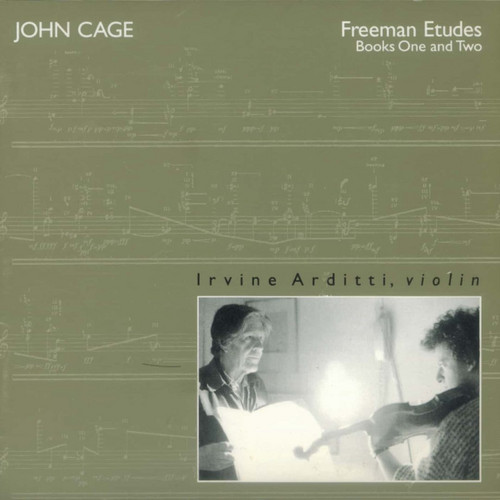
Freeman Etudes, Books One and Two
John Cage's Freeman Etudes, Books 1 and 2 (the first sixteen etudes for solo violin), played by Irvine Arditti at blistering speed under the composer's supervision.
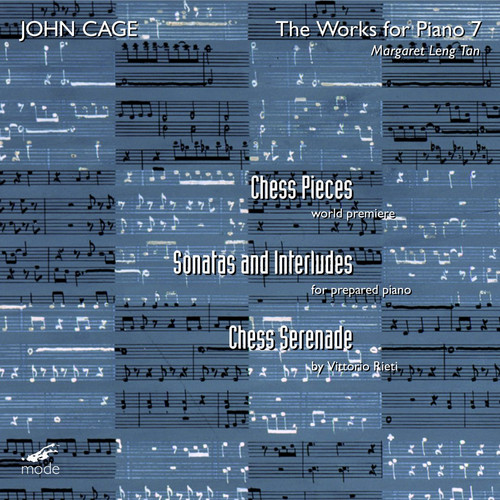
The Piano Works 7 - Chess Serenade
First recording of John Cage's Chess Pieces (1944), rediscovered in a painting and transcribed by Margaret Leng Tan, with her recording of Sonatas and Interludes and the first recording of Vittorio Rieti's Chess Serenade.
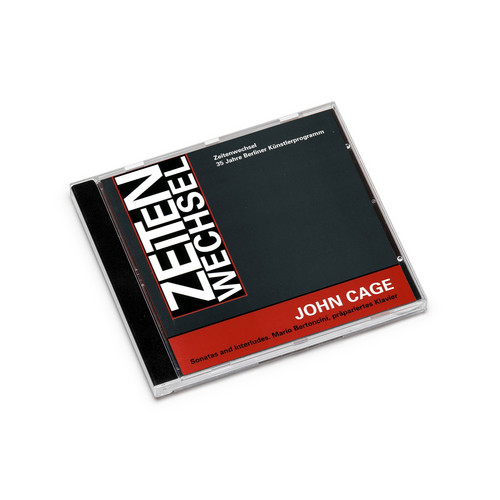
Sonatas and Interludes
This landmark recording of John Cage’s prepared piano works performed by Mario Bertoncini was recorded back in December 1991. The sonatas are divided into four groups, each divided by the less overtly structured, rhapsodic interlude pieces. Bertoncini sensitivity to the displaced sonic characteristics of the piano is remarkable and suggests a rigorous dedication to Cage’s work.
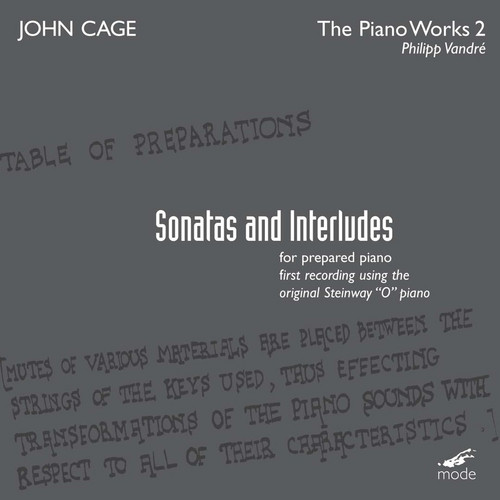
The Piano Works 2 - Sonatas And Interludes For Prepared Piano
John Cage's Sonatas and Interludes for prepared piano played by Philipp Vandré, the first recording on a Steinway “O”-type baby grand, the piano Cage composed on, with corrections to discrepancies in the printed score.
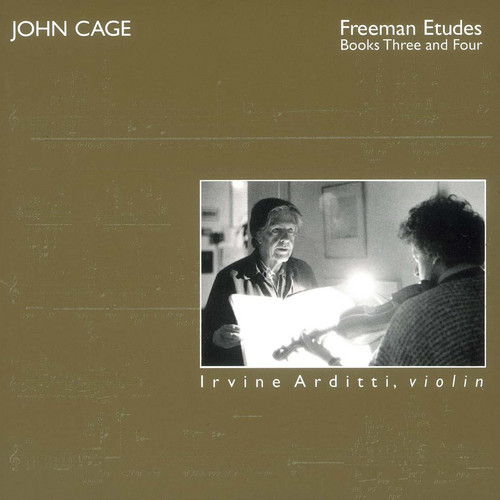
Freeman Etudes, Books Three And Four
First recording of the second half of John Cage's Freeman Etudes for violin, Books Three and Four, played by Irvine Arditti, the second release in his traversal of Cage's complete violin works for Mode. Released 1989.
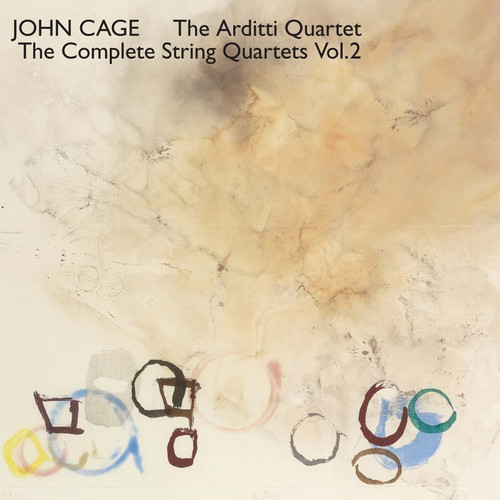
Complete string quartets, volume 2
Two string quartets by John Cage played by the Arditti Quartet: String Quartet in Four Parts (1949-50), in a new recording, and Four (1989), a first recording written for the ensemble. Composer-supervised sessions.
1 2 7 8 9 10 11 12 13