We use cookies on our website to provide you with the best experience. Most of these are essential and already present.
We do require your explicit consent to save your cart and browsing history between visits. Read about cookies we use here.
Your cart and preferences will not be saved if you leave the site.

Morton Feldman

Morton Feldman (1926 to 1987), born in New York, was a major figure of twentieth century music and, with John Cage, Christian Wolff and Earle Brown, a member of the New York School. An early experiment with graphic notation gave the performers freedom over pitch, but he soon returned to precisely notated music of extreme quietness and slowness. His work is defined by soft dynamics, floating chords and, in the last years, enormous length: the String Quartet No. 2 runs some six hours, For Philip Guston past four.
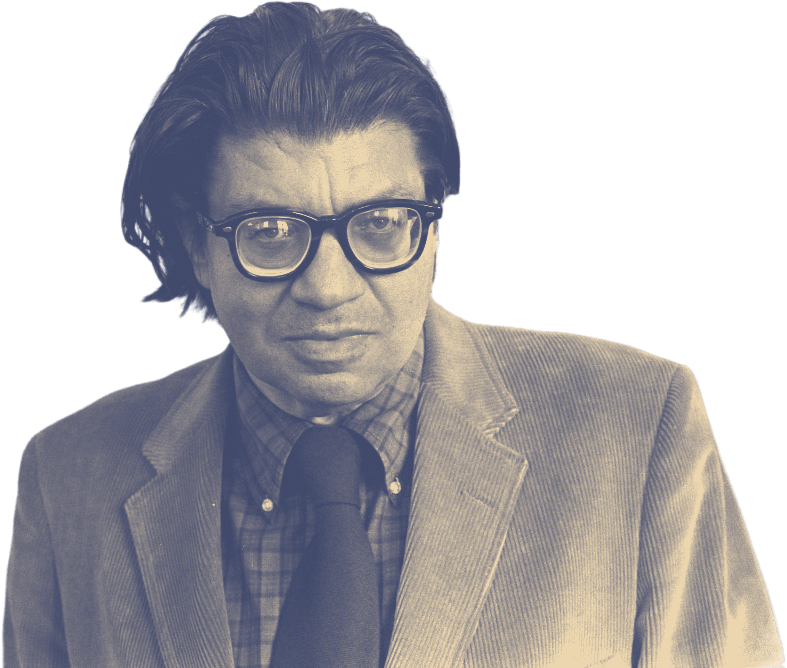
Morton Feldman (1926 to 1987), born in New York, was a major figure of twentieth century music and, with John Cage, Christian Wolff and Earle Brown, a member of the New York School. An early experiment with graphic notation gave the performers freedom over pitch, but he soon returned to precisely notated music of extreme quietness and slowness. His work is defined by soft dynamics, floating chords and, in the last years, enormous length: the String Quartet No. 2 runs some six hours, For Philip Guston past four.
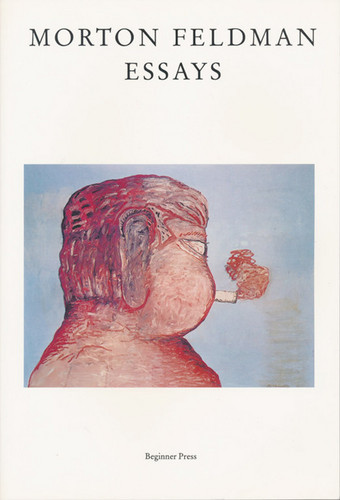
Essays
**Original 1985 edition, few copies in stock** Morton Feldman was a big, brusque Jewish guy from Woodside, Queens—the son of a manufacturer of children’s coats. He worked in the family business until he was forty-four years old, and he later became a professor of music at the State University of New York at Buffalo. He died in 1987, at the age of sixty-one. To almost everyone’s surprise but his own, he turned out to be one of the major composers of the twentieth century, a sovereign artist who o…
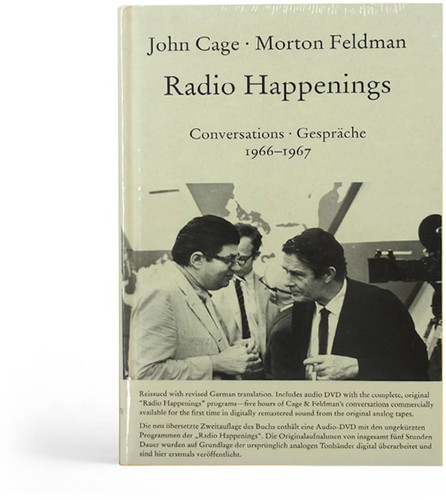
Radio Happenings
** 224-page hardcover book  with audio DVD of the complete 5-hours of audio from the radio broadcasts** In 1966-67, radio station WBAI in New York City invited composers John Cage and Morton Feldman to make 5 one-hour radio conversations. Unscripted and improvised, they were free to talk about whatever they wished. The fascinating conversations cover music, politics, sociology, current events, the arts and more.These Radio Happenings are legend to fans of these composers, as well as a unique mom…
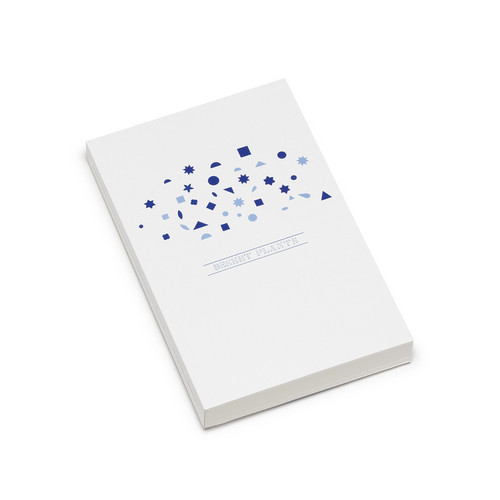
Desert Plants
Facsimile reprint of Walter Zimmermann's book Desert Plants, his interviews with American experimental composers from a 1976 trip to America
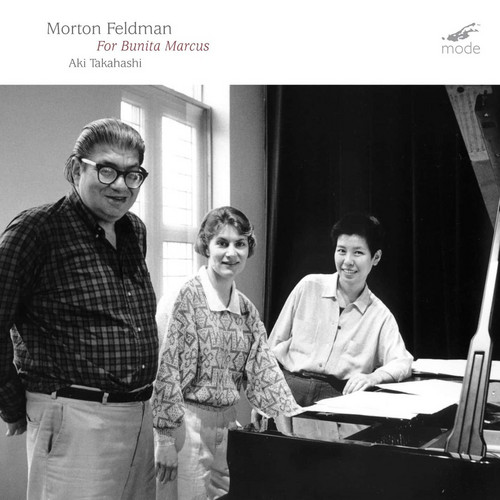
For Bunita Marcus
Morton Feldman's For Bunita Marcus (1985), an hour-long solo piano work, played by Aki Takahashi, for whom Feldman wrote all his piano music after Triadic Memories.
Morton Feldman Piano
Philip Thomas presents a major 5CD collection of virtually all of Morton Feldman's music for piano, the most extensive survey of Feldman's piano music to date. Released by Another Timbre in September 2019, exactly 20 years after John Tilbury's pioneering but long unavailable 4CD set, this box includes several pieces which weren't included there, and three works which have never been released on disc before. Feldman (1926-1987) was part of a radical group of experimenters alongside John Cage, Chr…
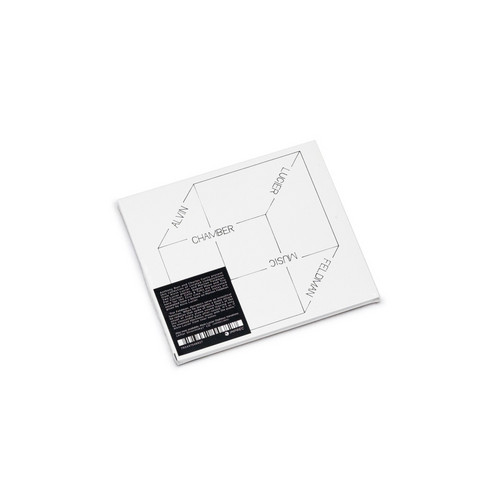
Chamber Music: Alvin Lucier & Morton Feldman
Anthony Burr and Charles Curtis present a collection of curated compositions from Alvin Lucier and Morton Feldman. Two Lucier pieces, "August Moon" and "Trio For Clarinet, Cello & Tuba" are presented here for the first time. Liner notes are excerpted from a lecture on Morton Feldman given by Alvin Lucier. A selection from Alvin Lucier's liner notes: "For Feldman, dynamics serve an acoustical function. When he mitigates a piano attack he reduces that spike of noise that's at the onset of every pi…
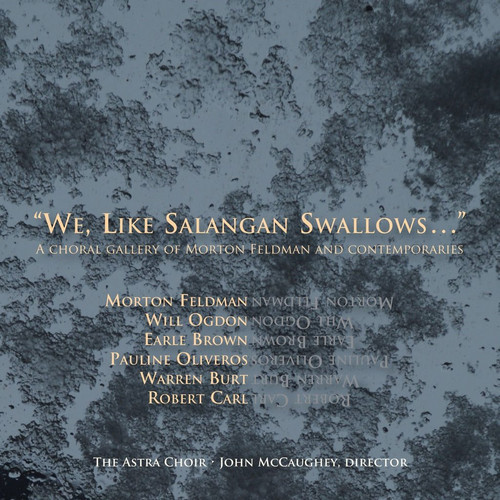
We, Like Salangan Swallows...: A Choral Gallery of Morton Feldma
The intense individuality of Morton Feldman's (1926?1987) art and its 'painterly' aspect have tended to push his rich output of works into a zone all of their own, surrounded by a moat of stillness. This recording attempts the reverse process -- to bring his choral works (the previously unrecorded Chorus and Instruments, Voices and Instruments 1, Voices and Instruments 2, and The Swallows of Salangan) into a 'gallery' of other choir compositions of his times. Through the interaction with works o…
Turfan Fragments
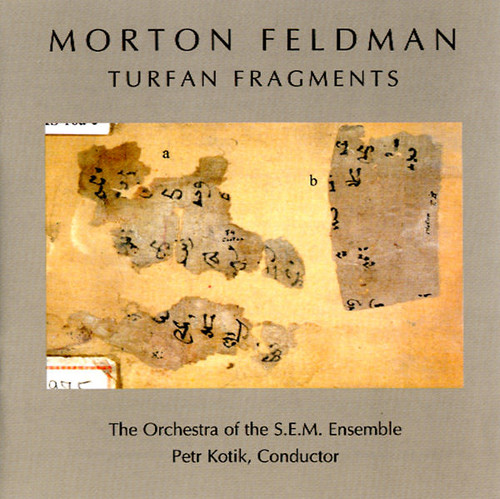
Originally released in 2001 by the Dog W/A Bone label, this release features these 2 long pieces: For Samuel Beckett and The Turfan Fragments. Performed by: The Orchestra of the S.E.M. Ensemble, with Petr Kotik, conductor. For Samuel Beckett and The Turfan Fragments are Morton Feldman's only chamber orchestra compositions. Both were commissions: The Turfan Fragments by the Swiss-Italian Radio Orchestra in 1980, For Samuel Beckett by the Schönberg Ensemble, Amsterdam, in 1987. Both titles are des…
Complete Music For Violin & Piano
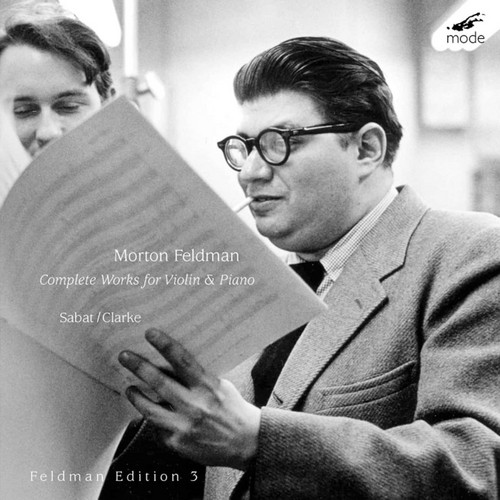
Morton Feldman's complete music for violin and piano, from Piece for Violin and Piano (1950) to For John Cage (1982), which spans both discs, played by Marc Sabat and Stephen Clarke.
String Quartet No. 1
Morton Feldman's String Quartet No. 1 in the longest recorded performance, with Structures and Three Pieces for String Quartet, played by the Flux Quartet. Two CDs plus a bonus DVD of the uninterrupted 90-minute audio.
Trio
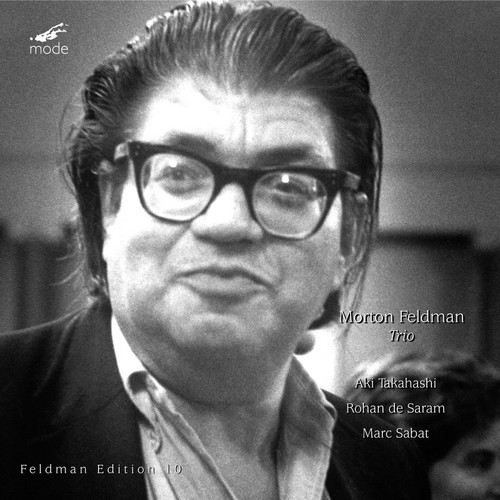
Morton Feldman's Trio for violin, cello and piano, lasting one hour, 45 minutes, in a recording with Aki Takahashi, Marc Sabat and Rohan de Saram, two of whom worked closely with the composer.
String Quartet No. 2
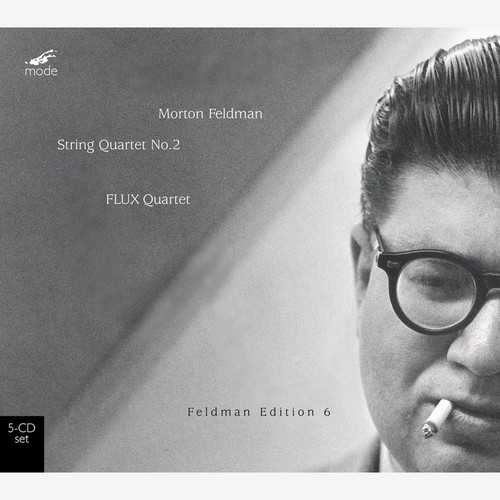
Morton Feldman's String Quartet No. 2, a work of more than six hours, played by the FLUX Quartet on a deluxe five-CD box with liner notes by Christian Wolff and FLUX founder Tom Chiu.
Piano, Violin, Viola, Cello
Piano, Violin, Viola, Cello marks the culmination of Morton Feldman’s late chamber writing, recorded at Henry Wood Hall in London in 2017 by a quartet comprised of Mark Knoop (piano), Aisha Orazbayeva (violin), Bridget Carey (viola), and Anton Lukoszevieze (cello). The composition, premiered in 1987, unspools over seventy-five minutes as an unhurried expanse - a landscape where micro-variations bring fragile changes within near-stasis, and the weight of each chord, sustain, and silence is palpab…
Music for Piano and Strings by Morton Feldman. Volume 3
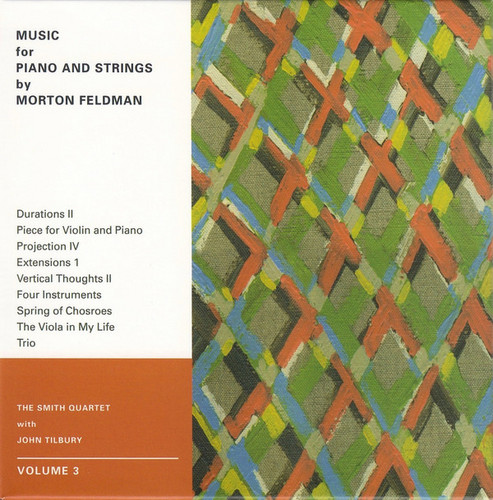
At its best Feldman's music can take our breath away, providing a revelatory experience, a transparency which has no need of argument. Thinking back to Piano and String Quartet there are moments of extraordinary beauty when, through a sudden change of register, darkness enshrouds the music; elsewhere the string sound enshrouds the piano arpeggios. Morton Feldman seems to occupy a metaphysical space and encroaches on the domain of spirituality normally associated with religion. Thus art w…
For Samuel Beckett
1999 release - For fifty-five minutes the great American composer Morton Feldman weaves his tapestry of sounds, a pattern always the same and yet never the same, an iridescent, thick fabric, full of details, although these never distract the listener's attention. Feldman met Beckett only once in his life (though Beckett later sent him a postcard on which the composer discovered the text for his opera Neither). He created music of a beguiling tonality and beauty, inspired more by painting and lit…
Clarinet and String Quartet
Saltern returns with a gorgeous new recording of Morton Feldman's Clarinet and String Quartet (1983) performed by Anthony Burr (clarinet), Graeme Jennings (violin), Gascia Ouzounian (violin), Che-Yen Chen (viola) and Charles Curtis (cello). This performance highlights Feldman's interest in notation by treating the slight differences in intonation and rhythm literally and specifically. Recorded by Tom Erbe in the living room of a friend of the musicians. Edition of 400. Housed in jackets print…
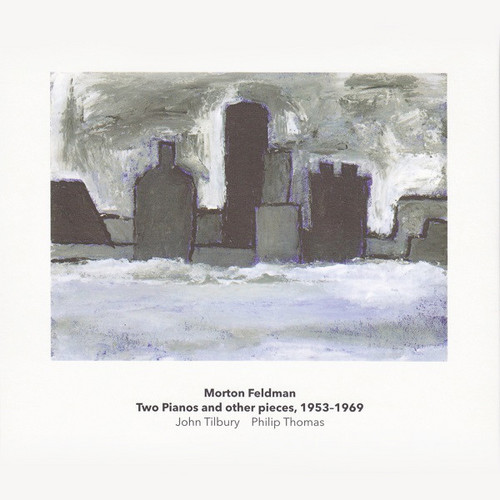
Two pianos and other pieces, 1953-1969
Two Pianos and Other Pieces 1953-1969 collects the most experimental and beautiful works for multiple pianos from Morton Feldman’s formative years, exhuming scores rarely captured before - including “Two Pianos,” “Piece for Four Pianos,” “Piano Four Hands,” “Piano Three Hands,” and “Two Pieces for Three Pianos.” Led by pianists John Tilbury and Philip Thomas, the ensemble expands with strings, brass, and percussion, depending on the piece. This collection shines during passages of radical quietn…
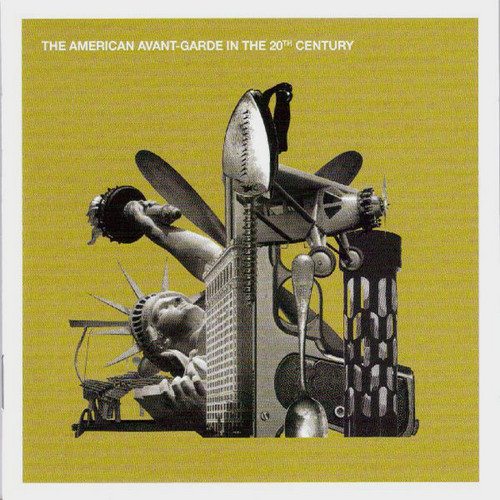
The American Avant-Garde in the 20th Century
Following on from our popular primer A Young Person's Guide to the Avant-Garde, LTM now offers a more comprehensive overview of American avant-garde music in the 20th century.Commencing with early pioneers Charles Ives and George Antheil (including the celebrated, Futuristic Ballet Mechanique of 1924), this chronological double disc collection also includes pieces by émigré arrivals in the New World such as Leo Ornstein, Dane Rudhyar and Edgard Varèse, as well homegrown composers including Henry…
Violin & Orchestra
Carolin Widmann’s widely acclaimed ECM recordings have traversed a broad arc of music – from Schubert to Xenakis. Here she turns her attention to one of the pivotal compositions of Morton Feldman. Violin and Orchestra, composed in 1979, marked a new direction, with an almost painterly attention to detail in slowly unfolding music. It is not a concerto in the strict sense of the term, not soloist with orchestral support. The violinist must move inside the glowing colour-field of sound. In t…
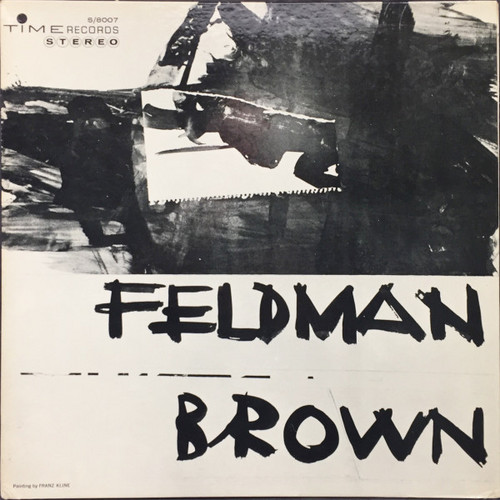
Morton Feldman / Earle Brown
Finally back in print. This rare Morton Feldman /Earle Brown split LP was originally released in 1962 on the small NY-based Time Records and features Feldman's 'Durations I-IV' on side A and Brown's 'Hodograph I,' 'Music for Violin, Cello and Piano' and 'Music for Cello and Piano' on side B. David Tudor is featured on piano throughout. Feldman and Brown, who were both interested in non-traditional systems of notation and improvisation, were very closely aligned with the New York School, a group …
1 2 3 4 5