Back in stock
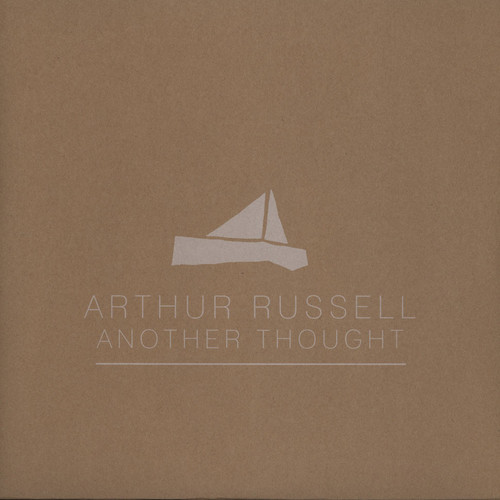
Another Thought
Reissue of Arthur Russell's seminal classic, heart-breakingly beautiful, stripped to the bare essentials of Arthur's voice and cello dappled with effects and backed with his own drum machine. The tracks date from between 1982 to around 1990, catalogued from over 800 tape reels by Mikel Rouse for Point Music, and produced by Don Christensen. While it is a collection of tracks in various stages of completion, often sparse and direct, it is perhaps the most sonically coherent album ever released of…
Sold Out

Ben É Samba Bom
A stunner of a record from the mighty Jorge Ben – and a record that catapulted the Brazilian singer to international fame at the time! This is his second legendary LP, a seminal killer and as usual features some of the best arrangers in the genre, first released in Brazil in 1964. While many of the performers during the heyday of Tropicalia and the rise of MPB (música popular brasileira) opted for a more radical stance in their challenge to Brazil’s political and cultural authorities, artists li…

Monkey Banana Kitchen
Staubgold proudly presents the legendary first album from 1980 by UK underground heroes Family Fodder, for the first time reissued on CD. The CD version comes as a lovingly-assembled compilation (total running time: 79:52 minutes). It features the complete Monkey Banana Kitchen LP, the 12" EP Schizophrenia Party (1981) and the 7" singles Film Music (1981) and The Big Dig (1982), all originally released on Fresh Records. Guest musicians include This Heat's Charles Bullen on drums, guitar, vocals,…
Sold Out
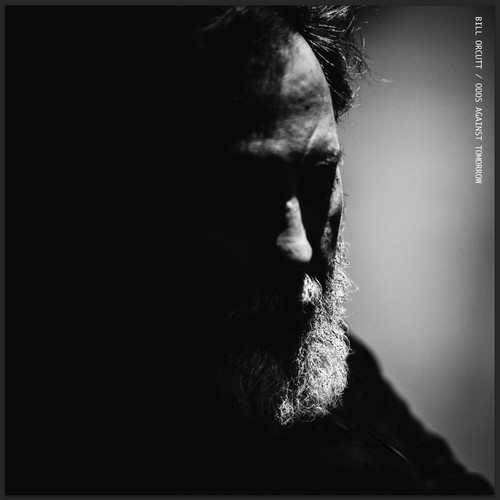
Odds Against Tomorrow
After two albums and over half a decade spent toiling in the margins of the American Songbook, Bill Orcutt returns to original composition and the blues with his latest full-lenght, Odds Against Tomorrow. Taking its title from Robert Wise's 1959 film noir, Odds Against Tomorrow retrofits familiar folk / blues forms to the unique sound of Orcutt's guitar and the result crackles with a freshness and authority that nostalgic retreads cannot deliver. Odds Against Tomorrow is more than an expansion o…

Configurations
Shasta Cults' Important Records debut is not to be missed. A self-titled Shasta Cults will be available later this year, also on Important Records. A ship sinks beneath the silver mirror of the sea-top, temple gongs ring through an empty valley, industrial machinery sputters, heaves, lurches forward, stops, falls apart... These sound events may be the most acute musical referents of Shasta Cults, the music project of Canadian synthesizer technician Richard Smith. Using obsolete electronics, Shas…
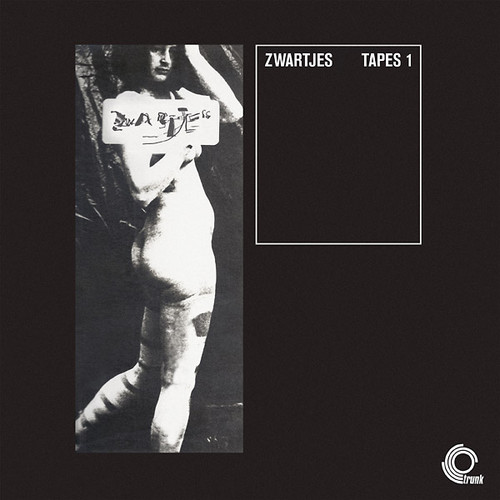
Tapes 1
Tapes 1 represents the first ever sound recordings to be released from the archive of cult Dutch film director Frans Zwartjes. The sound is unlike anything you may have heard -- dream-like, disjointed, disturbing, peculiar, sexy, unexpected, and totally unique. Frans Zwartjes is famous for his art-house films. A Dutch underground auteur, his prolific output dates from 1968. A unique talent, Zwartjes produced, directed, and edited his own films, but more importantly he created and improvised the …
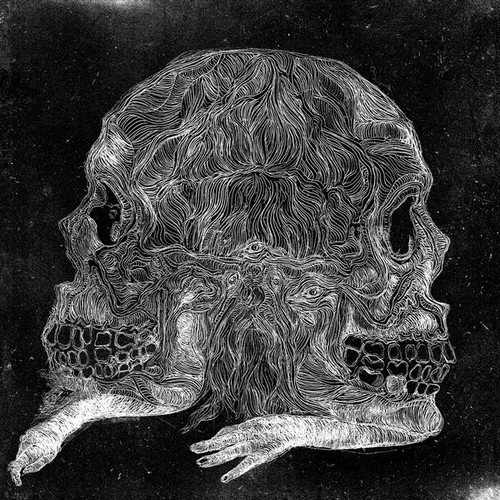
Regression
Wolf Eyes’ Nate Young’s Regression series has provided some of the most compelling dread-electronics spewed out by the North American underground in years, with instalments released on Demdike Stare’s DDS label and Aaron Dilloway's Hanson, as well as NNA Tapes and others. It all began back in 2009 with the first volume issued by Joachim Nordwall’s Ideal label, an incredible set that’s now being released on vinyl for the first time ever, just in time for Wolf Eyes newly minted (Warp sponsored) Lo…
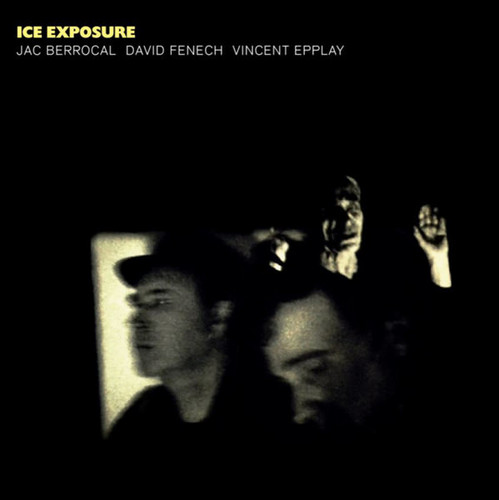
Ice Exposure
Jac Berrocal, David Fenech, and Vincent Epplay return with Ice Exposure, their second album for Blackest Ever Black. A sequel and companion piece of sorts to 2015's Antigravity, its title couldn't be more apt: sonically it is both colder, and more exposed -- in the sense of rawer, more volatile, more vulnerable -- than its predecessor, capturing the combustible energy and barely suppressed violence of the trio's celebrated live performances with aspects of noir jazz, musique concrète, no wave ar…
Sold Out
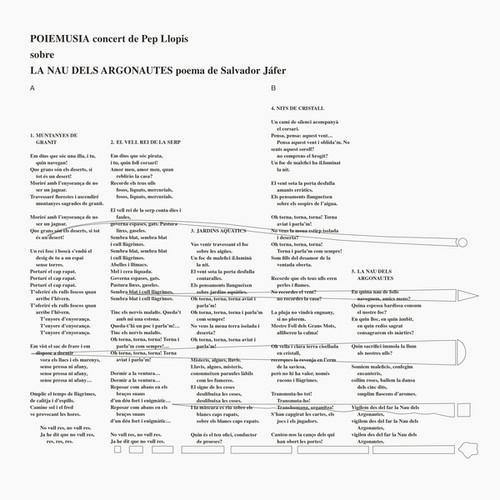
Poiemusia La Nau Dels Argonautes
Over the past decade or so, there has been a strange, idiosyncratic bubbling from New York - sonic adventures emerging under the banner of Rvng. The imprint was founded quietly during the mid 2000’s, gathering ever increasing note and renown, while never allowing themselves to be easily defined. Genre and association mean little, in the face of the guiding light of discovery, integrity, and surprise. A short while back, we caught wind of a new sub-label, emerging under the banner of RVNG - Fre…

FRKYS Vol. 7
The full-length player of FRKWYS Vol. 7 features pieces improvised in various forms by David Borden, James Ferraro, Samuel Godin, Laurel Halo, and Daniel Lopatin. When Lopatin (Oneohtrix Point Never, Ford & Lopatin) and RVNG Intl. began discussing this FRKWYS collaboration, Borden's work in Mother Mallard's Portable Masterpiece Co. and his seminal Music For Amplified Keyboard Instruments album were mutually / ecstatically acknowledged. While rooted in academia, Borden's minimalist compositions d…
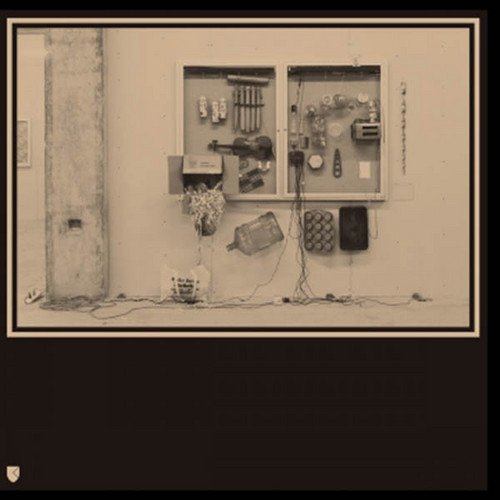
Fits & Starts
For the tenth volume of FRKWYS, composer, percussionist and sound designer David Van Tieghem alongside ten younger artists from across the avant spectrum become a bulletin of Fits & Starts. In July of 2012, RVNG Intl. was invited to participate in Bulletin Boards, a group exhibition at Venus Over Manhattan curated by White Columns’ gallery director Matthew Higgs. An extension of an ongoing project which resides in the entrance of White Columns’ downtown New York gallery, Bulletin Boards featured…
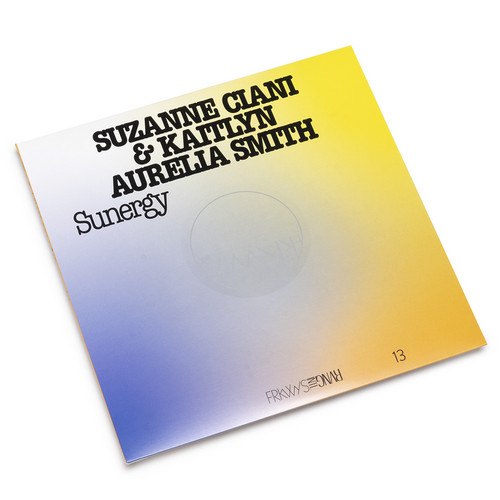
FRKWYS Vol. 13: Sunergy
Sunergy brings together synthesists Kaitlyn Aurelia Smith and Suzanne Ciani for the thirteenth installment of FRKWYS, RVNG Intl.’s intergenerational collaboration series. For this edition, a panorama of the Pacific Coast provides the place and head space for a musical appreciation and consideration of a life-giving form vast and volatile with change.Fortuitously (as is the freaky way), Smith and Ciani were discovered to be neighbors in the small coastal community of Bolinas, California. The two …
Sold Out
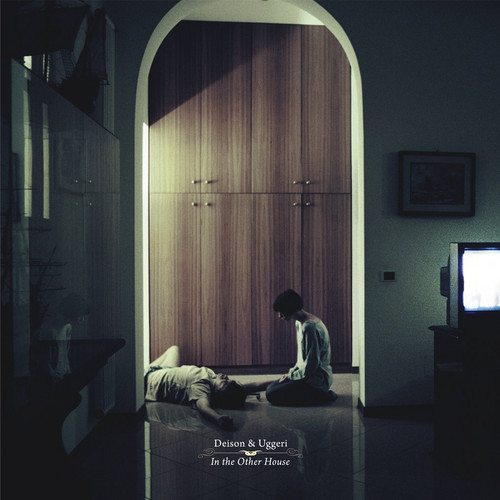
In the Other House
In the Other House is the product of a collaboration that began two years ago between Cristiano Deison and Matteo Uggeri, two wildly prolific noise artists who have been active since the 90’s. The album is intended to be a auditory portrait of an imaginary house and the presences within it, room by room. This strangely beautiful work is easily one of my favorite dark-ambient themed releases of the year. What is truly remarkable is that the pair never actually physically met in the process of re…

Zwölf
12 short live solo guitar, like a portrait of the Austrian musician at a time of his course, oscillating between minimalism, American primitive, improvisation or noise. Guitar’s lover will be pleased.Some tracks with field recordings from Steve Bates.Mastered by Martin Siewert.

Kaeef Ruzadun presents The Creative Arts Ensemble
First time on vinyl, unrelease before recordings taken from thei legendary 'New Horizons' Album released in 1983 Creative Arts Ensemble was the only large ensemble group that emerged directly from Horace Tapscott’s legendary Pan Afrikan Peoples Arkestra and community jazz group. Their debut, aptly named One Step Out, is a true gem of the Los Angeles jazz underground, and a crucial document of pianist and composer Kaeef Ruzadun Ali’s first recording as leader.A Los Angeles native, Kaeef was intro…
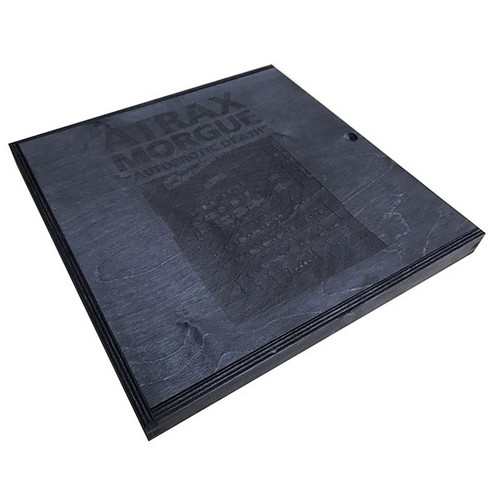
Autoerotic Death
**99 copies** This version comes in astonishing black wooden box in LP size with laser engraving plus tape with remix of Autoerotic Death by Mark Solotroff, Atrax Morgue LP and insert with numbered certificate.Marco Corbelli’s artistic journey began in the early 90’s. Under the pseudonym of Marco Rotula, he started to release a series of fanzines in A5 format. The first was The Pleasure Agony, followed by Sick and Murders. The aesthetics of these first fanzines were very sophisticated and the c…
Sold Out
Hibernation
The Oval Language is an autonomous art project founded in 1987 in Leipzig, East Germany, by Klaus-Peter John and Frank Berendt, and continued to this day by John. Its fields of activity are multifaceted and have included sound-noise performances, conceptual works in open spaces, installations, land art projects, photography, etc. The Oval Language has collaborated extensively with various artists, among others Nicolai Angelov, Koyo Axel Guhlmann, and Guido Hübner of Das Synthetische Mischgewebe.…
Rough & Wojtyla featuring Richard Pinhas
Rough & Wojtyla Featuring Richard Pinhas is Rough & Wojtyla's second album. Richard Pinhas, the founder of '70s legends Heldon is one of France's best known experimental musicians and is a key figure in the fusion of rock with electronic music. Guitar drones are supported by either tribal or jazzy sounding drums and collide with various key instruments and found sound. The influence of musique concrète which prevails on the duo's first LP, can also be felt as the sounds and moods shift abruptly.…
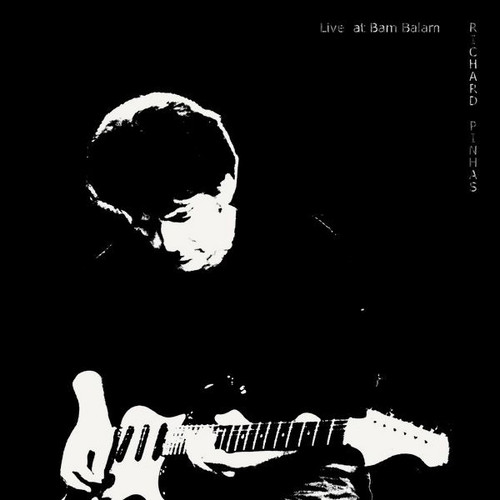
Live at Bam Balam
Richard Pinhas, the founder of '70s legends Heldon, is one of France's best-known experimental musicians and is a key figure in development of rock music fusing with electronic music. Live at Bam Balam is solo guitar and processing as well as drone electronics with the use of a Metatronic Delay system: no re-recording. This brilliant collection of solo improvisations was recorded in Bordeaux (France) on April 16th, 2016 and April 21st, 2018. Limited edition vinyl-only release for the French Reco…
Vanity Tapes
**300 copies** The Vanity Records box sets present a comprehensive anthology of releases by legendary Japanese DIY label Vanity, active in the late 70s and early 80s. It was conceived by Studio Warp, in collaboration with Agi Yuzuru and the whole roster of artists involved with Vanity. Eight years in the making, the limited edition project is finally seeing the light of day on October 21st 2019, with distribution duties handled by Kyou Records in Japan and WRWTFWW Records in the rest of the worl…