Back in stock
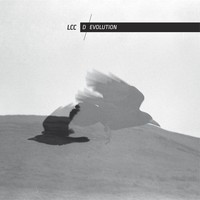
D/evolution
LCC (previously known as LasCasiCasiotone) is Ana Quiroga and Uge Pañeda, who hail from the Asturias region of northern Spain, and are now based in Gijon. After a couple of digital-only releases, Editions Mego is now set to release their first physical full length entitled D/evolution. Encapsulating the paradox between man and earth, it reflects on the paradigm that is Evolution, and examines the extent to which our development and technological advancement, which is inevitably bound to t…
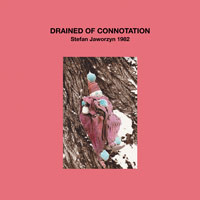
Drained of connotation
Drained Of Connotation is a collection of synth improvisations recorded by Stefan Jaworzyn in 1982, recently rediscovered by the artist when trawling his cassette archive for the 2013 Skullflower KINO reissue/compilation series. Writer, musician and misanthrope Jaworzyn was a notorious and energetic presence in the UK underground of the 1980s and '90s. Following a brief stint in Whitehouse, in '86 he formed Skullflower with Matthew Bower and remained the band’s guitarist for four years, playing …
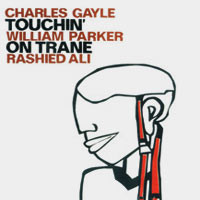
Touchin' On Trane
"This is Charles Gayle's most accessible work. Gayle's mastery of free jazz is blended with a more traditional compositional style of jazz on this disc. Touchin' on Trane is composed of five original songs, and even includes ex-Coltrane drummer Rashied Ali. As the title insists, Coltrane is the influence for the music on this disc. The influence ranges from the upbeat tempo of "Giant Steps" in "Part A," while "Part D" is reminiscent of Coltrane's "Live in Japan" performances. Gayle, bassi…
Ett
Klara Lewis' debut release presents an electronically-charged reconstruction of organic sound matter. Ten tracks featuring a wide variety of sonic material which is subjected to Lewis' unique approach to the sonic landscape. Field recordings, small sounds, samples, ambient pot holes, repetition, and giddy disorientation are all tactics deployed by Lewis. On entering these works we take a voyage through a series of audacious audio adventures, playful musical miniatures and choppy sonic sea…
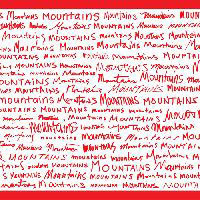
Mountains Mountains Mountains
Mountains re-release this excellent slab of organic electroacoustic drone on Thrill Jockey. Following on from his exceptional Type long-player, Field Rituals, Koen Holtkamp regroups with cohort Brendon Anderegg for a long-awaited new Mountains release. Previously encountered on the duo's own Brooklyn-based Apestaartje label, the Mountains sound proved to be one of the most organic and natural examples of how acoustic instrumentation and digital electronics might be merged together. Plugging guit…
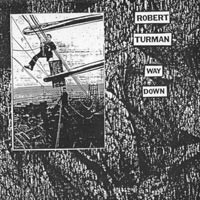
Way Down
Robert Turman‘s industrial genre-bending masterpiece album “Way Down†finally has been reissued! "Turman’s contribution to the industrial and synth wave underground in the late 1970s and 80s was unique and substantial. He first rose to prominence as part of NON, collaborating with Boyd Rice on the classic 1977 single ‘Mode of Infection’/'Knife Ladder’, before leaving to pursue his own more expansive solo vision. Turman released a number of cassettes ov…
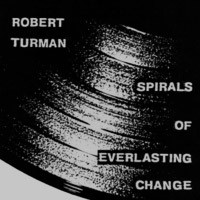
Spirals of Everlasting Change
Two copies back in stock....MASTERPIECE!!!!!!!!!! This album is sure to blow you away. "Spirals was originally conceived in 1982 as two separate cassettes, each consisting of a series of seemingly random, yet carefully selected loops, usually one to three minutes long. The two cassettes were played simultaneously on small portable cassette machines, started randomly, so the interweaving of rhythms was different every time. Several years later, the two tapes were committed to a single mix,…
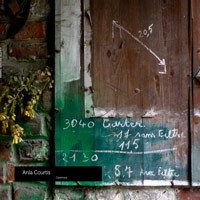
Cassetopia
Anla Courtis was born in 1972 in Buenos Aires, Argentina. He was a founding member of Reynols. With an impressive release catalog and tour history, he has collaborated among others Pauline Oliveros, Lee Ranaldo, Jim O'Rourke, Eddie Prevost, Otomo Yoshihide, Phill Niblock, Makoto Kawabata, Mats Gustafsson, Toshimaru Nakamura, Gert-Jan Prins, Rudolf Eb.Er, Tetuzi Akiyama and Okkyung Lee. Through extended techniques, prepared sound, tape manipulations, processing of field recordings, live electroni…

Venus in Cancer
The 1969 guitar classic, remastered from the original tapes in gatefold sleeve. "Robbie Basho released Venus in Cancer in 1969 on the Blue Thumb label. After five albums for the Takoma label in the '60s, Basho had cemented his reputation alongside John Fahey and Leo Kottke as one of the most brilliant guitarists of his generation. His wide range of musical influences from around the globe set him apart from other blues-based players, incorporating Arabic, Himalayan and Indian themes; Japan…
Space Homestead
Apart from the fact that “MV & EE” is slang for zero gravity and that they’ve been doing it consistently “better” with good vibes/jams they still WANT to give you more of the best of them. This is their “space homestead” and for good reason this wall of sound applied thru DIY sensibilities was recorded over the course of a year in 9 different studios, presenting as clearly as circumstances can permit, a living idea right here in the now of what it is all about. These are sonics in motion,…

Back porch hillbilly blues vol. 2
LP version. Avant-hillbilly master fiddler Henry Flynt scuffles through a most peculiar set of electrified and acoustic bumpkin fiddle howls and screeches circa early to mid 1960s. From the enviable opening 'echo rock', in which Flynt does his best to compete with the electro-echo buzz of a Jorgen Ingmann or Link Wray to the beauteous instrumental glow of the extended modal country jam of 'Jamboree', Flynt proves once again that his is not a music simply rooted in the taut belt of New York isms,…
Assemblage Blues
As Dan Melchior continues to kick the Medway gutbucket to the curb, he is also willfully absorbing all manner’ve underground cankerous crud along the way. For those endeared to wallet chains and crisp, cuffed jeans, this has been tantamount to heresy. But for thems what’s embraced the sounds of “the new Dan,” said aberrations are as welcome to caustic ears as a cold beer is to a set’ve parched lips. And while last year’s Visionary Pangs LP (released with Das Menace on the S-S label) was a grower…

Physical Changes
CD+DVD+LP. Mueller's mammoth new solo percussion work. If his previous solo effort "Metals" was about pummeling rhythms & frequencies, this drives the whole idea into oblivion, as the sounds here are something to be felt as much as heard.
Far Side Virtual
RESTOCKED, last copies around - The Wire's Releases of the Year!!!!!!James Ferraro paints a 21st century still life on his debut album for Hippos In Tanks. The record is called Far Side Virtual. Each song, a melodious reflection of the moment now, comes shrink-wrapped in HD fidelity as glossy as a 2012 Toyota Prius. Ferraro's muse is some enigmatic modern metropolis, where the streets are as slick as i-Pads, and where the symphonies ring with Macbook message alerts. Through the steam risi…

Live At The Waterworks Berlin
Founder of the Steel Cello Ensemble (1970s) featuring various players over the years. The music was produced on steel instruments like the Bow Chime or the Steel Cello that were built by Rutman himself. Among the musicians he collaborated with were Rudi Moser (drummer of Die Haut and Einstürzende Neubauten), Matthias Bauer and Carsten Tiedemann. This is a recording of a concert by Robert Rutman and his steel cello's recorded at a Berlin Art Gallery. If you are unfamiliar with the Steel Cello Ens…

Forma
Sold out at source FORMA (Mark Dwinell, Sophie Lam, & George Bennett) emerged on the NYC minimal synth scene in 2010 with a singular vision of cosmic Krautrock for a new age. On their eponymous debut LP, the Brooklyn-based electronics trio merges the melodic flow and primitive rhythms of their motorik predecessors with the hypnotic drones of Minimalism, creating an intricate work both addicting and rewarding with repeat listens. Like many of the LP's eleven tracks, the churning and relentl…
Antarctica
RESTOCKED, very last copies...Awesome new arrival, two side-long excursions into monolithic drone-rock in Tony Conrad + Faust vein. David Maranha’s recordings stretch back over 20 years with the Portuguese avant trio Osso Exótico, as well as collaborations with Z’ev and Minit. A followup to Marches Of The New World (2007), Antarctica is made up of two side-long excursions into monolithic drone-rock. In the vein of Tony Conrad & Faust, “Venus In Furs,” La Monte Young and Terry Riley, Maranh…
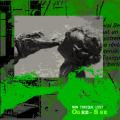
Ogre-Sse
a great album pulled out of the stream of time (1983-1985). They have never been on record or on air (nevertheless, some have been released on international cassette-compilations in the '80s). Back then they called it "primal industrial-punk".
Alphabet Of Movements
With the music of Milwaukee-native Jon Mueller, patience is the key. His radical snare workouts are meditative master-classes in drumming, but require a distinct offering of time and attention to truly enjoy the dense clouds of sound his music creates. After crafting 2010's critically-acclaimed The Whole, Mueller decided to put together a live set that, while not reflecting the over-dubbed nature of the album itself, reflected the philosophy held within. The result was "I Almost Expect To…

Back porch hillbilly blues vol. 1
LP version. A remarkable collection of hillbilly minimalism, by one of the forgotten heroes. These are blocks of generic material subtly changed by reiteration and lack of development. Like Beefheart, Henry Flynt is one of the rare examples of musicians who fearlessly experimented with the blues and folk forms in the face of all contemporary and experimental music orthodoxies. An important recording and a great listen.