
Grumpy Pieces
On Grumpy Pieces, Harmonious Thelonious condenses his long-evolving language of interlocking melodies, polyrhythms and minimalist electronics into a rougher, nervier form, where grooves bristle with tension and noise becomes a structural force.

Situation Modulaire
Local Distorsion is a French duo formed in 2012 consisting of Cyril (vocals, lyrics, synthesizer) and Caroline (vocals, lyrics). Explicitly described as an "illusory collective concept," the project draws on surrealist and nihilist literature, metaphysics, and the aesthetics of the 1980s DIY scene as filtered through a contemporary sensibility. Rather than claiming a fixed identity, Local Distorsion operates across different group names and tonal approaches to move freely between coldwave, minim…
Pointless
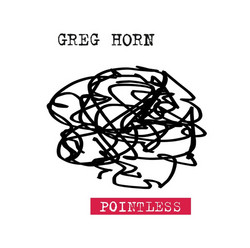
Greg Horn started out in West Lafayette, Indiana as guitarist and vocalist of Dow Jones and the Industrials, a punk and new wave band with a wiry, keyboard-inflected sound that earned them a split LP with the Gizmos in 1980 before the group dissolved in 1981. Horn relocated to Phoenix, Arizona, where he found work at the PBS station KAET and met synthesist Galen Herod. Together they formed Tone Set, the minimal synth-pop duo that released Cal's Ranch and Calibrate and earned rare praise from Mar…

Park Holme Recordings 1983-89
On Synth Pop Art, The Toy Shop turn Paul Klein’s one‑man Leeds project into a sharp, neon‑lit partnership with Philip Walsh, distilling early‑80s UK minimal synth, big‑chorus ambition and nearly‑was pop history into a tight set of lost singles.
Recordings 1979-1983
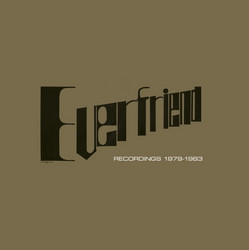
Everfriend was the project of New Jersey-based keyboardist Bill Rhodes (real surname Rupprecht), operating with drummer Mike Jacoby and bassist Paul Kozub, all previously connected through a band called the All Night Flyers. Rhodes self-released Everfriend's recordings between 1980 and 1983 on his own Jazzical Records label in very limited vinyl editions: Tropicsphere (1980), Sphere of Influence (1981), and Shoot to Kill (1983), the latter first released as a tape. The project sits in an unusual…

We Are Young And Stupid
On 29th April 1982, the final year degree show at the Royal College of Art in London gave birth to a project that had no clear precedent. The Death and Beauty Foundation, initiated that day by Val Denham alongside Mike Wells, Nick Coombe, Stuart Jane, Elita Denham, and Antal Nemeth, began as a performance/action group with experimental sound. The first recordings — the "Darlington Tapes" — were made by Denham and Andrew McKenzie of The Hafler Trio in 1982, establishing a connection to the wider …
Applied Synthesis
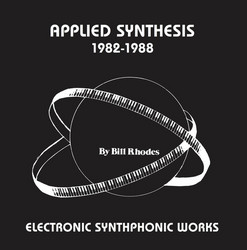
Bill Rhodes was a Florida-based synthesist and composer who spent the 1980s building an idiosyncratic body of work across a series of self-released cassettes and limited vinyl pressings, entirely outside the commercial music industry and largely unknown beyond the tape-trading network he plugged into through South Florida connections and fanzine advertisements. His music was described by Boomkat as spanning "lounge jazz flair to doomy John Carpenter feels," evoking a library's worth of themes an…

Thealonian Music
Ash Wednesday is an Australian musician from Adelaide who arrived at the late 1970s Melbourne post-punk scene via the proto-punk group JAB, whose tracks appeared on the Suicide Records compilation Lethal Weapons, and then via The Models, a band he co-founded with Sean Kelly that would later become a chart-topping pop group while Wednesday himself moved in a very different direction. His experimental work from the early 1980s unfolded across several parallel projects: solo electronic pieces; Mode…

Recordings 1979-83
Malcolm Brown is a Scottish electronics and minimal synth artist who has been active since the late 1970s, working from council flats in West Lothian with whatever equipment he could assemble: a Casio VL Tone, electric guitar, bass, piano, a Shinei Fuzzbox, a Dual Octave Box, a WEM Copycat echo unit, a Dr. Rhythm drum machine, electronic percussion pads, an Akai GX 4000D reel-to-reel recorder, and a Hitachi stereo tape deck. His early collaborations with Robert Lawrence of Quick Stab Products in…

The Blackwing Sessions | Demos 1982 / 83
On The Blackwing Sessions, Demos 1982/83, Robert Marlow opens the vault on his pre‑Peter Pan Effect sketches, capturing Basildon synth‑pop at source: raw Vince Clarke sequences, Eric Radcliffe grit, and songs caught mid‑mutation between bedroom dream and major‑label mirage.
Fluorochrome
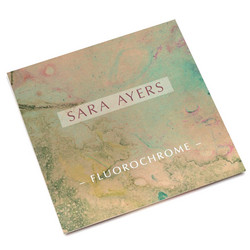
On Fluorochrome, Sara Ayers turns a tiny kitchen studio into a prism for synth‑pop, ambient and art‑song, layering her own voice and machines into intimate electronic miniatures that feel both handmade and quietly otherworldly.
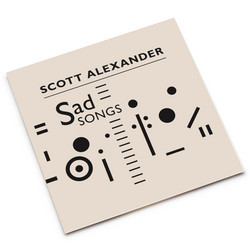
Sad Songs
On Sad Songs, Scott Alexander steps away from American Music Club into a one‑man synth lab, fusing Eno‑tinged ambience, noir synth‑pop and fuzzed‑out psychedelia into a solitary, homespun detour that never repeats itself.
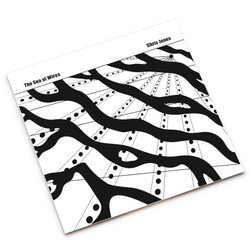
Recordings 1980-82
On Recordings 1980–82, Sea of Wires condense Coventry bedroom kosmische into slow‑burn circuits: Chris Jones and Tony “T” Murphy channel Hawkwind and German electronics into looping, improvised voyages that feel handmade yet eerily vast.

Synth Pop Art
On Synth Pop Art, The Toy Shop turn Paul Klein’s one‑man Leeds project into a sharp, neon‑lit partnership with Philip Walsh, distilling early‑80s UK minimal synth, big‑chorus ambition and nearly‑was pop history into a tight set of lost singles.

Recordings 1980-1981
On Recordings 1980–1981, Those Little Aliens / This Little Alien bottle the moment when punk’s “anyone can do it” collides with cheap synths, mail‑art cassettes and Throbbing Gristle shock, turning a Leeds bedroom into a crackling, homespun laboratory.
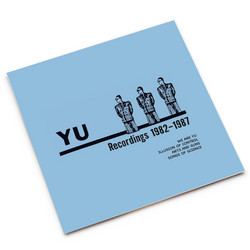
Recordings 1982-1987
On Recordings 1982–1987, YU - Dwaine Woodliff, his brother David and Gaylon - turn Austin’s DIY tape underground into a lo‑fi philosophy lab, smuggling post‑punk, bedroom electronics and dark humour into concept‑cassettes about how not to come apart.
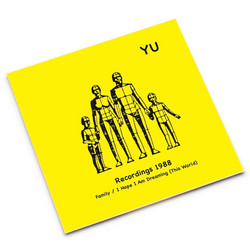
Recordings 1988
On Recordings 1988, YU - brothers Dwaine and David Woodliff with Gaylon - push their Austin DIY ethic to a strange, addictive peak, fusing minimal synth, post‑punk anxiety and home‑taped intimacy into songs that feel like intercepted private signals.
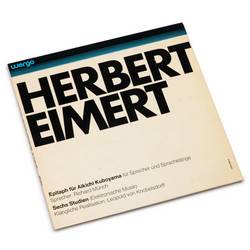
Epitaph Für Aikichi Kuboyama / Sechs Studien (LP)
Very beautiful electronic pieces from the late 1950's by the founder of the WDR electronic music studio and mentor to Karlheinz Stockhausen, released on Wergo's great "Studio Reihe Neuer Musik" experimental music series in the 70's. Essential early electronic music. With insert.
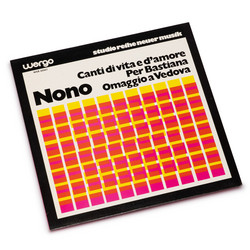
Canti Di Vita E D'Amore / Per Bastiana / Omaggio A Vedova (LP)
First recordings of three indispensable pieces composed in the 1960's respectively for soprano and tenore solo and orchestra, magnetic tape and orchestra, magnetic tape, released on Wergo's great "Studio Reihe Neuer Musik" experimental music series in the 70's. With insert.
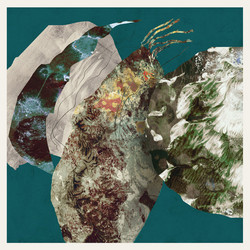
Minor Planets
Minor Planets completes a trilogy of cosmically themed electro-acoustic albums by UK and Berlin based trio Twinkle3, 15 years in the making. This third installment is once again all about the unique synergies the group discover in combining free group improvisation with studio and musique-concrete techniques. The group's combined love of everything from Lee Perry to Noh Theatre via Karlheinz Stockhausen and King Sunny Ade lead them to respond musically to create a single universe where they all …
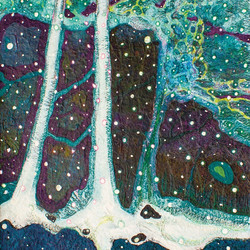
Petrichor
Tip! Max Loderbauer’s career in music spans the last 3 decades, yet he’s still managed to keep his listeners hungry by releasing only 3 solo albums to date. Two of those releases (Transparenz, 2013 and Donnerwetter, 2020) were on Tobias Freund’s label Non Standard Productions - his long time collaborator and Templehof studio mate. In between those releases, Loderbauer graced Marionette with Greyland in 2016, revealing a previously unheard youthful and sentimental side. Now in 2022, the seasoned …

Räumlichkeit
Bastian Epple makes an eagerly anticipated return to marionette under his elusive MinaeMinae guise that imagines rich sonic architectures for the journeying spirit to voyage to. Räumlichkeit is Epple’s debut album and third release to date following Gestrüpp from 2020, venturing further into melodic electronic nostalgia and percussive beat oriented soundscapes. Spanning fifteen vignettes that trapeze through uncharted winding trails and familiar spaces, the album’s recordings evoke a scenic sta…

Koldd
Pretty Sneaky, the anonymous project that has been quietly hiding behind a banana peel logo and self released white label 12” EPs, present their dilated and slomo sub laden atmospheres, this time for Marionette - following elusive outings for label favorites Mana and Meakusma. After being introduced to PS through a common connection back in 2016, a year before their very first self published white label release, it was only in 2021 that we reconnected to discuss an album for the label. Maintaini…

La Voce Del Padrone (LP)
Original 1981 edition on EMI of Battiato's smash-hit album of great and unusual synth-pop. With matte sleeve and original innersleeve.

Giubbe Rosse (2LP)
1989 double live set in which besides the 80's hits Battiato revisits some pieces from his earlier experimental period from albums like Sulle Corde Di Aries and Clic. Original and only Italian edition on EMI.
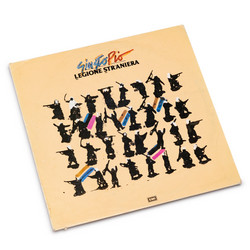
Legione Straniera (LP)
Original and only 1982 edition on EMI of the classic groovy classical/synthpop album by Battiato's teacher and violin player with heavy involvement of the experimental/pop composer. Never re-issued on either vinyl or CD. With original innersleeve.

Milva E Dintorni (LP)
Rare orgiginal 1985 debut LP on Supporti Fonofrafici by one of the best Italian minimal/synth wave bands.

Any Colour You Like (LP)
Rare original 1985 debut LP on Supporti Fonografici by one of the best Italian minimal/synth wave bands.

No Inzro
Original copy of the sole album by Veneto electronic ebm/synth band released by Rockgarage in 1984. With insert.
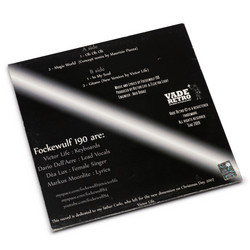
Oh Oh Oh (12"EP)
2009 EP on Vade Retro Records by early 1980's electro wave duo. With original innersleeve.

Eternity (LP)
Original edition on Trance Records of the 1993 debut and sole album by Gaznevada's Ciro Pagano (Robert Squibb) successful trance/dance project.

In Limbo
Original 1986 debut LP on Spittle of gothic-post-industrial music, with insert.

The Art Of Gentle Revolution (5CD box)
Lavish 5CD box set released by Contempo in 2005 with four albums and one EP from 1987 to 1992 (Freiheit Fuer Die Sklaven, Gisela, Omne Animal Triste Post Coitum, Treue Hunde, 69Sixtynine69), re-sequenced and with bonus tracks.
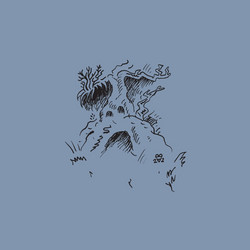

My Shadow
One of the most striking and enigmatic works to appear on Discreet Music in recent years. There is a long tradition of artists who have tried to set scripture to music and failed magnificently - the failure itself becoming the subject, the wound becoming the work. Carrie DeCunzo Mirande's debut album belongs to this lineage. In the twenty-four days before Christmas 2024, she read the twenty-four chapters of the Book of Luke and attempted to respond in sound. Two piano pieces emerged - one inspir…

Mechanics & Music (2CD)
"The Italian post-industrial scene has certainly been very rich: bands like Officine Schwartz, Rosemary's Baby, Ain Soph, Sigillum S, Atrax Morgue, T.A.C., and many others are testament to how this genre unexpectedly took root in Italy. F:A.R. came from a quiet city like Savona, yet their claustrophobic, frenzied, and obsessive music seems to originate in some hellish place dominated by disused factories with machinery that occasionally turns on itself. F:A.R. formed in the early 1980s and made …

Obsession (12"EP)
Original Belgian edition with "Cosey cover" on Play It Again Sam of the hard-pounding 1986 EP.

Synaesthesia (12"EP)
Original US edition on Wax Trax! of the 1991 EP including Daniel Miller's mix.
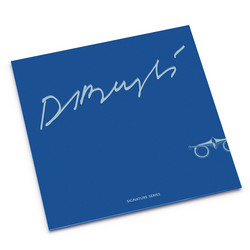
Peter Beyls
Peter Beyls stands as a pioneer at the crossroads of computer science and the arts, shaping generative systems in music, visual, and hybrid formats. In early works, inspired by figures such as Michel Waisvisz, Karel Goeyvaerts, and Lucien Goethals, Beyls fused electronic experimentation with precise tape artistry, notably advancing the crackle box synthesizer at STEIM.
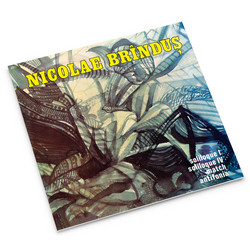
Match / Soliloque 1&4 / Antifonia
Nicolae Brînduş's Match / Soliloque 1&4 / Antifonia reissues the composer’s most eccentric works from the PHTORA cycle (1968-1972), blending collective improvisation, spectral tradition, Romanian folklore, and free jazz into a mesmerizing tapestry. Tape manipulations and reverberation add depth, while Ana Golici’s sleeve art captures the album’s vivid sensibility.