Lovely Music, Ltd.
Lovely Music (full name Lovely Music, Ltd.) is an American record label devoted to new American music. Based in New York City, the label was founded in 1978 by Mimi Johnson, an outgrowth of her nonprofit production company Performing Artservices, Inc. It is one of the most important and longest running labels focusing exclusively on new music and it is devoted to recording American experimental/avant-garde music.

Sound Paintings
Joan La Barbara begins Sound Paintings with a scream that pushes you into an unusual world of vocal sound. Her virtuoso singing style, developed over a 20-year period, can be heard on this disc, which combines some of her earlier works with more recent compositions. She takes her extended techniques, which include multiphonics, overtone singing, and glottal clicks, and orchestrates them in layered soundscape compositions using from 8 to 16 tracks of material.

Musica Iconologos
A surprising release from the radical Fluxus composer, Yasunao Tone
- an encoded description of the visual image in utmost detail. In the
mythical future, somebody can translate the sounds of this compact disc
back into pictures. Personnel: Yasunao Tone and Craig Kendall - image selection and processing; Craig Kendall - computer programming, digital sound creation, manipulation; John D.S. Adams - assistant producer and audio consultant.
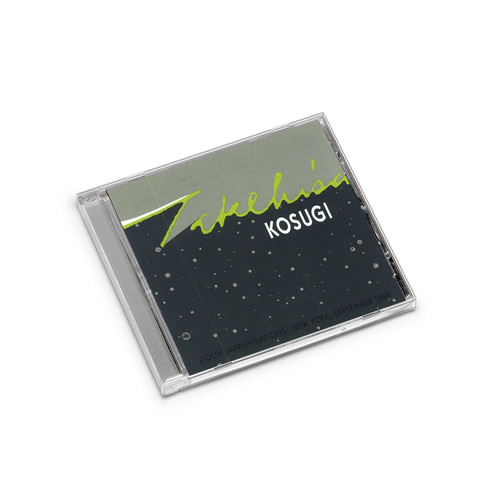
Violin Improvisations
Originally released in 1989, Violin Solo documents Takehisa Kosugi's improvisations with electric violin and miscellaneous sounding objects, recorded September 3-4, 1989. Kosugi's approach has a sense of emerging from the bottom of a spiritual unconscious. From this place comes a music based more on the feeling of sounds than conscious arrangement. Memory, physical action, tactile perceptions, environmental conditions, and awareness of subconscious microcosmic and macrocosmic extremes inform his…
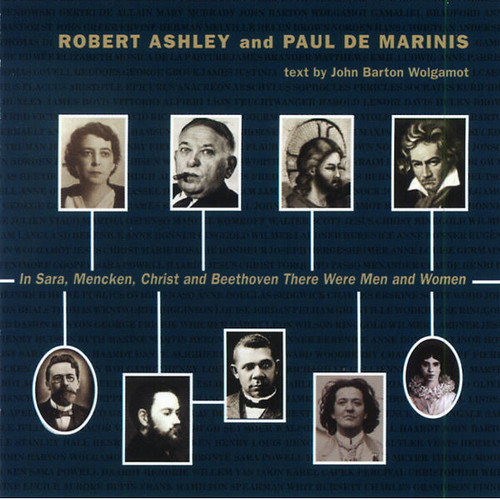
In Sara, Mencken, Christ and Beethoven There Were...
**Deluxe slip-cased version features a 110-page book** Definitive CD reissue of this original Cramps label album from 1974, an early classic from Robert Ashley with music provided by Paul DeMarinis. This deluxe slip-cased version features a 110-page book, reproducing the original John Barton Wolgamot text along with fascinating liner notes explaining the whole project from Keith Waldrop and Robert Ashley. The CD features one long composition with Ashley reading a text by poet John Barton Wolgamo…

Atalanta (Acts of God)
Originally released on Lovely Music in 1985. Robert Ashley makes use of the story of Atalanta
- a royal princess, discarded by her family, who was raised by the
animals to become the fastest-running human, and who was later reclaimed
by her father to marry her off for dynastic purposes - to present the
character aspects of the "successful suitor". These three aspects of
character are presented in the opera as anecdotes about three
extraordinary men of our times: Max Ernst (surrealist paint…
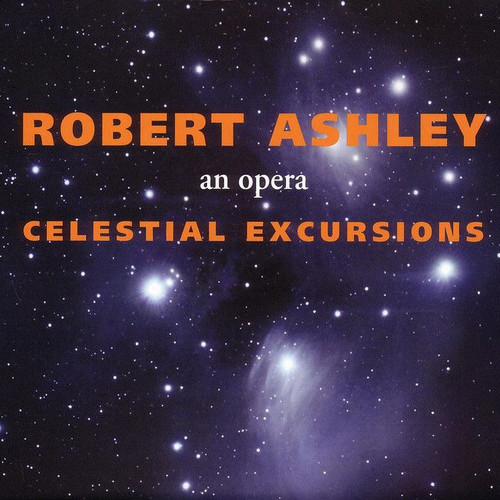
Celestial Excursions
2005 release. Following the ground-breaking work, Dust (LCD 1006CD), godfather of experimental opera Robert Ashley returns with Celestial Excursions. Ashley's endeavor explores remarkably uncharted territory -- the kind of language that is common among "old" people who talk all the time or not at all, to anyone passing by or to themselves. The opera premiered at the Hebbel Theater in Berlin, before coming to The Kitchen for its U.S. premiere in April 2003. Celestial Excursions delves into the wi…
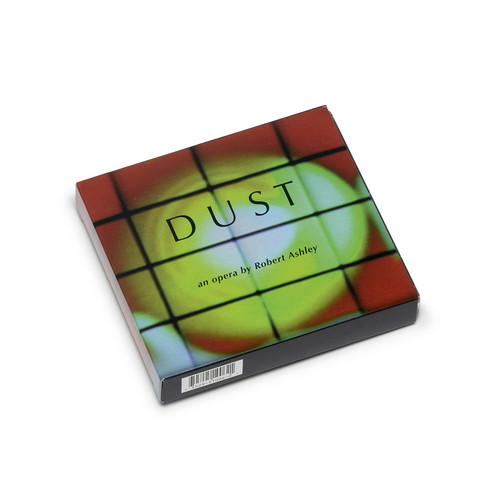
Dust
Dust is an opera by Robert Ashley and Yukihiro Yoshihara (video direction) whose imaginary setting is a street corner anywhere in the world, where those who live on the fringes of society gather to talk, to each other and to themselves, about life-changing events, missed opportunities, memory, loss, and regret. Five "street people" recount the memories and experiences of one of their group, a man who has lost his legs in some unnamed war. As part of the experience of losing his legs, he began a …
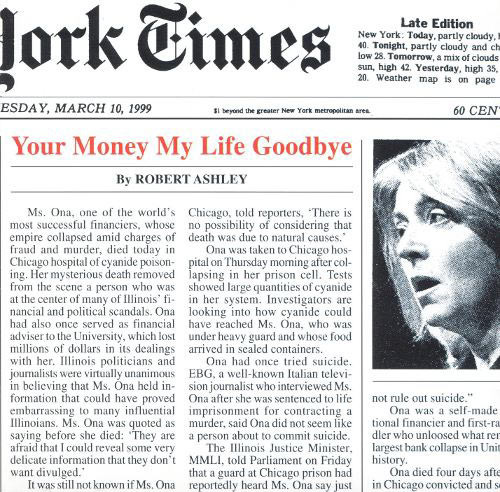
Your Money My Life Goodbye
An opera commissioned by Bayerisher Rundfunk Munich's Hörspiel und Medienkunst department about an internationally renowned swindler, who almost took down the European and American banking system. Featuring the voices of Robert Ashley, Sam Ashley, Thomas Buckner, Jackie Humbert, and Joan La Barbara. Recorded and mixed by Tom Hamilton. Robert Ashley on the piece: "Your Money My Life Goodbye is one of forty-nine vocal-ensemble pieces of various lengths (from ten minutes to ninety minutes or more) …

Yellow Man With Heart With Wings
1990 CD issue of Robert Ashley's 1978 piece for voice and electronics. A two-part composition with narration (part one in Spanish and part two in heavily altered English) commissioned by public radio station KUNM in Albuquerque, this music has a plain, serene beauty. Part one is a narration by Guillermo Grenier in dreamy, flatly inflected Spanish, backed by a four-note synthesizer track, and punctuated by mysterious, heavily processed vocalizations. Ashley throws in extensive sound washes and ot…

Voice is the original instrument
For Circular Song she adapted circular breathing to the voice and sang on the inhale as well as the exhale. For Hear What I Feel she was isolated beforehand, then performed with her eyes taped shut, responding to materials placed in front of her that she could not see.
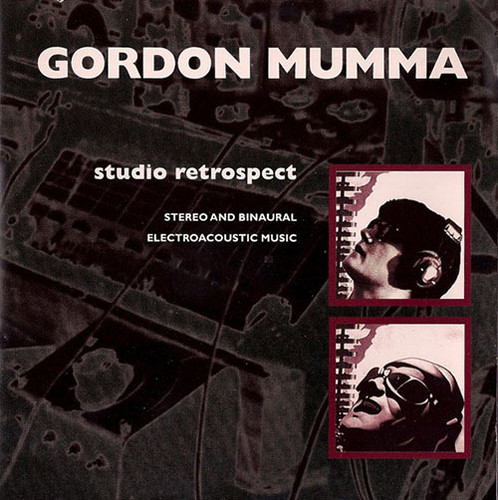
Studio Retrospect
A collection of six compositions made in electronic music studios from 1959 to 1984. All were composed for concert hall or theater performance with choreography, as well as for distribution on recordings. Music from the Venezia Space Theatre, The Dresden Interleaf, and Echo-D were composed for quadraphonic theater systems, and were later spatially remodeled for release on stereophonic recordings. A collection of six compositions made in electronic music studios from 1959 to 1984. All were compos…

Jetsun Mila
Beautiful extended ambient work from Eliane Radigue, a composer known for her work with magnetic tape and Arp Synthesizer, and who studied under Pierre Schaeefer and Pierre Henry in the late 50's. Her compositions are often drone-like, impeccably crafted electronic sounds which seem to move in a continual flow around the listener. She has created many meditative works since the late 1970s, mostly based on Tibetan Buddhist subject matter.Jetsun Mila is inspired by the life of Milarepa, a great yo…
Songs of Milarepa
Five pieces in tribute to Milarepa, the eleventh century Tibetan poet and saint. Radigue on synthesizer, Robert Ashley reading in English and Lama Kunga Rinpoche in Tibetan, the last track running sixty-two minutes.
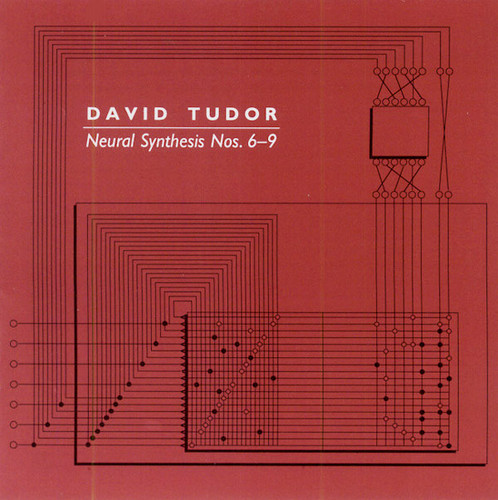
Neural synthesis n. 6-9
1995 release. Neural Synthesis Nos. 6-9 combines the art of music, the engineering of electronics, and the inspiration of biology. In it, David Tudor orchestrates electronic sound in ways analogous to our biological bodies' orchestration of consciousness. The performance originates from a neural-network synthesizer conceived and built especially for Tudor. He surrounds this synthesizer with his own unique collection of electronic devices, and in the recording on this CD made for headphone playba…
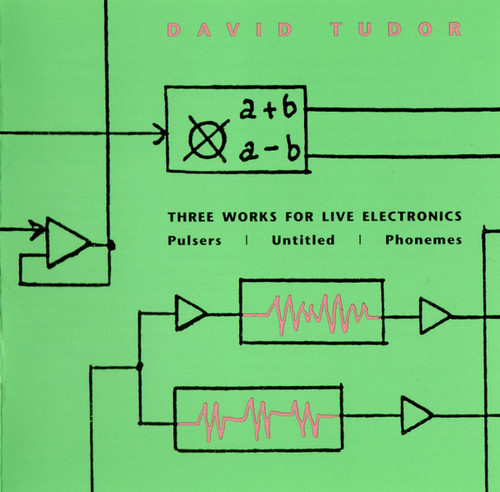
Three Works For Live Electronics
Originally released on Lovely Music as Pulsers / Untitled in 1984. This re-release includes an additional piece from David Tudor, Phonemes. Pulsers explores the world of rhythms created electronically by analog, rather than digital, circuitry. With analog circuitry, the time-base common to the rhythms can be varied in many different ways by a performer, and can eventually become unstable. Untitled is a part of a series of works composed in the 1970s that were developed through experiments in gen…
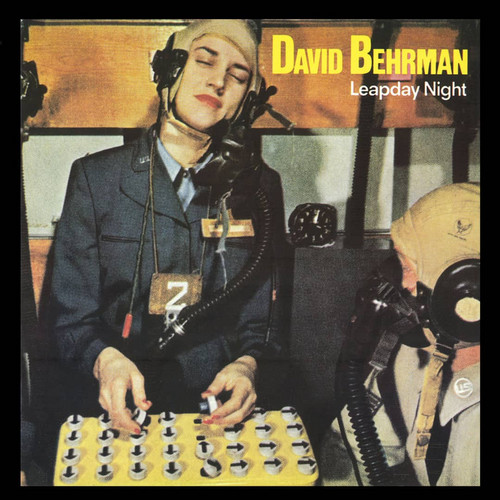
Leapday Night
A series of three pieces/suites documenting David Behrman's evolved interactive computer music practice from the 1980s, featuring Rhys Chatham and Ben Neill (trumpet/mutantrumpet), Fluxus mainstay Takehisa Kosugi (violin), and Behrman himself on electronics. This essential recording captures Behrman's mature work with listening machines: thickly layered liquid sounds created through a complex computer music system which absorbs, actually hears, the sounds of instrumentalists, then plays off thei…

On the Other Ocean
Originally released on Lovely Music in 1978 and now available on CD, this essential recording documents David Behrman's groundbreaking exploration of interactive computer-human improvisation—among the earliest works to establish real-time dialogue between musicians and microprocessor systems.
On the Other Ocean is an improvisation by Maggi Payne and Arthur Stidfole centered around six pitches which, when played, activate electronic pitch-sensing circuits connected to the "interrupt" line and inp…
Still Lives
Three amazing works for pure waves and instruments. Lucier has pioneered in many areas of music composition and performance, including the notation of performers’ physical gestures, the use of brain waves in live performance, the generation of visual imagery by sound in vibrating media, and the evocation of room acoustics for musical purposes. His recent works include a series of sound installations and works for solo instruments, chamber ensembles, and orchestra in which, by means of close tuni…
Theme
Theme features three works from Alvin Lucier. Music for Piano with Magnetic Strings is a work in which the strings of a piano sound by themselves. Several EBows (small electromagnets used primarily with electric guitars) which would cause the piano strings to vibrate and sound are placed on the strings of the piano. The pianist works from a prose score which describes the process and suggests she freely position and reposition five EBows on the piano strings, creating strands of sounds of v…
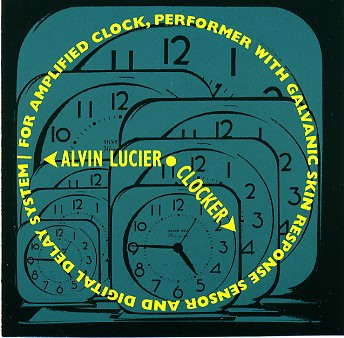
Clocker
Another classic Lucier catalog item, a 45-minute recording made in 1991 of this piece that he first conceived in 1978. The piece is for: amplified clock, performer with galvanic skin response sensor and digital delay system. The sounds that emanate are beautifully shifting patterns of tock-collage that reveal dramatic sonic detailings. "I wanted to make a work in which a performer could speed up and slow down time, stopping it, if possible, simply by thinking. I bought a Westclox Silver Bell Mon…