New Arrivals
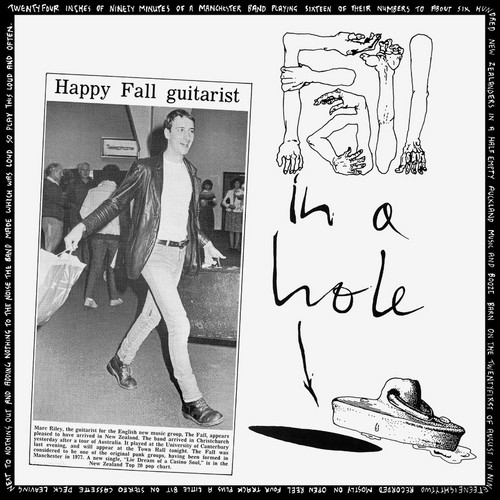
Fall In A Hole
The Fall live in Auckland, August 1982, recorded by Chris Knox for Flying Nun: Marc Riley's last tour, two drummers, feedback-drenched rarities and Hex Enduction-era favourites. First vinyl reissue, with poster and notes by Roy Montgomery.
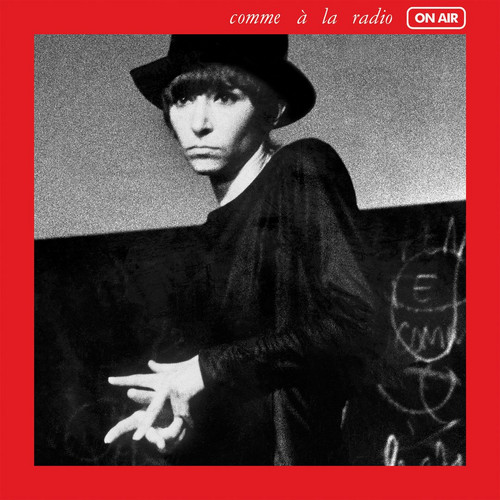
Comme à la Radio: On Air
Companion to the expanded Comme à la Radio: unreleased ORTF radio sessions from 1969-71 with Areski Belkacem, plus four unissued studio takes, among them two instrumental versions of the title track and a full 10-minute "Leo" with the Art Ensemble of Chicago.
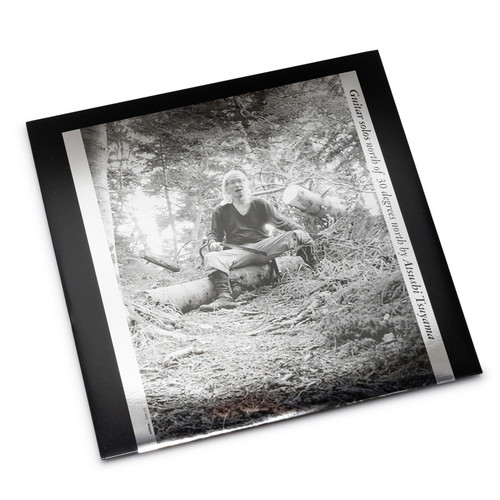
Guitar Solos North of Latitude 30
A solo acoustic guitar record by Atsushi Tsuyama, of Acid Mothers Temple and Omoide Hatoba, who has also spent fifty years as a mountain keeper in the Ina valley. Vinyl only, 200 copies, in a silver screen printed sleeve.
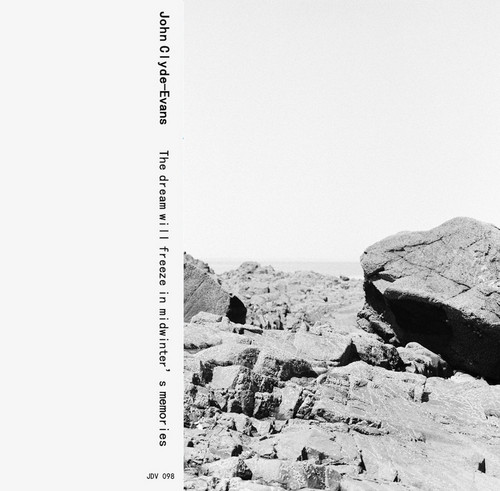
The Dream Will Freeze In Midwinter’s Memories
John Clyde-Evans played in that formidable band called Hood in the early 90s. In the years that followed, he was one of the most adventurous figures in the incredibly diverse British underground scene. His productions from that era ranged from blissful tape loops of string instruments to bizarre, mind-numbing noise experiments—created using, among other things, traditional Indian instruments from the time he spent living there... Then, for nearly twenty years, he completely fell off the radar...…
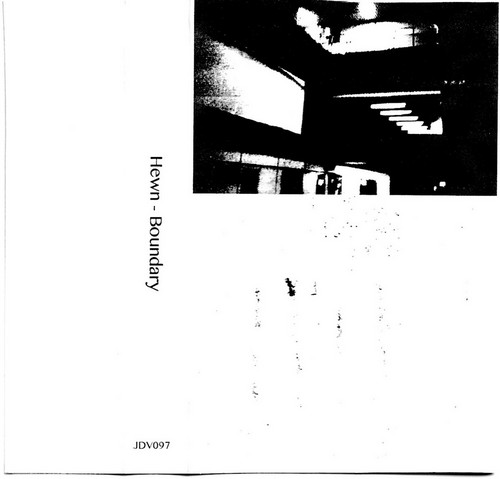
Boundary
4 tracks recorded in 2025 and 2026 by young mancunian duo Hewn, whose music Jack Davidson (Noise not music) once described as "frail but nonetheless flesh-and-blood ambient". Still about there...
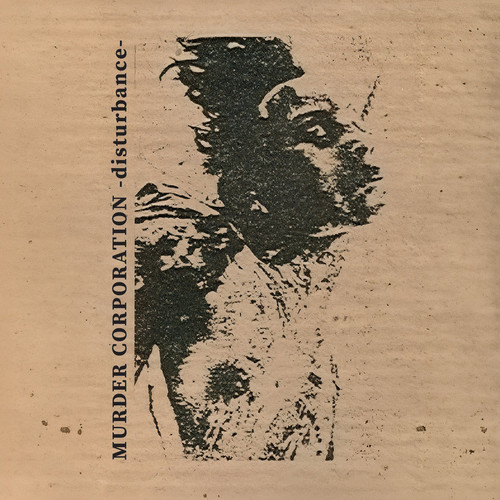
Disturbance
*100 copies limited edition* Founded by Moreno Daldosso in 1992, Murder Corporation emerged during a crucial transitional period for the Italian industrial underground. The ritualistic and experimental tendencies that had characterized many projects of the 1980s were progressively mutating into harsher territories shaped by power electronics, death industrial, noise extremism and transgressive performance aesthetics. Within this shifting environment, Murder Corporation rapidly developed a distin…
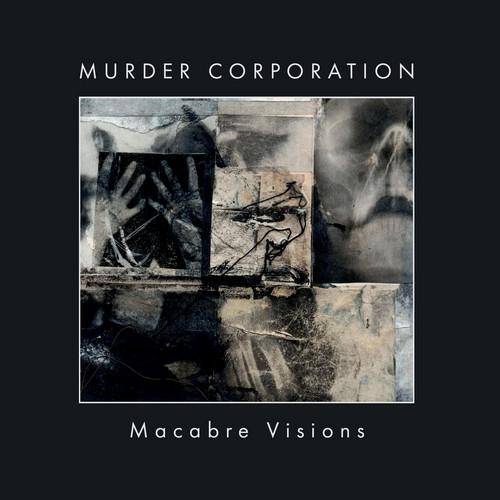
Macabre Visions
*100 copies limited edition* Founded by Moreno Daldosso in 1992, Murder Corporation emerged during a crucial transitional period for the Italian industrial underground. The ritualistic and experimental tendencies that had characterized many projects of the 1980s were progressively mutating into harsher territories shaped by power electronics, death industrial, noise extremism and transgressive performance aesthetics. Within this shifting environment, Murder Corporation rapidly developed a distin…
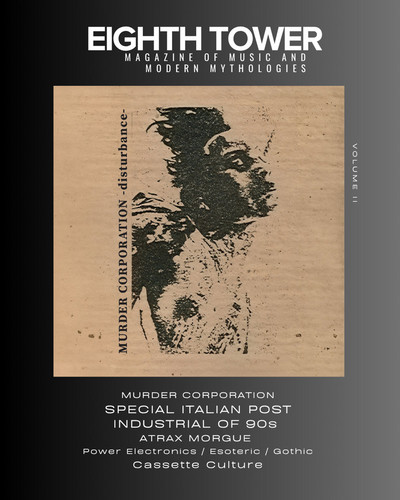
Eighth Tower Magazine Vol. II (Magazine)
*100 copies limited edition* Eighth Tower Magazine is a periodical publication dedicated to music and modern mythologies. It explores alternative and experimental sound practices, tracing connections between contemporary music, invisible cinema, and dark fiction. Eighth Tower investigates how modern mythologies are shaped, transmitted, and transformed. It is conceived as a space for reflection, documentation, and critical exploration, where sound, image, and narrative converge into a shared cult…
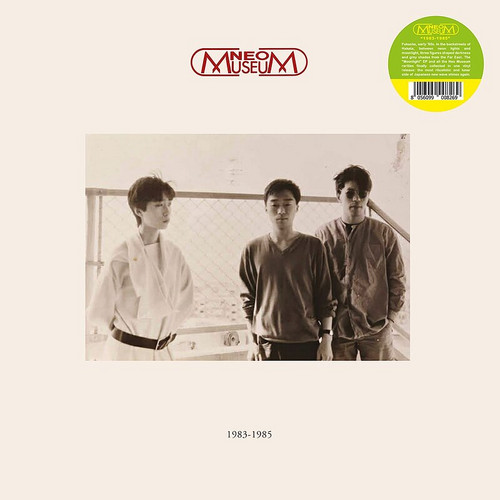
1983-1985
Fukuoka, early '80s. In the backstreets of Hakata, between neon lights and moonlight, three figures shaped darkness and grey shades from the Far East. The "Moonlight" EP and all the Neo Museum rarities finally collected in one vinyl release: the most ritualistic and lunar side of Japanese new wave shines again.

Technical Music Planning
If it's extreme, leave it to us. Challenging the sound, playing with the sound, laughing at the sound. A docking of debut recordings from the most talked-about street artists and "sound collages & sound gags" by pro musicians with eccentric ideas. An exciting, bold, and humorous "bright" New Wave omnibus album. Featuring artists like: Kaoru Sato (EP-4), Masumi Hara & Banana, Shingo Tomoda, Chinju, Mammy, Muzeum, and more.
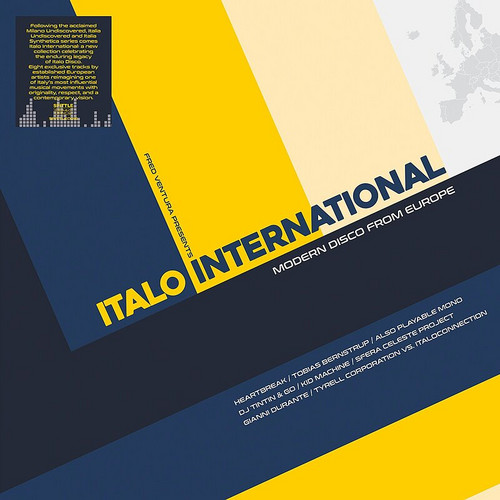
Fred Ventura Presents Italo International - Modern Disco From Europe (LP)
Following the acclaimed Milano Undiscovered, Italia Undiscovered and Italia Synthetica series comes Italo International: a new collection celebrating the enduring legacy of Italo Disco. Eight exclusive tracks by established European artists reimagining one of Italy's most influential musical movements with originality, respect, and a contemporary vision.
Italo International is a journey through the many shades of elegant and visionary electronic music, moving between Italo Disco, Synth Pop and d…
Life Extension
Marco Farina aka Canva6 is an Italian artist and longtime member of the Presto!? roster. He has performed at MACRO Roma, Triennale Milano, C2C Festival, Aaniwalli Helsinki, Signal Festival Prague and across Europe. His music has also crossed into film and contemporary art: “Still Cry at High Speed” was featured in Caroline Poggi and Jonathan Vinel’s Eat the Night, presented at Cannes’ Directors’ Fortnight, while “Raging Euphoria” and “Sleepwalking” were used in Stephanie Comilang’s Search for Li…
Cyano
In Cyano, synthesist and composer Emily A. Sprague questions self, other, ecology, and life in a distant realm. Conjured around the idea of an imagined planet whose inhabitants are rebuilding forbidden capacities for expressivity and emotional connection, Cyano is a meditation on visibility, psychic transformation, light transmission, and worlds beyond our knowing materialized through an intuitive use of modular synthesizers and voice.
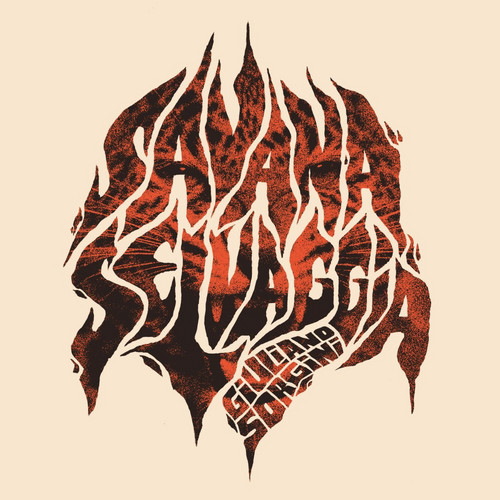
Savana Selvaggia
Eight years after the masterpiece Africa Oscura, Four Flies revisits Giuliano Sorgini’s afro-dark universe, unearthing and compiling another suite of previously unreleased music recorded by the Roman composer for television documentaries in the mid-1970s. Savana Selvaggia is a tribute to the continent that left the deepest mark on Sorgini’s creative trajectory. Traversing ancestral percussion, synthesizers, enigmatic themes, and mystical expanses almost like a spiritual journey, Savana Selvaggia…
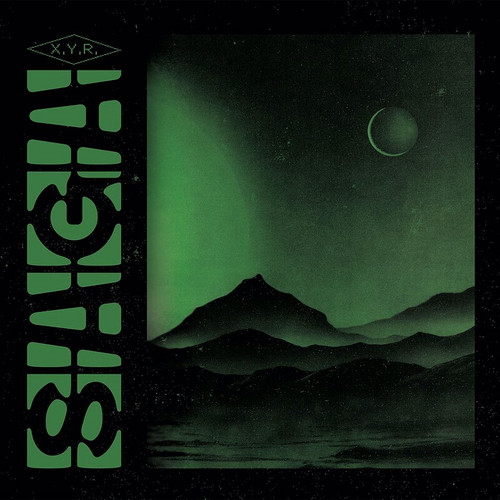
Saga
On the eve of the 15th anniversary of Vladimir Karpov’s voyaging, visionary solo synth entity X.Y.R., the project unveils its vastest quest yet: Saga. Recorded and revised intermittently at his home studio in Alexandrovskaya, St. Petersburg across 11 years, the album’s four side-long songs span overlapping panoramas of twilit drone, desert wind, stargate electronics, and jungle temple percussion, alternately elevated and desolate. Working with his signature Soviet-era synthesizer, the Formanta-M…
Qurmami
Maryos Syawish (b. 1993, Iraq) is a Chaldean Iraqi artist and musician based in Naarm/Melbourne working fluidly across visual art, sound and curatorial practice. His creative work spans more than 15 years and is defined by a lawless, unorthodox approach that resists traditional genre boundaries. His Research Records debut is an introspective and meandering exploration of place, legacy and personal history. It’s a marked change of pace for the Melbourne-based producer, who has carved his name int…
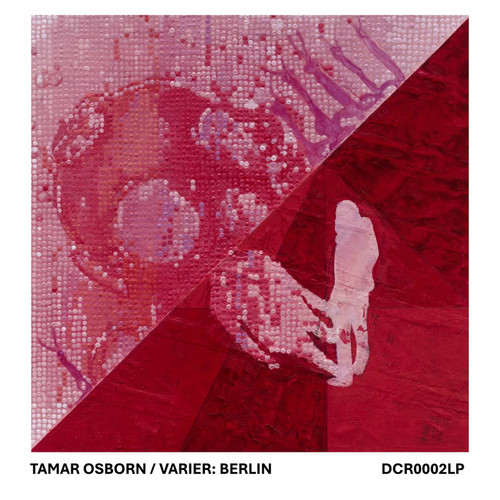
Varier: Berlin
Renowned saxophonist, woodwind player, bandleader and composer Tamar Osborn stands at the heart of the UK’s forward-thinking music movement. A multi-instrumentalist whose genre-slipping creativity has made her the go-to voice for artists within the new wave of jazz and improvised music, Osborn now unveils her most ambitious and exploratory project to date. Well known and highly regarded as a bandleader and featured player across a wide number of groups - most notably her modal ensemble Collocuto…
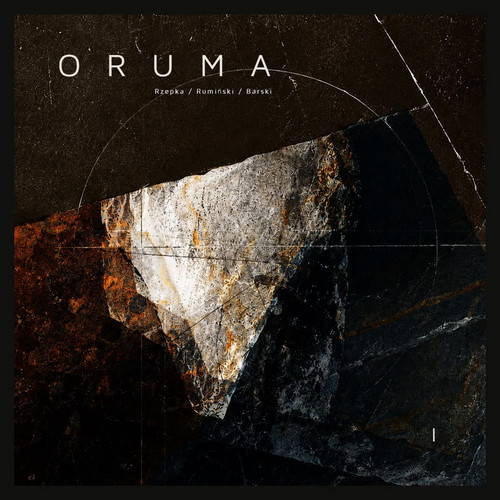
I
Oruma is a trio formed by Ola Rzepka (drums, zither, percussion), Artur Rumiński (electric guitar) and Mat Barski (electric guitar). At its foundation is the musical dialogue previously developed by Rumiński and Barski as a guitar duo and documented on the albums “On the Margin” and “At the Junction”. Their encounter with Ola Rzepka during Kraków’s Kakofonie series opened this music to a new sense of dynamics, pulse and collective form.
Oruma’s music exists at the intersection of free improvisat…
Parity Symmetry is Conserved
Rekombinant is the solo project of Rome based composer and sound artist Alfonso Montagnese. Blending electroacoustic composition, analogue electronics, magnetic tape and sound design, his work explores the physical qualities of sound, embracing imperfection, transformation and degradation as expressive compositional tools. Borrowing its title from the physical principle of parity symmetry, the album is less interested in scientific theory than in the possibility that an identity may endure even …
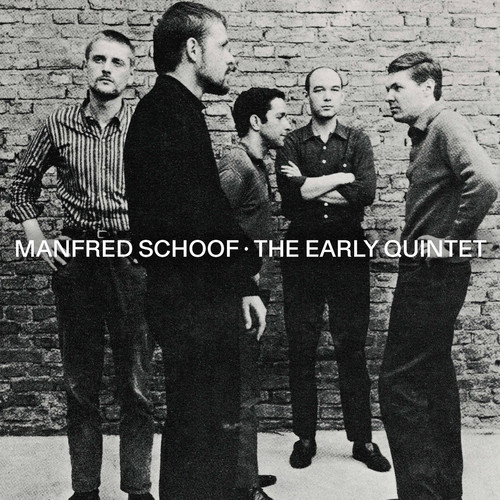
The Early Quintet
Corbett vs. Dempsey is pleased to present The Early Quintet, featuring trumpeter Manfred Schoof's highly influential mid-sixties sextet (and occasional septet), featuring pianist Alexander Schlippenbach, tenor saxophonist Gerd Dudek, bassist Buschi Niebergall, and drummer Jaki Liebezeit. (One track adds drummer Sven-Åke Johansson.) In addition to the first CD release of the 1978 FMP record, this version includes a bonus piece, never before heard. Deep cuts from the formative moment of European f…