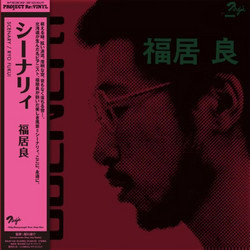
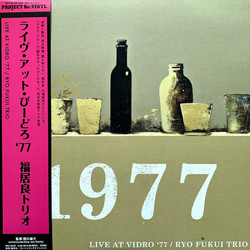
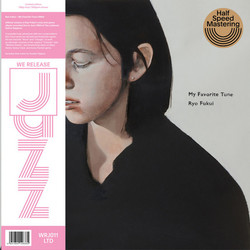
Recorded roughly a year after his debut Scenery, Mellow Dream finds Ryo Fukui returning to the trio format with a new sense of purpose. The delicacy, clarity and emotional transparency that made the first album a cult favourite are all still here, but now they’re carried by a stronger, more assertive touch. The world he sketches at the piano suddenly has sharper outlines and deeper shadows; the lines feel bolder, the rhythm section more tightly wound, the overall sound more three‑dimensional. If Scenery was the miraculous arrival of a singular voice from Sapporo, Mellow Dream is that voice speaking in full, confident sentences.
The title track sets the tone. “Mellow Dream” opens with a bittersweet, heart‑stirring melody that seems to hover between hope and regret, poised and singing even before the improvisation begins. As the trio moves through the tune, Fukui’s phrasing reveals the balance at the core of the record: exquisitely shaped lines that never feel fussy, harmonic choices that are sophisticated yet immediately graspable, a left hand that both anchors the time and colours the harmony. By the time the head returns, the piece feels less like a standard‑in‑waiting and more like a fully formed statement of intent, a personal anthem that would come to define his legacy.
Elsewhere on the album, the energy ramps up without sacrificing that emotional depth. “Horizon” surges forward with vibrant, exhilarating drive, the trio riding a hard‑swinging pulse that showcases Fukui’s increased strength and stamina. His right hand cuts through the changes with crisp, bebop‑honed articulation, while the left hand punctuates and prods, giving the performance a kind of forward lean that’s thrilling without ever turning brash. Even in the densest passages, you can hear an underlying lyricism, a sense of line that keeps everything singing.
One of the key developments on Mellow Dream is compositional. Where Scenery contained just a single original, here the number of Fukui’s own tunes increases to three, giving listeners a broader window onto his writing. These pieces sit comfortably alongside the standards, yet they bear distinctive fingerprints: melodic contours that feel both classic and slightly off‑centre, harmonic movements that open out into unexpected colours, forms that leave just enough room for the trio’s conversational interplay. Through them, you hear not only Fukui the interpreter, but Fukui the builder of his own small corner of the jazz songbook.
Taken as a whole, the album radiates maturity and richness. The trio sound more deeply bonded, the pacing of the set is surefooted, and Fukui’s playing carries a new weight without losing its original freshness. It’s this combination - heightened strength, expanded authorship, undimmed sensitivity - that leads many listeners to quietly place Mellow Dreameven above his debut. Knowing that Ryo Fukui would tragically pass away decades later with only a handful of albums to his name only sharpens the sense that this record captures him at a uniquely luminous peak: a moment when everything he loved about jazz, and everything that made his Hokkaido‑born sensibility unique, met in perfect balance.