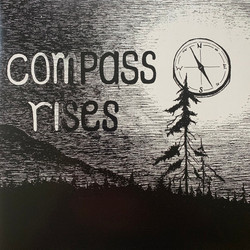
*300 copies limited edition.* Recorded in 1973 and originally issued as a modest private pressing, Compass Rises is the lone full‑length document of Compass, an acoustic‑electric quartet active in upstate New York between 1969 and 1974. More than a calling card, the album stands as a compact manifesto: seven originals that showcase a band fluent in the post‑Coltrane language of the era while remaining grounded in the working realities of industrial‑college towns where they played. Saxophonist and bass clarinetist Rick Lawn, keyboardist Joel Chase, bassist and flugelhorn player Tom Ives, and drummer Al Colone form the core line‑up, with percussion duties shared among the group and augmented by conguero Ken Parmele. Together they arrive at a sound that is versatile yet purposeful, drawing on modal jazz, soul‑jazz and Latin inflections without ever losing their straight‑ahead centre of gravity.
The record opens with Ives’ “Cleanin’ Up,” a modal groover whose relaxed propulsion and smart, funky turnaround in the head would sit comfortably alongside Joe Henderson’s Milestone‑era outings. It’s an immediate statement of intent: sturdy, melodic, rooted in swing but open enough to let the soloists stretch. “Sunflower” follows with a gentle Latin lilt, not a pastiche of Freddie Hubbard’s famous tune but its own sinewy, breezy vehicle, Lawn’s husky tenor threading gracefully over the rhythm section’s easy churn. “Waltz for Barbara” offers a lyrical, three‑quarter respite, a ballad that lets the group’s more reflective side come into focus before “Blues for Vito” kicks the front line into higher gear, Ives’ flugelhorn joining Lawn over a dry, cracking groove that gives their tough, metallic phrasing something solid to bite against.
On the album’s second half, Compass lean further into their exploratory instincts without abandoning clarity. “Schizoid” lives up to its title, Lawn’s nasal soprano carving spirals against pummelling toms and Chase’s fuzz‑edged keyboard sprawls, pushing the band closer to the outer reaches of contemporary jazz‑rock. “Sour Cream” reins things back into a choppier soul‑jazz pocket, built on syncopated figures and earthy exchanges, while closer “Pharoah’s Thing” tips its hat to the spiritual jazz currents of the time: it begins on an elegiac plateau, then gradually unfurls into a minor‑key bounce that balances uplift and introspection. Heard as a whole, Compass Rises is both a snapshot of a specific regional scene and a fully formed artistic statement, the kind of self‑released LP that was meant to be a “sonic business card” yet ended up capturing a band’s voice at its most focused. Long overlooked, it rewards the attentive listening and critical attention it didn’t receive on first release, revealing Compass as more than local hopefuls – as craftsmen and improvisers with something quietly enduring to say.