Berta Lask
Dramatic Depiction of the German Peasants' War of 1525 (Book)
One hundred years ago, playwright Berta Lask was commissioned by the German Communist Party to write a play to mark the 400th anniversary of the German Peasants' War. She accepted and staged the reappearance of its leader Thomas Müntzer, who wakes up every hundred years to address the present, represented in the prologue by a group of striking proletarians to whom he tells his story. In the play, Lask asks a fundamental question: what would Thomas Müntzer see if he woke up today? The list is long: climate change, imperialism, sexist oppression, earthquakes, genocide, impending fascism. Capitalism has not dug its own grave. Rather, it is the oppressors of previous centuries who have been resurrected, implanted in new bodies, equipped with new modes of enslavement, in unequal spatial domination and temporal disjunction. Thomas Müntzer, with all his time travel and modes of resurrection, addresses the present from a multiplied past.
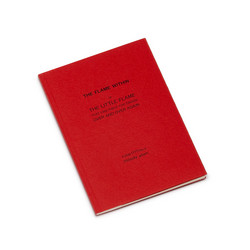
For the first time, Lask's play has been translated for print, accompanied by a series of commentaries and interventions: on everything from the “proletarian problem” to rainbows and bundles of twigs; from Albrecht Dürer's monument to the massacred peasants to Paul Robeson's interpretation of “Joe Hill”; from revolutionary violence to tragic commemoration.
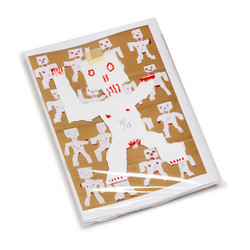
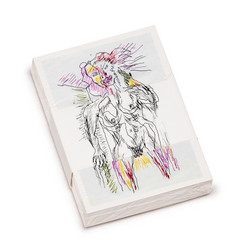
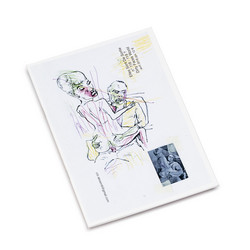
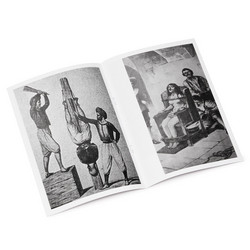
Translated by Sam Dolbear with Esther Leslie, Joey Simons and Charlotte Thießen, the two volumes are edited by Sam Dolbear. The second volume, devoted to commentaries, includes contributions by Caroline Adler, Joseph Albernaz, Hunter Bivens, Shane Boyle, Rebeccca Comay, Sam Dolbear, Loren Goldman, Danny Hayward, Disha Karnad Jani, Sam Keogh, Henrike Kohpeiss, Esther Leslie, Huw Lemmey, Peter Linebaugh, Hussein Mitha, Vesa Oittinen, Hannah Proctor, Daniel Reeves, Ashkan Sepahvand, O. L. Silverman, Joey Simmons, Kerstin Stackermei, virgil b/g taylor, and Alberto Toscano. Designed by Ott Kagovere, the two A4-sized volumes are wrapped in a poster created by artist Sam Keogh. Berta Lask (1878–1967) was a German writer, playwright, and journalist who became a communist activist in 1923 and authored a body of work marked by strong political engagement.
![Noisemakers[s]](https://cdn.soundohm.com/data/products/2024-03/NoisemakerS_Book_01-jpg.jpg.250.jpg)