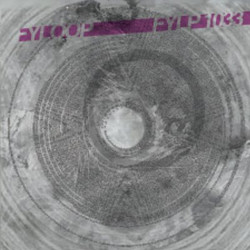
** 2025 Stock. Original 1986 Copies that may show some signs of long storage wear. ** Electronic Music presents Pär Lindgren - one of Sweden’s leading composers of electroacoustic music and a longtime teacher of the medium at the Royal College of Music in Stockholm - in an uncompromising trio of works that show just how far “tape music” can be pushed beyond its founding clichés. Issued by Fylkingen Records as FYLP 1032, the album gathers “Houdinism”(1984), “Rummet (The Room)” (1980) and “Den” (early 1980s), three pieces that treat the electronic studio not as a synthesizer stand-in for instruments, but as a laboratory for friction, rupture and meticulously staged shock. Lindgren’s approach has been described as “acerbic and abstracted, a disorienting foreign land with no easily identifiable signifiers or clear narrative,” and the record leans into that description with conviction.
Each composition explores a different strategy for organising energy in time. “Rummet” focuses on the idea of space as something that can be constructed from sound alone: abrupt attacks ricochet across phantom walls, resonances bloom and vanish, and the listener’s sense of room-size and distance is constantly being rewritten. “Houdinism,” titled after the escape artist, toys with the notion of entrapment and release; bands of dense, noisy sound are clamped into place, then suddenly cut away, leaving ghostly traces or opening onto unexpectedly bare textures, as if the piece were repeatedly slipping its own restraints. “Den” (literally “The/It”) is more elusive still, a study in grain and threshold where small, abrasive details accumulate into larger, grinding masses, then disintegrate back into near-silence, never settling into stable identity.
Underlying these works is Lindgren’s dual identity as both composer and pedagogue. Since the early 1980s he has taught electroacoustic composition at KMH, shaping generations of Swedish composers while continuing to develop his own language in parallel. The pieces on Electronic Music date from a fertile period when access to state-of-the-art studios like EMS enabled highly detailed tape and voltage work, but before digital tools smoothed away the rough edges; you can hear razor-blade edits, tape-speed manipulations and analog processing sitting alongside more pristine treatments, giving the music a tactile, almost physical presence. Fylkingen’s decision to dedicate a full LP to these three works underscores the organisation’s historic role in championing electroacoustic music that is not merely atmospheric or illustrative, but structurally and sonically demanding.