Luciano Michelini
La Conquista di Luna (LP + CD)
In July 20, 1969, as Neil Armstrong stepped onto the lunar surface, an Italian pianist and composer named Luciano Michelini was completing work on one of the most extraordinary documents of that moment's cultural impact: La Conquista Di Luna, an imaginary soundtrack to humanity's greatest adventure. There was no film. There would never be a film. What Michelini created instead was something rarer and more enduring: a sonic fantasy of space exploration that captured the wonder, mystery, and optimism of the Apollo era with an inventiveness that still sounds fresh more than fifty years later.
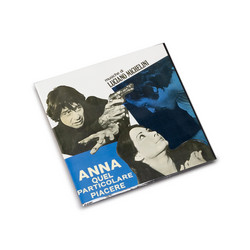
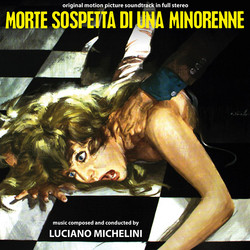
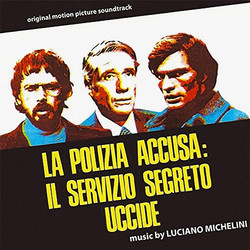
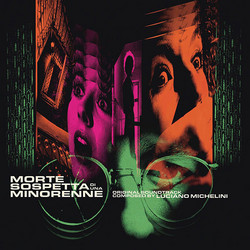
Michelini remains one of Italian cinema's great unsung figures. Born in 1945, he studied at the prestigious Conservatorio di Santa Cecilia in Rome, earning degrees in piano under Vera Gobbi Belcredi, composition under Armando Renzi, and orchestral conducting under Franco Ferrara. From 1964 to 1982, he worked as a pianist, conductor, and manager for RCA Italy, a position that gave him access to world-class studio facilities and session musicians while leaving him largely invisible to the wider public. His film scores, while admired by connoisseurs, never achieved the fame of his contemporaries. Among his best-known works are Il Decamerone Nero (1972), the poliziottesco thriller La polizia accusa: il servizio segreto uccide (1975), La città gioca d'azzardo (1975), Morte sospetta di una minorenne (1975), and the gorgeous sci-fi horror score for Sergio Martino's L'isola degli uomini pesce (1979).
Yet Michelini's name has traveled further than he could have imagined, thanks to a single composition: "Frolic," a whimsical piece written in 1974 for the obscure Italian film La bellissima estate. Decades later, Larry David heard the track in a California bank commercial and became obsessed with finding it. When he launched Curb Your Enthusiasm in 2000, he made "Frolic" the show's theme, and Michelini's playful march for tuba, mandolin, and piano became one of the most recognizable pieces of television music in the world. Steven Spielberg uses it as his ringtone. Snoop Dogg sampled it for "Crip Ya Enthusiasm." The tune has spawned countless internet memes. And yet even now, the composer behind it remains largely unknown outside specialist circles.
La Conquista Di Luna predates "Frolic" by five years, but it shares the same spirit of inventive eclecticism. The album opens with the title track, a mission control transmission crackling over majestic church organ swells as psychedelic electronic effects swirl beneath thunderous, almost funky drums. It is a startling opening, simultaneously reverent and experimental, as if Michelini had glimpsed both the spiritual dimensions of the moon landing and its potential as source material for something genuinely strange. "Il Volto Nascosto Di Luna" (The Hidden Face of the Moon) follows with lush orchestration and an undercurrent of melancholy, evoking the darkness of the lunar far side. "Tycho," named for the prominent lunar crater, is perhaps the album's most prophetic track, a piece of orchestral pop so ahead of its time that it seems to anticipate decades of subsequent production.
The presence of Edda Dell'Orso on several tracks elevates the album into the realm of the transcendent. Born Edda Sabatini in Genoa in 1935, Dell'Orso possessed a soprano voice of extraordinary range and purity. She had joined I Cantori Moderni di Alessandroni, the choral group led by guitarist and composer Alessandro Alessandroni, in 1960, and through that ensemble came to the attention of Ennio Morricone. Her wordless vocals became an essential element of Morricone's revolutionary soundtracks for Sergio Leone's Spaghetti Westerns: "The Ecstasy of Gold" from Il buono, il brutto, il cattivo (1966), the haunting themes of C'era una volta il West (1968), the elegiac romanticism of Giù la testa (1971). When Morricone needed a voice that could function as an instrument, ethereal yet powerful, capable of conveying emotion without words, he turned to Dell'Orso. So did Piero Piccioni, Bruno Nicolai, Luis Bacalov, and dozens of other Italian composers. On La Conquista Di Luna, her voice reverberates into the outer reaches of space, providing an almost spiritual counterpoint to Michelini's electronic experiments.
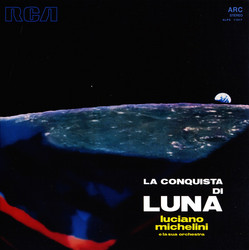
The album's tracklist reads like a guided tour of the cosmos: "A Mrs. Armstrong" (a tender tribute to the astronaut's wife waiting on Earth), "Chiaro Di Luna 2000" (Moonlight 2000), "La Ruota Dei Pianeti" (The Wheel of Planets), "Richiamo Di Terra" (Call from Earth), "Vento Solare" (Solar Wind), "Meteoriti," "In Viaggio" (Traveling), "Il Centro Di Houston" (Houston Control Center), and "Odissea Nello Spazio," a reworking of Johann Strauss's "Blue Danube" that nods to Stanley Kubrick's 2001: A Space Odyssey, released just one year earlier. The diversity of styles is remarkable: spacey lap steel guitar, piano treated with Leslie speaker, lush strings, funky rhythms, moments of quiet introspection, and passages of genuine avant-garde experimentation. The original LP sleeve featured a photograph from the Apollo 11 mission, grounding Michelini's fantasy in documentary reality.
For decades, La Conquista Di Luna remained virtually impossible to obtain without spending a fortune. Original pressings traded hands among collectors for hundreds of euros, their astronomical prices a testament to the album's cult reputation. This Schema Records reissue, presented as LP with bonus CD, restores one of Italian library music's holy grails to circulation. The CD includes the complete twelve-track program; the LP spreads the same material across two sides of vinyl, allowing the music to breathe.
In the 2020s, Michelini remains active. In 2024, he collaborated with his son Lorenzo Dada on Lucifer, an album released by Kompakt that combines electronic and acoustic elements across a suite of tender, melancholic pieces. Some tracks were recorded at the studio of Michelini's late friend, Ennio Morricone. But La Conquista Di Luna remains his masterpiece: an imaginary soundtrack to a real moment of human triumph, composed with a sense of wonder that the intervening decades have done nothing to diminish.