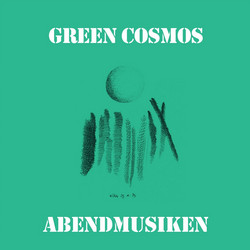
Tip! Morgenmusiken documents a band learning how to begin from nothing and trust the space. In the late 1970s, far from any established jazz centres, four young musicians in Marsberg, Germany formed Green Cosmos and pointed their ears outward: to John Coltrane’s spiritual climaxes, to Indian raga, to free jazz’s open forms and to the borderless drift of so‑called “cosmic music.” Their first album, Abendmusiken, leaned toward lyrical, ballad‑driven writing; Morgenmusiken – drawn from seven previously unreleased recordings – captures the next step, where composition becomes a frame for something more patient, more exploratory, more attuned to the moment as it unfolds.
Sessions often began in shared silence and meditation, and you can hear that in the music’s architecture. Themes don’t crash in; they emerge, almost shyly, from pedal points and loose rhythmic murmurs, coalescing into collective improvisations that feel both grounded and weightless. Saxophonist Michael Boxberger moves between burnished, devotional lines and more searching cries, while Benny Düring’s piano toggles between gentle, harmonically open voicings and percussive flurries that prod the group into new directions. Twin brothers Alfred and Ulrich Franke make up a rhythm section whose “telepathic connection” is less a slogan than an audible fact: bass and drums breathe together, leaving pockets of air, tightening into cycles, loosening again just when you think they’re about to lock. The presence of sitar master Narayan Govande tilts the group’s centre of gravity further toward raga‑inflected time, adding drones and sliding melodies that stretch the concept of “chorus” into something more circular and ritualistic.
What sets Morgenmusiken apart is the band’s commitment to space as an active element. “Silence might be the most beautiful part in music,” they once said, and these recordings bear that out. Passages hinge on a single sustained tone, a lightly struck chord, the decay of a cymbal; sometimes one note really does land with more impact than a rush of 100. The album’s mix of “cosmic music” and “live compositions” isn’t about genre fusion but about method: structures are there, but they’re porous, inviting in chance, environment, and the players’ shifting states of mind. Heard now, decades after they were captured, these seven pieces feel less like historical curios and more like a quietly major discovery – music that moves at the speed of breath and thought, inviting the listener into a morning that never quite finishes dawning.