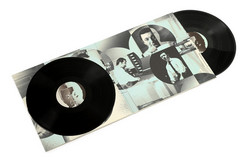
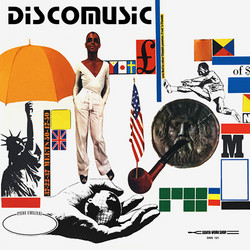
**2026 Remastered Repress** Gatefold edition with OBI and poster! Recorded in the summer of 1973 on an 8-track Ampex at Sound Work-Shop, the studio Piero Umiliani had built in his own building on Via S. Tommaso d'Aquino in Rome, To-Day's Sound documents a moment when Umiliani had concentrated, in a single eighty-square-metre room, an arsenal of electronic instruments still uncommon in Italian recording at the time: Minimoog, ARP 2600, EMS VCS3, Fender Rhodes, Clavinet, Lowrey organ, Space Echo, and a set of self-built envelope filters. The sleeve states the brief outright - "Rock-Rhythm And Blues-Beat-Underground-Country-Pop" - and the album's twenty-one cues, sequenced across four sides, range further still.
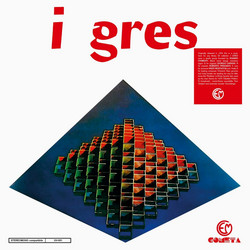
For the sessions Umiliani convened a band drawn from three of Rome's tightest jazz outfits and the brass of the RAI Symphonic Rhythm Orchestra. Franco D'Andrea (piano, clavichord) and Giovanni Tommaso (bass) came from Perigeo; Silvano Chimenti (guitar) from I Grès; Antonello Vannucchi covers Hammond, Giorgio Carnini the Lowrey; Oscar Valdambrini, Al Korvin and Marino Di Fulvio handle trumpets; Dino Piana, Mario Midana and Biagio Marullo trombones; Marcello Boschi flute; Carlo Zoffoli vibraphone and marimba; Maurizio Majorana electric bass; Vincenzo Restuccia, Gegè Munari and Ciro Cicco percussion. The collective is credited on the record as the Sound Workshoppers. Umiliani himself plays Moog, Fender Rhodes and marimba. Engineer Claudio Budassi captured the kit with an unusually weighted low end for the period.
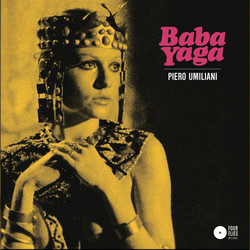
Open Space, lifted by Corrado Farina for the title sequence of Baba Yaga (1973), opens the record with a hard-driving figure of clavinet, bass and Moog leadlines that anticipates much of what American crime-drama scoring would arrive at by mid-decade. Across the rest of side A, Caretera Panamericana turns toward fast samba with flute laid over Moog improvisation; Goodmorning Sun drifts into a wider, more pastoral jazz mode; the title track is a tight backbeat workout under Hammond and Rhodes. Side B holds some of the album's most circulated material - Lady Magnolia, with its bubbling Moog hook over a slow-rolling funk pattern, has remained a favourite for compilers and DJs across four decades - alongside Truck Driver and Wanderer, both leaning into the tougher side of Umiliani's library writing, and the loose-limbed easy-listening of Pretty. Sides C and D extend the brief: Railroad and Coast to Coast lock into deep keyboard funk; Bus Stop and Country Town play the country/beat brief almost straight; Nocturne and Tropical River drift into ambient and exotica-tinged territory; Cotton Road works a slow blues groove; Safari Club and the closing Music on the Road return to extended group playing. What holds the record together is less a unified style than the discipline of the playing and the consistency of the studio's electronic palette across very different idioms - the Moog never decorative, always integrated into the rhythm section.
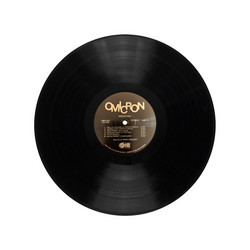
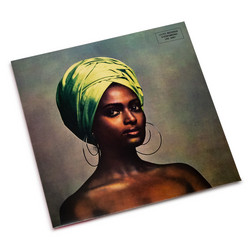
The reissue is fully licensed by Liuto Edizioni Musicali with the cooperation of Umiliani's family, mastered by Luca Sapio from the original analogue tapes at higher sampling rates than were available in 1973. Cover art by Sandro Lodolo reproduces the original.