“When it comes to artifacts of Italian Minimalism, this is about as good as it gets.”
It’s impossible to not sing the praises of Soave. Since their launch in 2017, the Milan based imprint has displayed a profound dedication to the Italian avant-garde, bringing forth a series of incredible reissues and archival releases from seminal figures like Giusto Pio, Giovanni Venosta, Roberto Mazza, Pier Luigi Andreoni & Francesco Paladino, Riccardo Sinigaglia, and Arturo Stalteri, as well as contemporary efforts by the likes of Maurizio Abate and Sandro Mussida. Now, for their first releases of 2020, they return with two astounding LPs that continue to shine light into the shadows of this remarkable realm. Losing The Orthodox Path, originally issued as a CD in 1997 and never before pressed on vinyl, is a mind-melting collaboration from Roberto Musci, Giovanni Venosta, and Massimo Mariani that has remained sinfully overlooked, while Le Città invisibili (Le Città e i morti) contains a body of long lost recordings by Marco Dalpane, issued now for the very first time. When it comes to artifacts of Italian Minimalism, this is about as good as it gets. Each is a revelation from back to front.
When it comes to the world of Italian Minimalism and avant-garde music from the 1970s and 80s, Roberto Musci and Giovanni Venosta need little introduction. Equally recognised for their solo efforts as they are for their long standing collaborations, their collective discography is as astounding as it comes. Soave has offered both artists a dedicated focus over the years, so far bringing back Musci’s brain boggling The Loa Of Music, Venosta’s seminal Olympic Signals, and the duo’s wonderful Urban And Tribal Portraits and A Noise, A Sound.
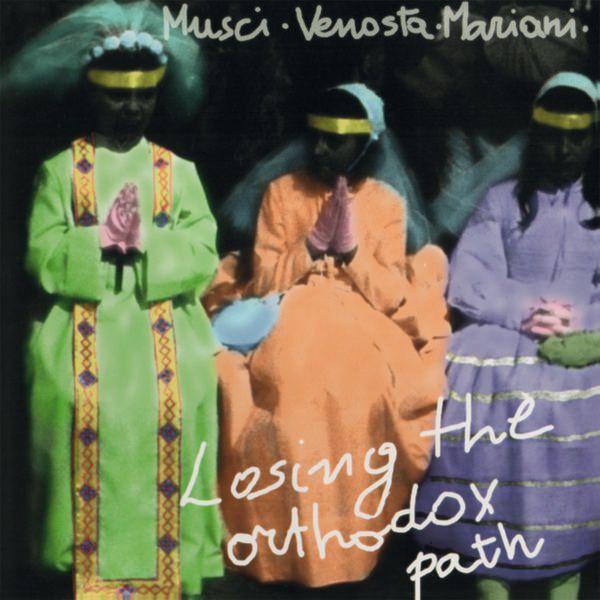
Losing The Orthodox Path, originally issued by the highly regarded Canadian avant-garde and experimental imprint, Les Disques Victo, in 1997, marks the entry of Italian composer, producer and sound engineer, Massimo Mariani, into this long standing creative partnership. Appearing a decade after Musci and Venosta’s collaborative debut, Water Messages On Desert Sand, it is immediately apparent how focused and consistent they were, as well as how far they had come in those years. The elements are all here - fragments of field recording, deep, expansive ambiences, and complex melodic lines - but Losing The Orthodox Path displays a deeper sense of tension and dynamics, pushing the mind back further toward the trio’s avant-garde and experimental roots. For many of their fans, it will quickly appear a towering achievement for each artist, and easily among the most engaging and ambitious records any of them ever made.
A brilliantly crafted tapestry of conceptualism and ideology, folding structure, texture, and a vast range of sonority into a single force that sits at the outer reaches of the vanguard of its moment, Losing The Orthodox Path is an immersive and incredibly challenging body of sound that is remarkably listenable for what it takes on. It is, as the title indicates, three artists taking an entirely unique path toward discoveries in the unknown - an homage to ancient music, that blends fragments of the real world with real-time playing by an incredible additional cast of acoustic instrumentalists, electro-acoustic practices, and elements from the computer based realm.
Absolutely incredible on every count. The height of Italian minimalism, occurring out of time.
Marco Dalpane - Le Città invisibili (Le Città e i morti)
First emerging during the 1980s, and largely known for his legendary collaborations with Tiziano Popoli (1985’s Scorie and its follow up, Lezioni Di Anatomia), Marco Dalpane is a central figure in the second wave of Italian minimalism, building on the groundwork of predecessors like Franco Battiato, Giusto Pio, Juri Camisasca, Lino Capra Vaccina, and others, while pushing the music into new territories of creative, social and political consciousness that were at one with their moment, creating a distinct musical vanguard for the 80s and 90s.
While Dalpane has collaborated on a remarkably diverse range of outings over the course of his long career, his solo efforts have received a sinfully small amount of attention. Belonging to a larger body of efforts that include Scorie, made for different outlets of the performing arts, this is sure to change with the long overdue emergence of Le Città invisibili (Le Città e i morti), comprised of a never before issued body of recordings made in 1991 for Radio Rai as an accompaniment to the reading of Italo Calvino’s “Le città invisibili” (“Invisible Cities”).
Ranging from the baroque to wilder reaches of abstraction, Le Città invisibili (Le Città e i morti) encounters Dalpane adopting the semiotic systems - detaching from a linear handling of the compositional resources and taking form as computer algorithms - used by Calvino in text, exploring the point at which the reader / listener becomes part in the process. Rippling sheets of notes double as aesthetic decodings, and indications of coordinates within the cultural and temporary landscape, moving music and the acts of its making toward an image of something essential and fundamental.
At once beautiful and remarkably challenging, Le Città invisibili (Le Città e i morti) is an absolute revelation. A long overdue window into the practice of the Italian avant-garde during the early 90s, and the practice of its most important artists.
Originally published by Soundohm.