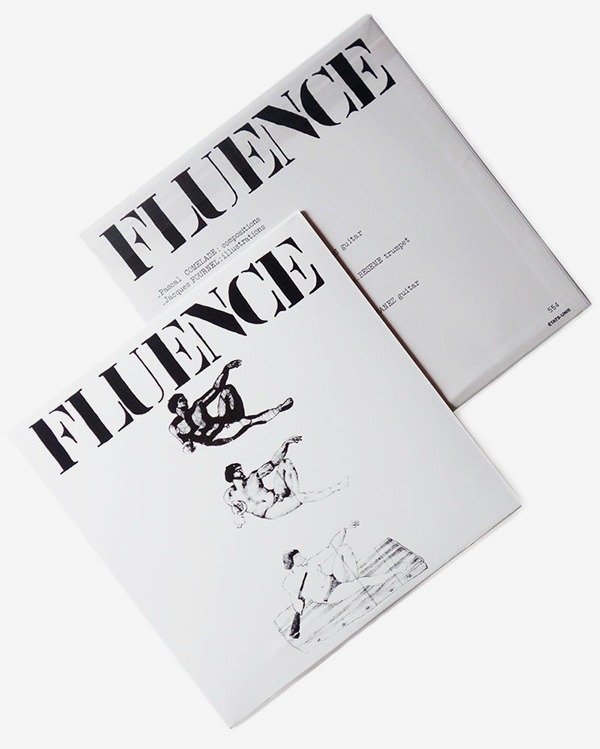
“Any first encounter with Fluence leaves little wonder why collectors and fans have been hotly chasing this one for years.”
A body of truly visionary sound that helps reimagine the French underground during the 1970s, États-Unis’s first time reissue of Fluence, the 1975 debut of Pascal Comelade, seamlessly bridges the realms of Prog, Kosmische, experimental electronic music, and minimalism in a way that few ever have.
Over the last few years, Superior Viaduct’s sub-imprint, États-Unis, has become a remarkable, unfolding realm of creative exploration, plumbing the depths of 20th century musical history for ambitious artifacts and artists that sidestep standard notions of genre, category, and idiom; often long neglected albums that forged their own singular path, and decidedly ahead of their time. In so doing, through an incredible series of limited edition vinyl reissues beginning in 2017, États-Unis has taken great strides within a larger movement, historically reappraising and revising the history of music and rebalancing our understanding of the past. Recently, we had the great fortune to shine some light on their stunning reissue of Pascal Comelade’s 1982 album, Sentimientos. Now we’re thrilled to do the same for the second in their series dedicated to this singular artist; the first stand-alone reissue of his earliest solo venture, originally released in 1975 under the moniker, Fluence.
Pascal Comelade emerged within the French musical underground during the mid 1970s, first working under the moniker Fluence, producing only one stunning, self-titled LP, before reverting to his own name. Easily one of the most noteworthy creative outsiders and visionary minds, he has quietly occupied the outer reaches of sonic exploration for almost 5 decades, issuing countless challenges and changing the face of music as he went, first effortlessly bridging the realms of Prog and ambitious electronic music, before, during the early 80s, veering toward the DIY spirit of Punk, creating a subtle, intricate, and abrasive body of work which would lay groundwork for the coming movement of industrial music, and bedroom electronics, all of which eventually led to remarkable collaborations with everyone from Robert Wyatt and Faust, to David Cunningham, Jac Berrocal, Pierre Bastien and P.J. Harvey.
Fluence, originally issued on Pôle Records - the legendary imprint run by seminal outfit Pôle - comprised three works that stand apart from each other; fixed points in a vast world that fall somewhere between the realms of Prog, Kosmische, explicitly avant-garde / experimental electronic music, and the irreverent. The first, ‘A Few Reasons To Stay / A Few Reasons To Split’ - a title inspired by Swiss conceptual artist Urs Lüthi - offers a fascinating rethinking of what minimalism might be conceived as, featuring kaleidoscopic arpeggios created by Comelade, and the sounds of frequent collaborator Richard Pinhas’ howling guitar, often resembling a cello and a vocal moan, over its true source. Remarkably, even before concluding the first side, Comelade veers away and shifts the ground with the playful, ‘Barcelona Tango’s’, flirting with off-kilter exotica of pocket trumpet and looping drum beats that foreshadows Comelade's later work, and created a stir in avant-garde circles upon its release for the use of unorthodox instruments (plastic saxophone, toy piano, etc.). Unquestionably the most striking and ambitious venture on the album is ‘Schizo’, gracing the entire second side. A vast, dreamy soundscape that recalls the best of Kosmische in the vein of Popol Vuh, but pushes further on with Comelade's electric organ rendering shimmering arpeggios and ambiences that collide with Gabriel Ibanez's thick, reedy buzz on guitar, creating something that stands entirely apart from the pack.
Built from a remarkable emotional, conceptual and textural range of materiality - remarkably experimental and progressive - that sounds both timeless and contemporary. Any first encounter with Fluence leaves little wonder why collectors and fans have been hotly chasing this one for years.
Originally published by Soundohm.