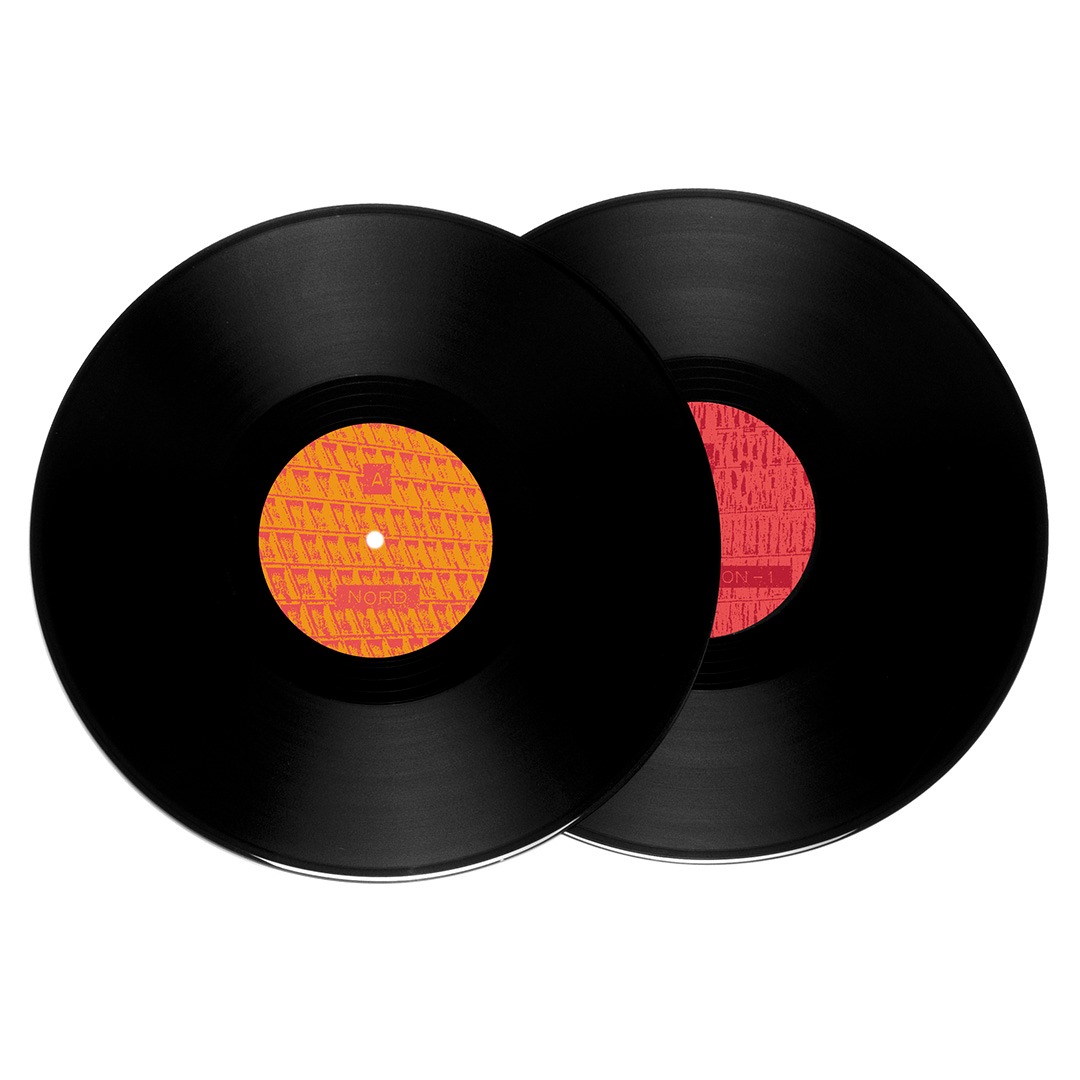
“Nord’s “Psycotron - 1” is an astounding piece of work that has remained almost entirely unobtainable, and thus under-recognized for its creative and historical significance, for nearly forty years.”
A hazy, claustrophobic bridge between minimalism, drone, creative conceptualism, ambient music and noise, we’re thrilled to offer the first ever vinyl reissue of Nord’s “Psycotron - 1” - one of the greatest and most sought after holy grails of early Japanese Noise. Recorded by Hiroshi Oikawa only a handful of years before his complete disappearance and originally issued in 1984 as a cassette box in a limited edition of 25 copies, “Psycotron - 1” now returns as a 4LP set.
For roughly three quarters of a century, Japan has given birth to some of the world’s most radical realizations of organized sound, particularly its numerous scenes of underground music. Among these, the country’s iconic context of noise - wildly free thinking, rebellious, and creatively boundary pushing - stands entirely apart. Incredibly influential and highly sought after by collectors and fans, this scene’s output - beginning with its founding during the late 1970s and continuing to this day - has been historically aligned with independent labels, with recorded documents often issued in tiny, limited editions that have made accessing material incredibly difficult. Thankfully, in recent years we’ve been witness to numerous reissues of impossible to find holy grails of Japanese noise, bringing these thrilling and blistering sounds to the audiences they rightfully deserve.
Emerging roughly alongside Hijokaidan, Hanatarash, Merzbow, Keiji Haino, High-Rise, Toshiaki Ishizuka, and numerous other projects, Nord were one of the earliest and most important projects within the nascent movement of Japanese noise during the late 1970s and early 1980s. Founded by Satoshi Katayama and Hiroshi Oikawa, the project only released one album - their self-titled debut for Pinakotheca in 1981 - before going their separate ways and each continuing to use the Nord name as their respective monikers, naturally causing a certain amount of confusion regarding the authorship of their subsequent outputs. Of the two, Hiroshi Oikawa’s brief run of releases during the mid-80s - "L∴S∴D∴", "NG Tapes", "Ego Trip", and "Psycotron - 1" - are incredibly fascinating and groundbreaking, before the artist disappeared from view. All remain incredibly hard to find, having been issued in small limited editions.
Sprawling across eight vinyl sides that reproduce those of the original cassette edition, “Psycotron - 1” encounters Oikawa’s Nord guise pushing the idiom of noise into fairly uncharted waters during its moment. Rather than the visceral energy and blistering textures and atonalities most commonly associated with the movement’s output, the artist veers toward a decidedly more immersive realm, sculpting two of deep dronescapes - each constructed via two themes, comprising slightly different versions - of pulsing electronics and synths that fall within a closer alignment with the German krautrock and Kosmische sound and foreshadow seminal albums like “Time Machines” by Coil that would emerge decades down the road.
Even more fascinating is the fact that the album’s conception incorporates elements of chance and variable multiplicity, drawn from experimental music. Like the original conception of Phill Niblock’s “Four Full Flutes” or The Flaming Lips’ “Zaireeka”, it was conceived with each of the collection’s cassettes (and now LPs) to be played simultaneously on four different stereos. Depending upon the time each side is started, in conjunction with the volume of each stereo and the position of each set of speakers, as well as the position of the listener within the room, every listen yields a unique experience and a near endless series of alternate sonic possibilities.
Nord’s “Psycotron - 1” is an astounding piece of work that has remained almost entirely unobtainable, and thus under-recognized for its creative and historical significance, for nearly forty years.
Originally published by Soundohm.