“There are few richer examples of the juncture between sonority and a life lived.”
Building on a prolific body of work that has appeared over the last year, the American composer and percussionist, Sarah Hennies, returns with “SOVT”, an astounding work of topical minimalism, issued by Elsewhere. Composed for piano and played by Wild Up’s Richard Valitutto, this engrossing marvel draws inspiration, like her highly regarded works, “Falsetto” and “Contralto”, before it, upon Hennies’ own deeply personal experiences with vocal therapy, culminating as an engrossing and deeply meaningful expression of structure and tone, moving far beyond the notions of art for art’s sake.
Experimental music can often be perceived to be a world of abstractions and ideas, divorced from the real world, lived experience, and the depth and range of human emotion. Of course, broadly speaking, nothing could be further from the truth, but it often takes an artist of particular talent and temperament to draw this into focus. In previous generations, the practices of composers like Glenn Branca, Julius Eastman, Pauline Oliveros, and Frederic Rzewski did precisely this: infusing experimental music with a palpable sense of politics, emotion, and topical concerns. Within the contemporary landscape, few better exemplify this ability than the American composer Sarah Hennies. Unquestionably one of the most singular and visionary voices working in experimental music today, over the last decade or so Hennies has issued a groundbreaking body of work deeply connected to lived experience, culminating as a remarkably tense and personal reimagining of Minimalism. Building on the momentum of a stellar suite of releases last year, Hennies now returns with “SOVT”, a startlingly beautiful composition for piano, performed by Richard Valitutto - a member of the ensemble, Wild Up, who many will know for their stellar suite of releases attending to the work of Julius Eastman over the last few years.
Following her studies in percussion at the University of California-San Diego with Steven Schick and others, Sarah Hennies first emerged into the landscape of experimental music via the vehicle of Texas’ thriving scene, primarily producing a brilliant body of solo compositions and collaborations - in addition to being a stunning interpreter of works by composers like John Cage, Alvin Lucier, Jandek, Jürg Frey, Ellen Fullman, Radu Malfatti, Arnold Dreyblatt, and others - that positioned her at the centre of the consciousness of nearly everyone who encountered her performances and recorded output. Despite a slow, gathering rumble over the years, it wasn’t until Hennies’ relocation to upstate New York that she exploded into broader consciousness, producing a rapid fire suite of releases - “Gather & Release”, “Orienting Response”, “Everything Else”, “Embedded Environments”, “Sisters”, “Reservoir 1” - in three short years, as well as a startling number of live performances, ensemble works and commissions, and collaborations, rooted in her singular practice of explorations of musical, sociopolitical, and psychological issues including queer and trans identity, love, intimacy, psychoacoustics, and percussion.
Originally commissioned by R. Andrew Lee and performed by Richard Valitutto - clocking in at just under an hour in duration - “SOVT” was composed for piano by Hennies in 2017. The piece’s title stands for Semi-Occluded Vocal Tract, a vocal exercising method deployed to strengthen the voice by helping the vocal cords vibrate more efficiently. Hennies encountered this process in a class on so-called “voice feminization” for transgender women, and began to draw direct inspiration from it, leading to the development and composition of a series of works, including the highly regarded “Falsetto” and “Contralto”, in addition to “SOVT”.
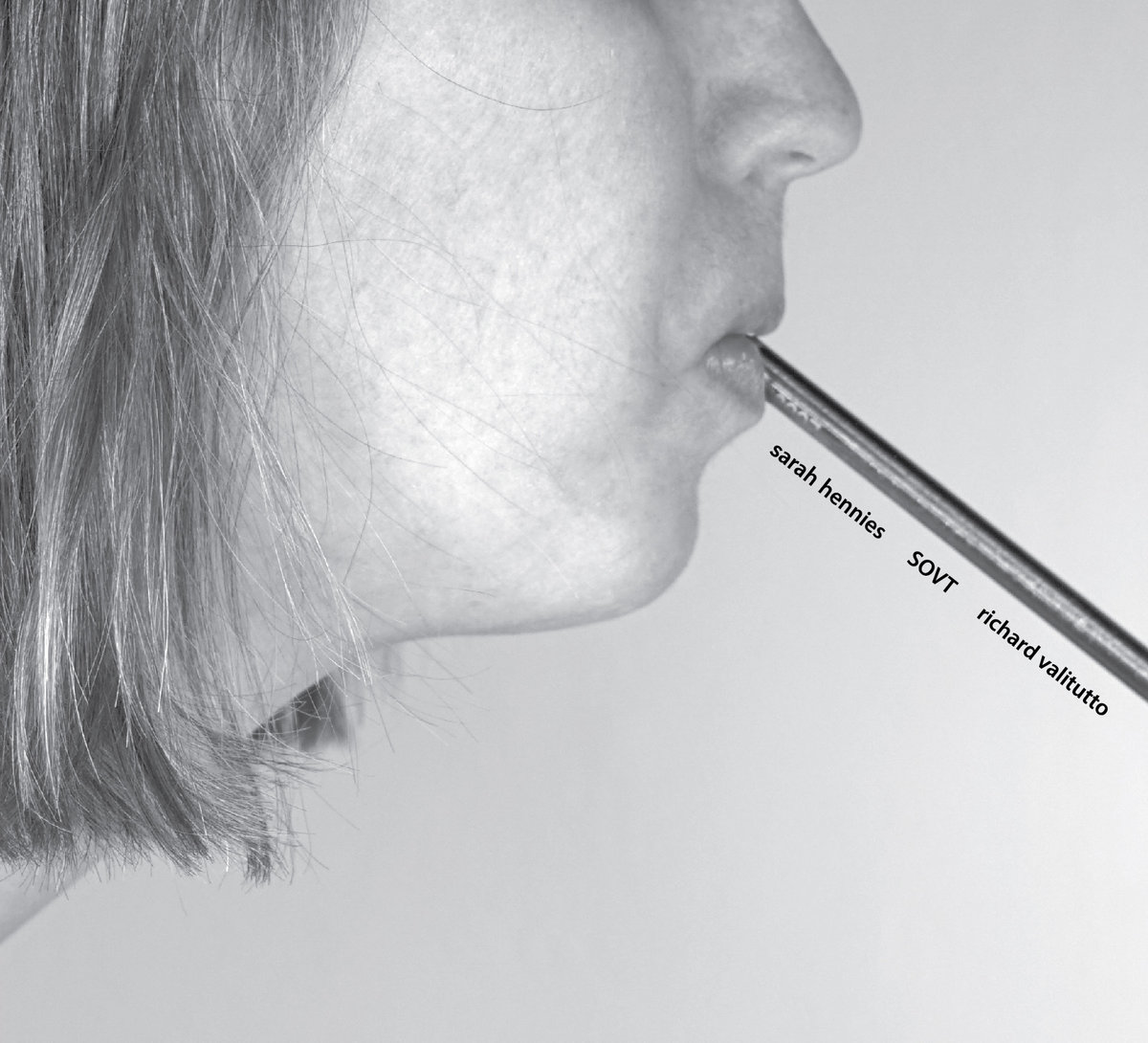
One of the methods utilised within SOVT exercises - experienced first hand by Hennies - is singing with a straw in the mouth, intended to regulate air pressure and reduce strain on the vocal folds. This led her to conceive, when embarking upon the composition of “SOVT”, to mute nearly all of the strings of a piano with Blu-Tack poster putty, developing a conjoined rhythmic language that reframes the piano as a hybrid instrument, resting between the realms of percussion and tonality. By connecting all the strings with putty, sympathetic vibrations occur throughout the piano, similar to the feeling of increased vibration in the mouth and throat experienced when singing through a straw.
Incredibly constrained, “SOVT” is a striking reconfiguration of Minimalism, encountering Hennies paring the material and structural elements of the piece to only the essential, while simultaneously imbuing each note with a profound sense of the topical, political, and metaphorical. As its muted resonances ring through Valitutto’s piano - linking each string to the next - moving from glacial punctuations that hang in the air toward more complex structural arrangements and shifts, increasingly picking up tempo toward hypnotic states, the experiences that underscored and inspired it, take root and connect, provoking empathy and understanding in the listeners’ ears, minds, and hearts. Where Minimalism - like the larger body of experimental music to which it belongs - has so often positioned itself as art for art’s sake, Hennies rapidly, over the course of the piece’s duration, illuminates how much more it can actually be.
Engrossing from its first sounding to the last, “SOVT” joins last year’s “Bodies Of Water” and “Motor Tapes”, as well as “Transits: Volume 1”, her fantastic realisation of Michael Ranta’s work - all issued last year - to mark increasingly prolific bodies of recordings from Hennies, each reinforcing the proof that she stands among the most important composers currently working in the contemporary landscape of experimental music. There are few richer examples of the juncture between sonority and a life lived.
Originally published by Soundohm.