“Immersive and grounded, while sonically inferring the otherworldly, it remains a rare work within the canon that utilizes field recording to be entirely transportive”
Building on the important relationship with the label that began with their beautiful edition of Glass World in 2023, Annea Lockwood returns to Room40 with an astounding new edition of her seminal, groundbreaking work, ‘World Rhythms’, from 1975. Fully readdressed by Lockwood from the original master tapes, drawing out new dimensions of the work - a visionary, multichannel composition that deploys field-recordings in unprecedented ways, Room40 has delivered a definitive edition of one of the most important works in the field of experimental sound.
With more than two decades of activity behind it, Lawrence English’s Room40 imprint has quietly become a singular presence within the context of experimental sound, enveloping a vast global network that extends far beyond its Australian roots. The label’s sprawling catalog of releases, currently numbering into the hundreds, traverses an incredibly diverse range of highly individual practices, spanning numerous generations, guided by an eye for innovation and artists who venture off the beaten path. Given the deep resonance between English’s own practice and that of the New Zealand born, American based composer, Annea Lockwood, it's surprising that it took until 2023, when Room40 produced a beautiful CD and book reissue of Lockwood’s seminal 1970 full-length, Glass World, for these twin stars to align. Thankfully it did, because they’ve rejoined forces once again, with a much needed, brand new rendering of her remarkable 1975 work, World Rhythms, originally released in a shorter form on the legendary feminist compilation, ‘New Music For Electronic And Recorded Media’, and then in an extended rendering for Phill Niblock’s Experimental Intermedia back in 1998, both of which are long out of print. Described by English as “one of the first creative works exploring the potentials of field recordings in a multichannel setting. It is a landmark work and a composition that.. now is only starting to come into true focus, and be understood for exactly how revolutionary it was.” Weaving a deep sense of abstraction from the sonorities of the natural world in ways that feel remarkably contemporary, it’s impossible not to agree. Lockwood has always been so ahead of her time that more than 50 years on, we’re only just starting to catch up.
Born in Christchurch, New Zealand, in 1939, since her emergence during the 1960s Annea Lockwood has remained a pivotal figure in the landscape of experimental sound. Following her studies at the University of Canterbury, the Royal College of Music, Darmstädter Ferienkurse, and the Hochschule für Musik Köln, Lockwood settled in London in 1964 where she rapidly emerged into the global consciousness via her “Piano Transplants” performance actions, that involved burning, drowning, or planting pianos in various locations across the United Kingdom and United States, alongside her seminal “The Glass Concert” (1967), published in the legendary imprint, “Source: Music of the Avant Garde”, and later released as “Glass World” - one of the great landmarks in experimental recordings - by Tangent Records, in 1970.
Following her move to New York in 1973, Lockwood embarked upon a fascinating multi-faceted practice that traversed numerous strategies of compositional generation, particularly working with field recordings of environmental sounds, spoken text, electroacoustic and acoustic instruments, and various technologies, as well as environmental specific performances, collectively amounting to a visionary canon of work that taps the radical potential of sound as a transmitter of meaning. Among the most groundbreaking of these was ‘World Rhythms’, regarded as among the first compositions to explore the potential of field recordings in a multichannel setting. First performed in 1975, before appearing as an approximately eight and a half minute version on the legendary feminist compilation ‘New Music For Electronic And Recorded Media’, alongside works by Pauline Oliveros, Laurie Spiegel, Laurie Anderson, Ruth Anderson, and others, even in that remarkable company, the piece’s remarkable constellation of sonorities and sense of open structure set Lockwood apart from her generation of peers.
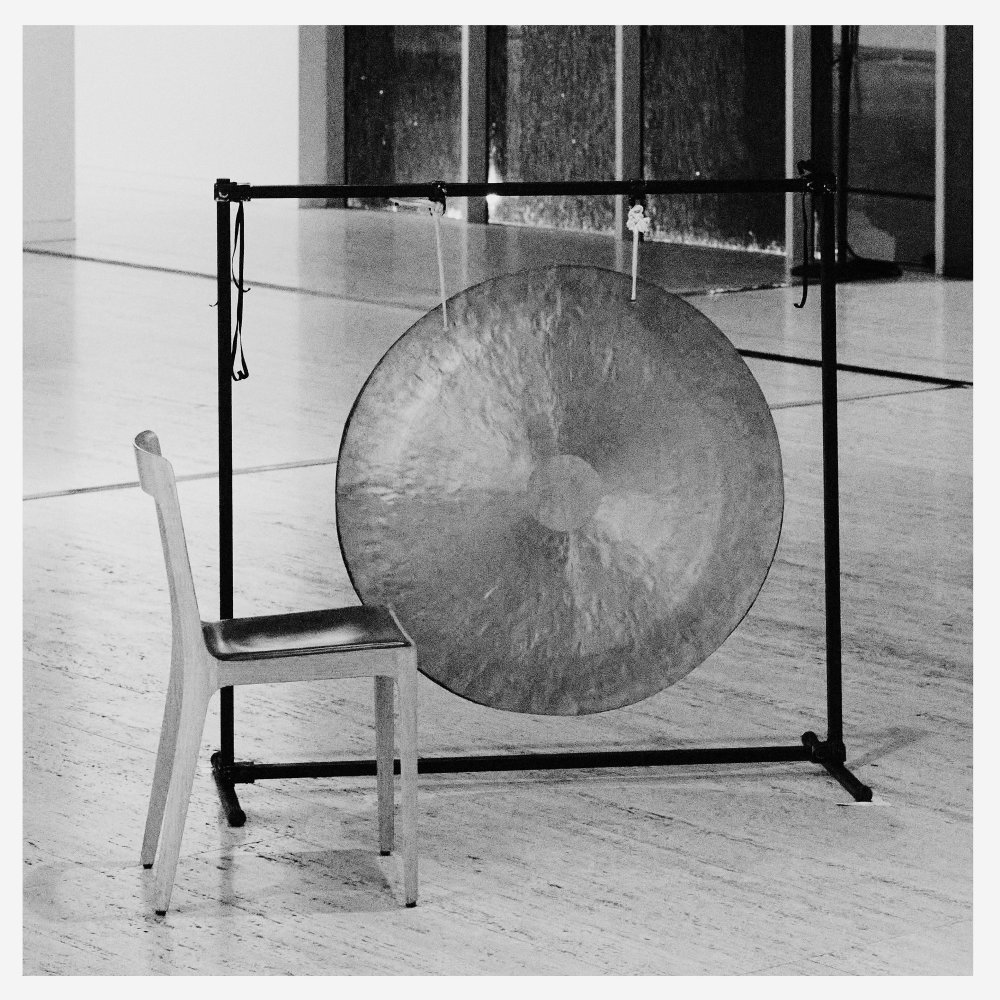
Room40’s new edition of ‘World Rhythms’ began with a desire on the part of Lawrence English to reissue the work. As the conversation between himself and Lockwood developed, the composer suggested revisiting the master tapes with the thought that the work could be revived and prepared for live performances. Upon English’s approaching of the original tapes, he was “struck by the profound dynamism of the recordings. Each of the sound-fields held an attentive flux, a rhythmic pulse that was breathing. Each one a story of the pulses of the world, and our universe, that spoke to a possible reading of reality that sits in excess of our everyday capacities. A poetics of pulse if you like.” Remarkably, those proposed performances happened, in some cases diffused by English, accompanied by Lockwood on tam tam, the collective process and conversations connected to which resulted in this newly rendered imagining of ‘World Rhythms’ through which the composer has developed new relations, listening paths and ways of exploring her sound-fields, while retaining the core of the original work and its priority orientation toward the act of attentive listening.
While English accurately points toward how revolutionary ‘World Rhythms’ was at the time of its composition, fully understanding its achievements - given how much work has utilized field recording and built upon its methodologies over the decades - may not be easy to glean for contemporary listeners, given how current it presently sounds. During the mid-1970s, Lockwood stood at the forefront of using environmental field-recordings as a primary material for musical composition. While a small number of composers like Luc Ferrari had already begun to work with these types of recordings, in most cases they were heavily manipulated beyond recognition, or as in the case of Luc Ferrari’s groundbreaking ‘Presque Rien No.1’, presented with almost no intervention so to leave the impression of a sonic snapshot of a space as it was encountered. With ‘World Rhythms’ Lockwood established an intermediate zone that has largely become a standard compositional method ever since: collaging multiple channels of different source material together with some minor intervention, balancing a deep sense of sonic abstraction against tangible identity of source.
Utilizing recordings of volcanic eruptions, earthquakes, radio waves, geysers and pools, and tree frogs, ‘World Rhythms’ constructs a remarkable sense of sonic space and environment, pulsing with intricate textural detail. Immersive and grounded, while sonically inferring the otherworldly, it remains a rare work within the canon that utilizes field recording to be entirely transportive, while also provoking new framings and understandings of the world in which we live and its natural disposition for the rhythmical.
Originally published by Soundohm.