“Once again, Paradigm Discs has delivered an absolute revelation of profound historical importance and a true joy for the ears.”
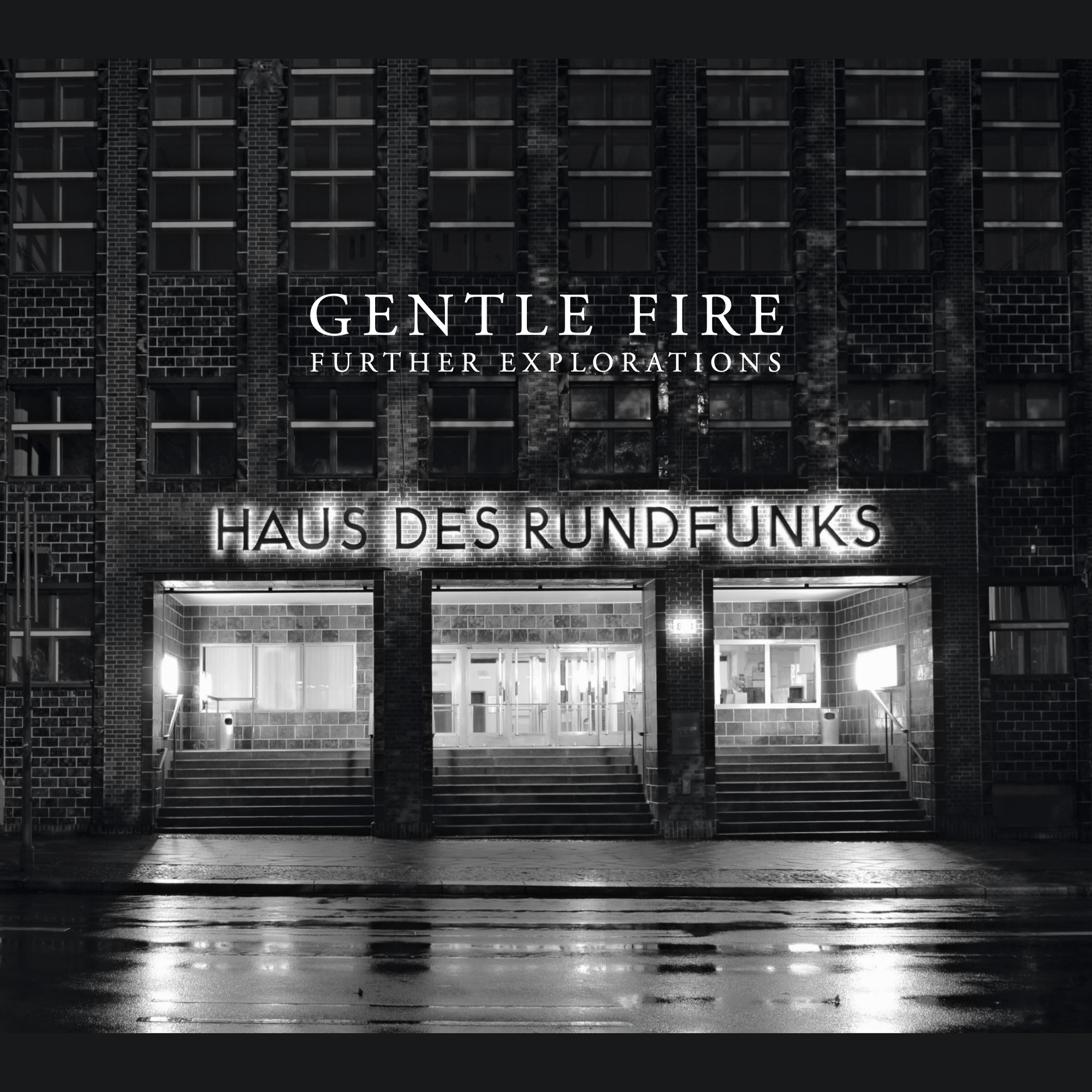
Building on the much-needed territory of sonic unearthing that defined their groundbreaking, box-set collections dedicated to the British experimental collectives Gentle Fire and Intermodulation, Paradigm Discs delivers ‘Further Explorations’, their second release comprising previously unissued recordings made by Gentle Fire. Capturing the all-star group in Germany during 1973 and 1974, these newly discovered recordings - featuring three devised by the group’s members, one by Erhard Grosskopf and one by Christian Wolff - radically expand our understanding of their activities and pursuits with music that is as challenging as it is a joy for the ear, coming out of nowhere to become one of our favorite releases of 2026 so far.
For more than 30 years, the London based imprint, Paradigm Discs, has been meticulously curating a catalog of remarkable, often sinfully neglected, music at the outer and extreme margin of experimental practice. During the label’s early years, it cast a wide net, issuing remarkable music by its founder Clive Graham’s project Morphogenesis, Pauline Oliveros, Trevor Wishart, Karuna Khyal, Brast Burn, Daphne Oram, and others. In recent years, working at a steadily more prolific pace, they’ve offered an increased focus to remarkable artifacts stemming from the English scene with a series of stunners by Alterations, Adam Bohman, and Anthony Moore, as well as revelatory, expansive boxsets dedicated to the output of Gentle Fire, Michael Allen Z Prime, and Intermodulation. Paradigm Discs’ latest, ‘Further Explorations’ continues this momentum, returning our ears to the singular world of the British avant-garde and live electronics performance group Gentle Fire. Comprising five, never before released archival pieces, recorded in Germany during 1973 and 1974, that capture the legendary project as they’ve rarely been encountered, performing works composed by the group’s members, as well as those of others (Erhard Grosskopf and Christian Wolff) - intertwining harmonically intoxicating ambiences with minimal dissonances and structural abstractions, this stunning CD edition represents some of the most revealing and captivating music to appear to-date from one of the most important experimental music collectives to emerge from Britain during the late 1960s and early 1970s.
Between its disbanding in 1975 and the release of Paradigm Discs’ astounding X3 CD collection of archival material, ‘Explorations (1970 - 1973)’, in 2020, Gentle Fire occupied a shadowy place in the cultural memory of experimental music: spoken of with awe and respect by those who had been lucky enough to catch them live during the group’s seven year run, and either mysterious or unknown by nearly everyone else, thanks to very little recorded material being available to a public ear: one LP issued by EMI in 1974 entitled ‘4 Systems, Music For Amplified Toy Pianos, Music For Carillon, Edges’, capturing renditions of pieces by Earle Brown, John Cage, and Christian Wolff by the group. This aforementioned LP did however offer clues, being that the group was primarily known for its dedication to the work of these composers, as well as that of Karlheinz Stockhausen, but as ‘Explorations (1970 - 1973)’ revealed, there was more, particularly the efforts of the all-star cast of composers and musicians that made up the group.
Formed in 1968 by Graham Hearn, Hugh Davies, Michael Robinson, Richard Bernas, Richard Orton, and Stuart Jones, Gentle Fire emerged into the English landscape of avant-garde music during roughly the same moment that witnessed the appearance of legendary groups like AMM, The Scratch Orchestra, Company, Spontaneous Music Ensemble, London Jazz Composers Orchestra, The Music Improvisation Company, but has remained among the least remembered projects of that remarkable context, despite the somewhat legendary status of its members as composers in their own rights: something that Paradigm Discs has set out to rectify. In addition to the sustained neglect due to a relative lack of publicly available recordings, this is also likely a consequence of their known efforts having been subservient to the work of other composers, and the majority of that work - deploying a range of acoustic instruments, electronics, objects, and homemade sound producing inventions - was enacted live in performance, thus, being undocumented, becoming a victim of temporary loss. Working in close contact with composers like Brown, Cage, Wolff, Stockhausen, Morton Feldman, Toshi Ichiyanagi, Gordon Mumma, Robert Ashley, David Behrman and Alvin Lucier - and playing a crucial part in introducing wide British audiences to experimental music through large scale performances at festivals like the Glastonbury Fayre, Gentle Fire is an important piece of the puzzle within the history of 20th century experimental music that has been overlooked for far too long.
There were breadcrumbs, leading to important truths, laid by Paradigm Discs’ ‘Explorations (1970 - 1973)’. While the first disc of that collection was dedicated to the kind of material for which the group had long been known - dedicated to renditions of works by other composers - the second focused in on pieces composed by some of the group’s members - Graham Hearn, Michael Robinson, Richard Bernas, and Stuart Jones - followed by an entire disc focused on their collective work. ‘Further Explorations’ follows roughly the same incredible line of inquiry as its predecessor and presents a similar balance of material, presenting a text-based piece for acoustic instruments, live electronics, and magnetic tape by the German composer Erhard Grosskopf, an alternate version of Christian Wolff’s ‘Edges’, differing from the rendition that originally appeared on the group’s 1974 LP, and three works devised by members of the group.
The five archival tracks that comprise ‘Further Explorations’ were discovered while Clive Graham was researching and unearthing the tapes for Paradigm Discs’ box set dedicated to Gentle Fire’s fellow Stockhausen collaborators Intermodulation. They capture two sessions recorded for German radio in 1973 and 1974, one for Sender Freies Berlin and the other for Hessischer Rundfunk in Frankfurt, and thus were produced with careful attention to a high level of quality and fidelity, allowing their remarkable achievements to be transmitted as though they were made yesterday. As Graham deftly points out: “these recordings have about them a similar atmosphere to much of the music on Brian Eno’s Obscure Records series and would not have been out of place on this predominantly Anglophilic label.” Laying embedded in this description are hints toward the rough sonic territory embodied across the length of the release: Great Britain’s unique sensibility of Minimalism that began to emerge during this period: embracing harmonic seduction and structural constraint, while also utilizing timbre, texture, and dissonance in ways rarely approached within other geographies. Beginning with a stunning, 20-minute rendition of Erhard Grosskopf’s ‘Looping’, Gentle Fire unfurls sustained tones, evolving, over the piece’s duration layers of drone that are occasionally augmented by spoken text. A rare encounter with a visionary composer that has only recently begun to get the attention he deserves via full-lengths issued by Neos and Edition Telemark, it’s a totally engrossing revelation on numerous fronts.
From here, Gentle Fire begins to really shine across two, long-form tracks of their own making. The first, ‘Art Must be Fed’, is a genre busting exercise in experimentalism: bridging the gaps between jazz, Minimalism, and far-reaching gestures of the avant-garde, as drops of piano tones are met by the sorrowful blues of a trumpet, deep long-tones, complex textures and timbres produced by numerous sound-generators, and vocal poetics balanced between spoken and songs. This is followed by the equally mesmerizing ‘Group Composition III’, an absolute stunner rendered on gongs and other metal objects that rolls in resonant waves and delicate strikes of punctuation for more than 20 minutes. For its final dedication to a composer outside of the group, Gentle Fire leaps into a fantastic rendering of Christian Wolff’s 1968 piece ‘Edges’, producing an intricate and delicate tapestry of timbres and clattering textures, before concluding ‘Further Explorations’ with ‘Music Project V-II’, a sublime immersion in drone composition that slowly moves toward lower registers and more complex tonal combinations over the course of thirteen minutes, producing startling effects that stand entirely distinct from most applications of its techniques being made at the time, and thus expanding the perceived depths that Minimalism might plumb.
While relatively bite-sized compared to its predecessor, the 79 mins of music that unfold across the length of ‘Further Explorations’ packs serious punch and takes huge steps toward further illuminating the relatively little documented activities of the super-group Gentle Fire. Once again, Paradigm Discs has delivered an absolute revelation of profound historical importance and a true joy for the ears.
Originally published by Soundohm.