“It is a beautiful thing to behold.”
Continuing the thrilling journey that has witnessed them traverse nearly every idiom of radical and adventurous music in recent years, Holidays Records returns with the first ever vinyl pressing of the French singer and instrumentalist Elizabeth Vogler’s sensational ‘Au Nom Deus Asos’. Capturing the electroacoustic composer and improvisor in-situ in a church in South-West France, weaving a constrained palette of harmonium and voice into six shimmering songs that blur the boundaries between experimental approaches and ancient folk forms, its timeless beauty moves beyond the realm of words.
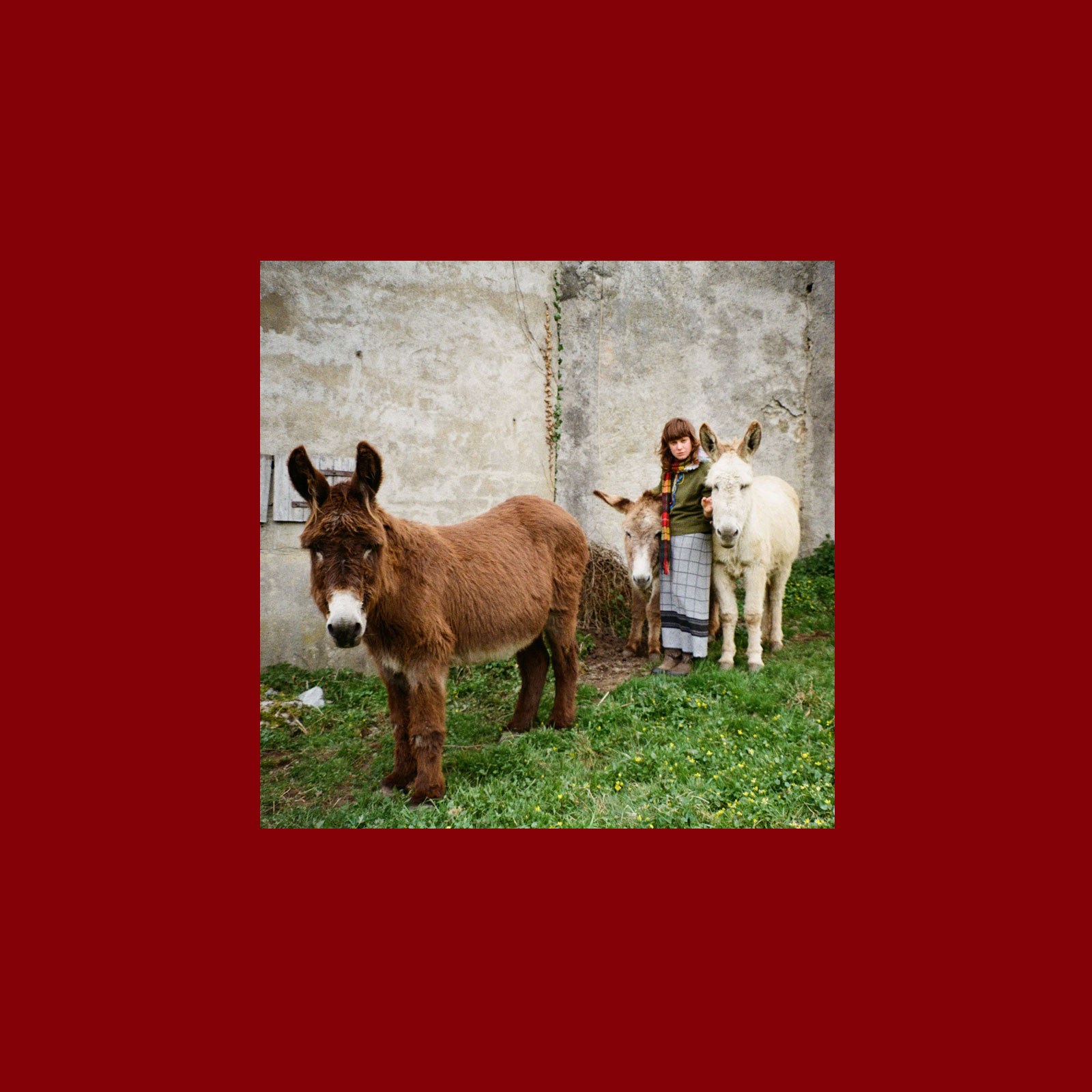
Experimental music has always had a complex relationship with the past. On one hand, it forges forward toward the future, fracturing itself from historical tropes and norms. On the other, it seeks that which is fundamentally human through the acts of communicating and expressing through organizations of sound. During the 20th century, this complex entailment of desires instigated many composers - Harry Partch, Lou Harrison, Terry Riley, La Monte Young, Steve Reich, etc. - to draw inspiration from ancient musical traditions stemming from cultures other than their own. More recently however, emerging generations of younger artists from Europe and the United States have begun mining historical traditions and musical temperaments connected to their cultures and geographies, particularly noteworthy in the case of Sarah Davachi and Kali Malone’s uses of early and Baroque tuning systems in their work. Perhaps even more strikingly, running within this movement is a constellation of artists - Roxane Metayer, Lise Barkas, Delphine Dora, Luster, etc. - who intertwine elements drawn from the indigenous folk traditions of Europe with experimental approaches. Now one of our favorite labels working today, the Milan based Holidays Records, dives into the inner world of one of the most engaging artists working within this latter grouping - the French singer and instrumentalist Elizabeth Vogler - with the first ever vinyl pressing of her stunning sophomore release ‘Au Nom Deus Asos’. Originally released to quiet acclaim as a small cassette edition by the Berlin based imprint, Billo, across the constrained expanses of six tracks, Vogler reduces her sonic palette to harmonium and voice, it’s an absolute stunner, channeling the ancient traditions of Southern France, before transmogrifying them into shimmering new forms. Issued by Holidays in a beautifully produced sleeve featuring full color photos by Albane Barraus, and an insert, this is a record of rare hope and joy, embodying a sense of timelessness that makes you wonder where it’s been all of your life.
Hailing from Southern France and trained in musicology and electroacoustic composition, for more than a decade Elizabeth Vogler has slowly carved out a unique territory within the sonic realm, singing in several polyphonic ensembles, creating electroacoustic compositions centered around voice and drones - combining choir-like layers, long-tones, electronics, field-recordings, and textures, described as “somewhere between imagined traditional song and unstable electronic ritual” - improvised performances, and increasingly expressions of experimental music that veer toward traditional folk, drawing upon Bulgarian vocal techniques, and the Occitan traditions from Béarn, in the South of France, where she grew up. It was from this rough proximity from which the loose perimeters of ‘Au Nom Deus Asos’ were built.
Inspired by and drawing on the experiences of a previous performance in the same space, Vogler recorded ‘Au Nom Deus Asos’ in Lescun church, located in a village in the Pyrénées, not far from the Spanish border, deploying her powerful and deeply emotive vocals - singing in a number of distinct dialects - and harmonium alone. Imbued with the naturally occurring ambiences and reverberance of the church in which it was captured, Vogler’s voice and accompanying long-tones reveal fascinating, ancient musical conversations across the French and Spanish borders, channeling unexpected, albeit subtle, pop sensibilities that impart something timeless and profound: sounds that have been “transformed, decomposed and rebuilt”, and that carry “fragments of memory, tradition and place.”
While bearing many of the hallmarks of folk music, when addressing ‘Au Nom Deus Asos’ Elizabeth Vogler’s strong rooting in experimental music should not be ignored. Much like the work of Sarah Davachi, Lise Barkas, and a number of others, she harnesses the power and humanity of ancient music within quietly radical hybrid forms that retain the spirit and principal quests of experimental music, in the absence of its explicit signifiers. It is a beautiful thing to behold.
Originally published by Soundohm.