Jazz /
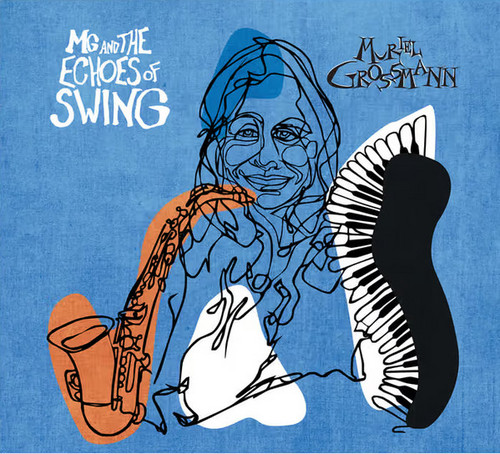
MG and The Echoes of Swing
The world knows Muriel Grossmann as a bandleader, saxophonist, and composer of highly individual and original music. Her work has become closely associated with a modern revival of spiritual jazz, reflected in albums such as Golden Rule, Universal Code, and Quiet Earth, and in performances across Europe with herlong-standing quartet.
That is one side of the story. In Ibiza, where Grossmann has lived and worked for over two decades, another side of the artist reveals itself. Locals know her not o…
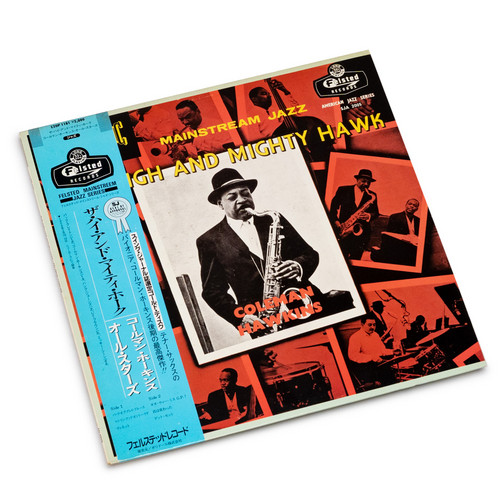
The High And Mighty Hawk (LP)
1984 Japanese re-issue on Felsted's "Mainstream Jazz Series" of the 1959 album. With insert and obi.
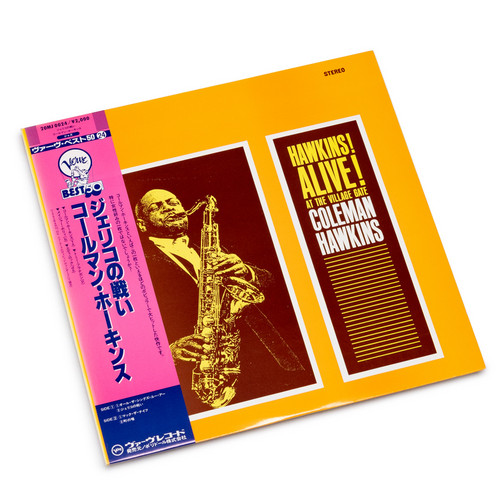
Hawkins! Alive! At The Village Gate (LP)
1985 Japanese re-issue on Verve's "Best 50" series of the 1963 live album. With insert and obi.
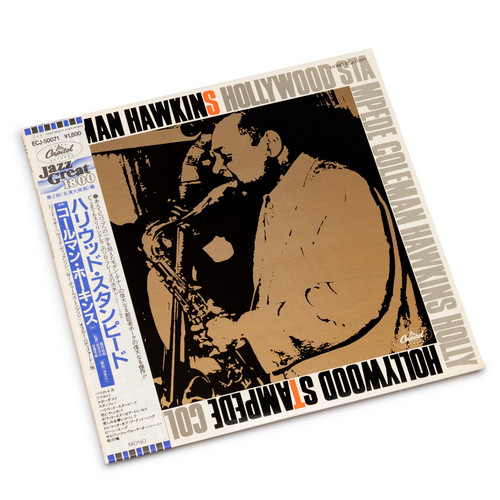
Hollywood Stampede (LP)
1982 Japanese re-issue on Capitol's "Jazz Great 1800" series of the 1967 Japan-only compilation. With insert and obi.
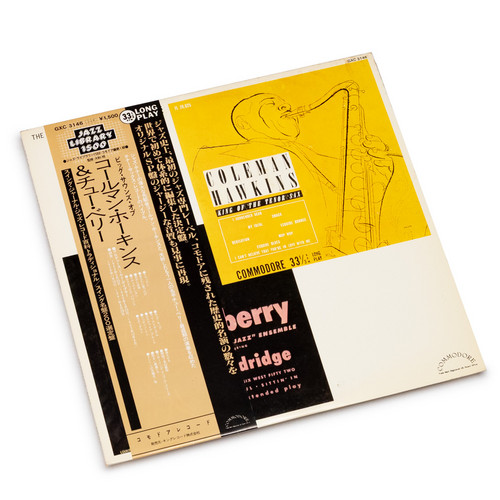
The Big Sounds Of Coleman Hawkins & Chu Berry (LP)
Promotional copy of the Japan-only 1979 compilation on Commodore's "Jazz Library 1500". With insert and obi.
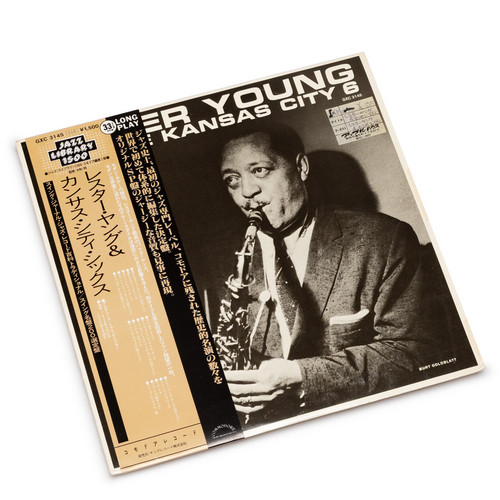
And The Kansas City 6 (LP)
1979 Japanese re-issue on Commodore's "Jazz Library 1500" series of the 1961 album with recordings from 1938 and 1944. With insert and obi.
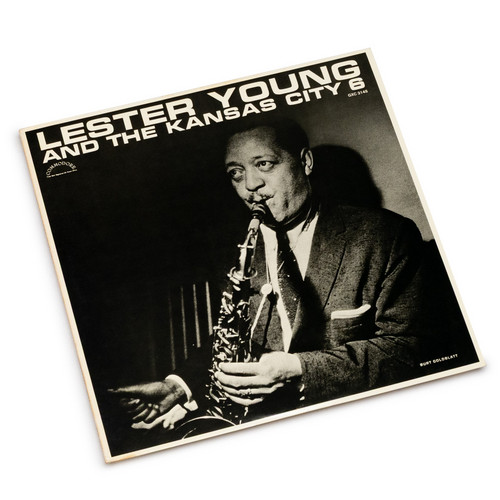
And The Kansas City 6 (LP)
1979 Japanese re-issue on Commodore's "Jazz Library 1500" series of the 1961 album with recordings from 1938 and 1944. With insert.
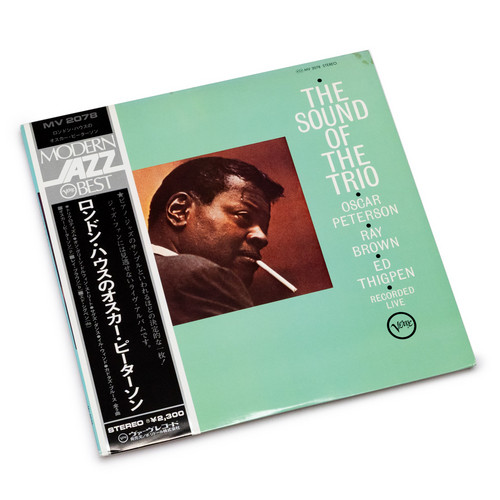
The Sound Of The Trio (LP)
1973 Japanese re-issue on Verve's "Modern Jazz Verve Best" of the 1961 album. With insert and obi.
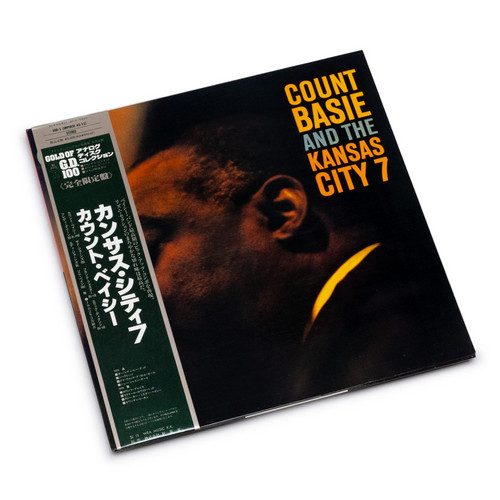
Count Basie And The Kansas City 7 (LP)
1991 Japanese re-issue on Impulse!'s "Gold Of G.D. 100" series of the 1962 album. With obi and original innersleeve.
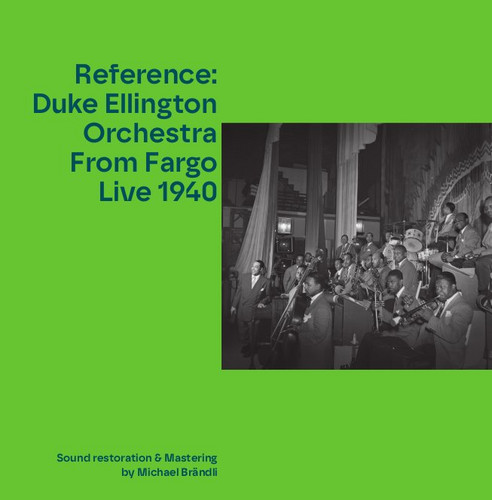
From Fargo Live 1940
"It was, all things considered, just an unexceptional whistle stop on a wearying circuit of dance halls and theaters – the night before they had played in Winnipeg, Manitoba and, conveyed by train the 200 miles to this evening’s North Dakota gig, would immediately afterwards find themselves en route to Duluth, Minnesota for their next show. There was certainly no expectation that the on-site recording, made by two South Dakota fans, Jack H. Towers and Dick Burris, on a single acetate disc recor…
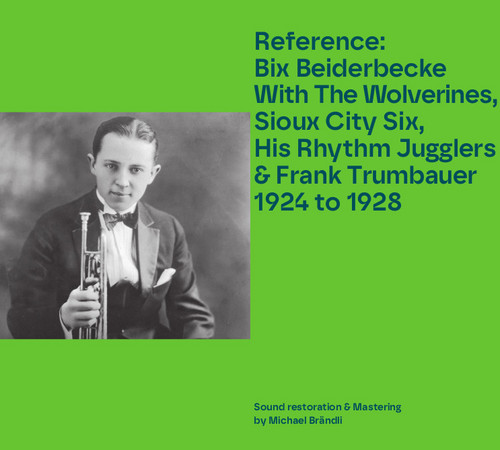
Reference: Bix Beiderbecke With The Wolverines, Sioux City Six, His Rhythm Jugglers & Frank Trumbauer 1924 to 1928
Books have been written, recordings analyzed, colleagues questioned, and nevertheless Bix Beiderbecke remains as much an enigma today, ninety-five years after his death, as he was to friends and fellow musicians during his all-too-brief, personally and professionally erratic odyssey through the 1920s. The body of work he left behind both reveals and conceals crucial aspects of his creative reality and unfulfilled potential, while innovating a subtle, eloquent manner of expression that would sugg…
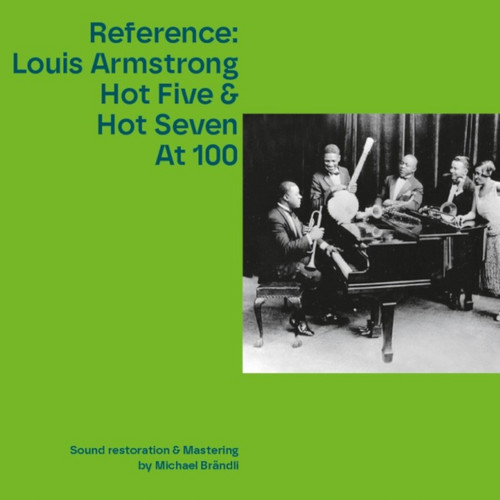
Hot Five & Hot Seven at 100
On Hot Five & Hot Seven at 100, Louis Armstrong’s seminal Chicago sides are reborn in vivid new mastering, letting his trumpet solos, daring rhythms and easy charisma speak afresh as the very moment jazz pivots into a true soloist’s art.
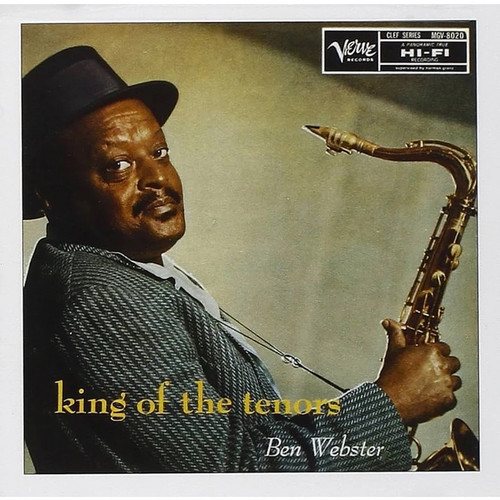
King Of The Tenors
King Of The Tenors is a landmark album by Ben Webster, recorded in 1953 and initially released as The Consummate Artistry of Ben Webster, then retitled for its classic 1957 Verve Records reissue. Webster is joined by jazz icons including the Oscar Peterson Trio throughout, as well as Benny Carter (alto saxophone) and Harry “Sweets” Edison (trumpet) on select tracks, resulting in ensemble interplay that balances lush ballads and blues with joyous swing. The program includes Webster originals like…
Live 1963 (The Lost Recordings)
This is a hitherto unknown recording of the influential Danish composer, pianist, and bandleader Jeppe Zeeberg, dated November 9, 1963. On this recording, Zeeberg is accompanied by a band comprised of several of his generation’s finest musicians. Inspired by the Ellington/Mingus traditions and the new sounds of free jazz emerging from overseas, Zeeberg was the rare individual who could straddle different styles in one performance – even within a single composition. This concert, recorded at Havn…

The Shadow Of Your Smile
2009 release ** "Ruby Ruby Ruby are more or less a vehicle for experimental German singer Margareth Kammerer. She has been involved in The Magic ID, a song-based project with Berlin improviser Christof Kurzmann, and also formed Ruby Ruby Ruby to pay homage to Billie Holiday and other jazz singers. This appears to have been a one-off project, there being no indication that the group (consisting of Derek Shirley and Steve Heather alongside Kammerer) has done anything else or is planning to work t…
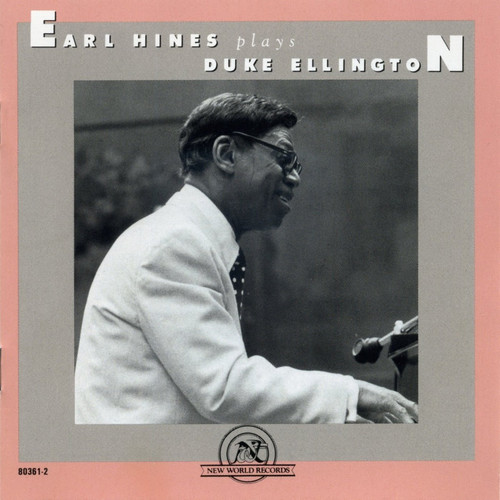
Earl Hines Plays Duke Ellington
When time pulled the rug from under Earl Hines in 1983, he was still enjoying a comeback that had lasted almost twenty years. That comeback was one of the most important events in recent jazz history and the music included here was recorded when his return to action was in high gear.
The classic quality that Hines maintained throughout his career, and that dominates these interpretations, was a persistent exuberance, a spirit of engagement. Hines was not incapable of meditative melancholy or the…
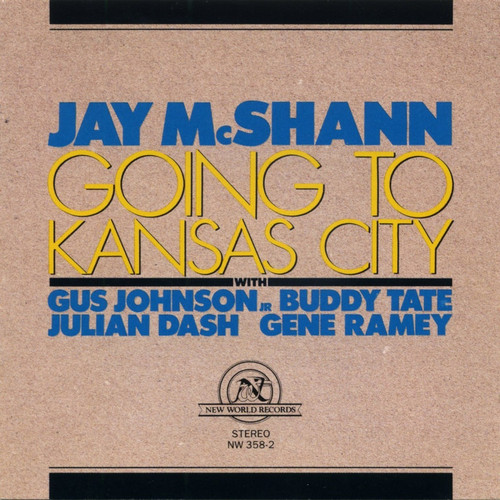
Going To Kansas City
Jay McShann secured a lasting place in jazz history on April 30, 1941, when he became the first bandleader to usher Charlie Parker into a studio for a commercial recording session. For years, that was how McShann was remembered, if at all—as an early benefactor of the most influential figure in modern jazz. Shamefully, it took the jazz literati three decades to recognize Bird's old boss as a dynamic force himself.
McShann's advocacy of Parker was hardly his only distinction as a bandleader. A ri…
The Texas Twister
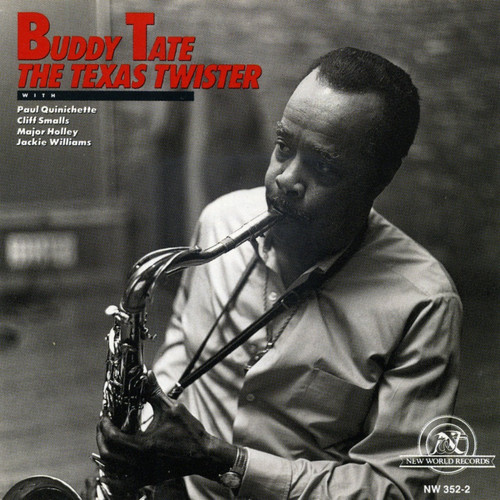
The Texas Twister is a relaxed, gently probing session; its several highlights begin with the title selection, a thirty-two-bar riff confection with a characteristically willful opening solo by Buddy Tate. His best playing on the date is heard on "Talk of the Town," a memorable example of his ability to invest a ballad with emotional generosity, melodic invention, and playfully rhythmic finesse, and on "Topsy," in which he follows the piano solo with a plaintive, wailing, yet impeccably shaped s…
Music Zounds
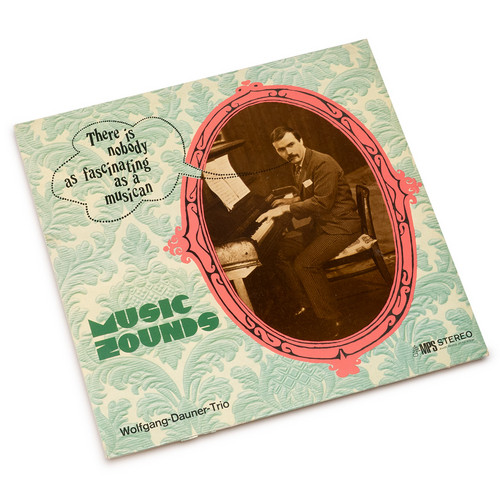
Original copy in great condition of the first edition of Wolfgang Dauner's 1970 album on MPS with Eberhard Weber and Roland Wittich. Modal jazz weirdness by a composer loosely connected with krautrock with his band Et Cetera.
Modern Jazz Au Club St-Germain
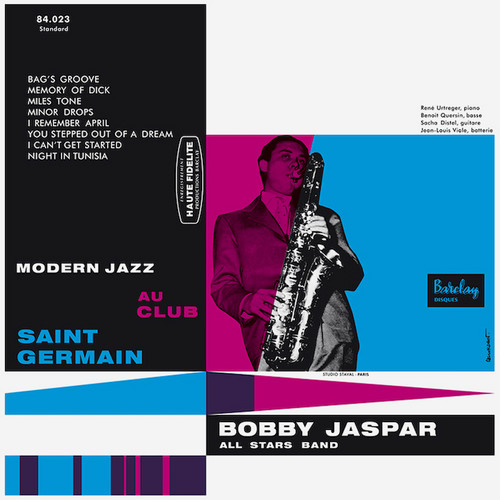
"After hitting Paris in 1950, saxophonist Bobby Jaspar enthralled jazz fans and jazzmen alike with his smooth, elegant playing, with the lyricism of his tranquil phrases heavily influenced by Stan Getz in particular. So when Jaspar began regularly performing with a small ensemble at the Club St-Germain five years later, he adopted the same instrumentation as that of his idol’s illustrious quintet, with Sacha Distel on guitar and René Urtreger on piano in the roles of Jimmy Raney and Al Haig, res…