We use cookies on our website to provide you with the best experience. Most of these are essential and already present.
We do require your explicit consent to save your cart and browsing history between visits. Read about cookies we use here.
Your cart and preferences will not be saved if you leave the site.

Christian Wolff

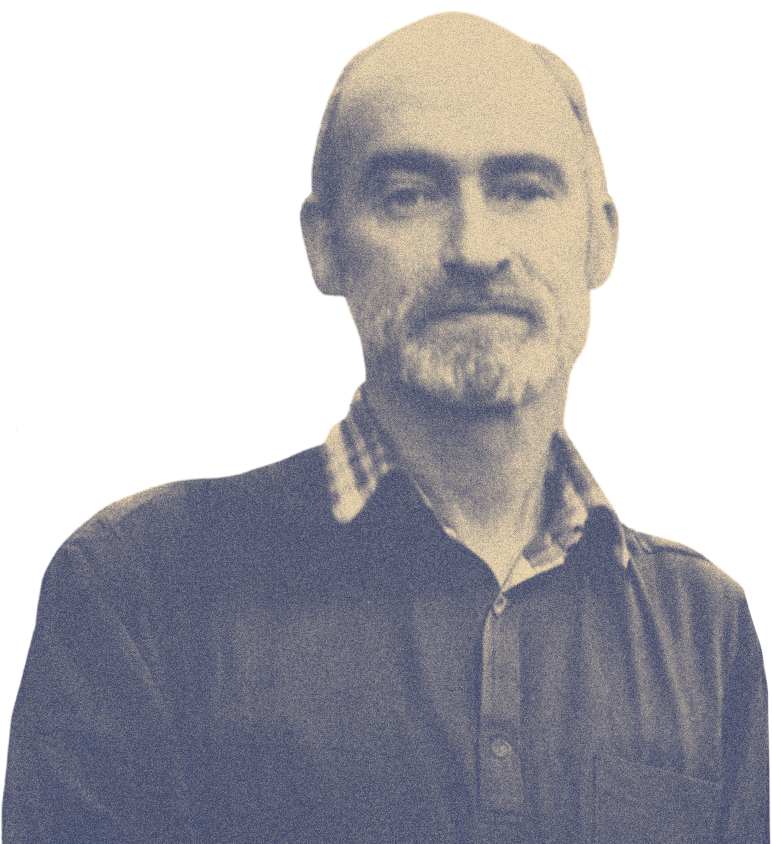
Christian Wolff, born in Nice in 1934 and raised in New York, is an American composer and the youngest member of the New York School around John Cage, Morton Feldman and Earle Brown. From the early 1950s his scores left more and more to the players, with cues taken from what the others do, so that performers become co-composers. Burdocks (1971), for any number of musicians, is the best known example. A classicist by profession, he taught at Harvard and then at Dartmouth for decades. From the 1970s his political commitment entered the music through workers' songs and protest tunes, and his later pieces explore fragile tonal relationships with the same openness.
Christian Wolff, born in Nice in 1934 and raised in New York, is an American composer and the youngest member of the New York School around John Cage, Morton Feldman and Earle Brown. From the early 1950s his scores left more and more to the players, with cues taken from what the others do, so that performers become co-composers. Burdocks (1971), for any number of musicians, is the best known example. A classicist by profession, he taught at Harvard and then at Dartmouth for decades. From the 1970s his political commitment entered the music through workers' songs and protest tunes, and his later pieces explore fragile tonal relationships with the same openness.
Kompositionen 1950 - 1972
A portrait of Christian Wolff, documenting the composer's early activity through recordings made close to the time of their composition from artists including Cornelius Cardew, Frederic Rzewski, David Tudor
Event
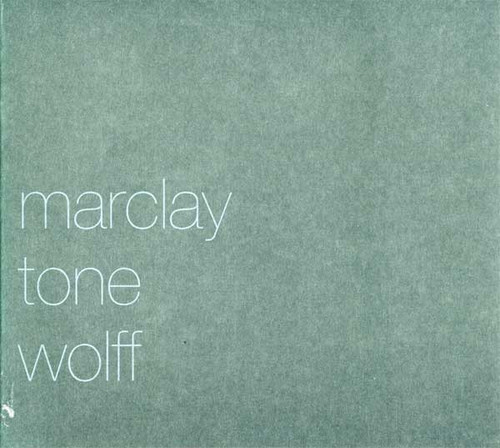
How's this for a threesome; in the red corner we have Christian Marclay with a box of records and his trusty turntables, in the blue corner it's twinkle-toes Yasunao Tone and his prepared CD's and players, whilst in the, erm, green corner stands Chri…
Bread and Roses
Christian Wolff's For 1, 2 or 3 People, Exercise 27, Bread and Roses and Edges, played by violinist Malcolm Goldstein and percussionist Matthias Kaul (also voice and hurdy-gurdy), recorded at Hessischer Rundfunk in 1999 and 2002.
Ten Exercises
This marvelous recording of these elusive works features composer-supervised performances by a hand-picked group of renowned new-music exponents.  "Your first encounter with the music of Christian Wolff leaves you with the impression you've just h…
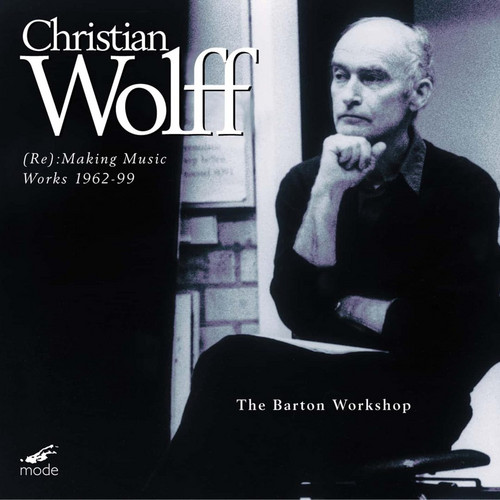
(Re):Making music, works 1962-99
Two CDs covering 37 years of Christian Wolff's music, mostly first recordings including the graphic score For 5 or 10 People and Schoenen met veters, played by The Barton Workshop with James Fulkerson.
Stones
2009 release ** The score of "Stones" consists of just a few lines of text:Make sounds with stones, draw sounds out of stones, using a number of sizes and kinds (and colours); for the most part discretely; sometimes in rapid sequences. For the most p…
Percussionist songs
2004 release ** Matchless Recordings presents a live concert by Christian Wolff and Robin Schulkowsky recorded at Poggiolo fram, Pozzuolo, Umbria, Italy on April 22-24 2003. The album includes fifteen tracks performed by Christian Wolff - composition…
Complete Works for Violin & Piano
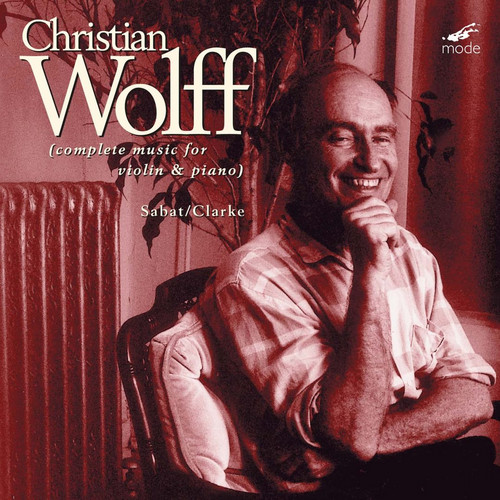
All of Christian Wolff's works for violin and piano: the first recording of Pebbles (1999) and two performances of Duo for Violinist and Pianist (1961), played by the Canadian duo Sabat/Clarke with the composer present.
Early Piano Music (1951-1961)
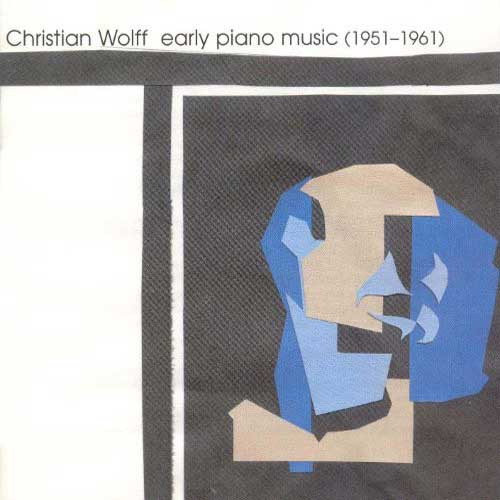
Early Christian Wolf piano music (written 1951-61), performed by: John Tilbury & Christian Wolff (pianos), Eddie Prevost (percussion). Studio recordings from 2001/2. "During the period when these works were composed (1951-61), Christian Wolff was clo…
1 2 3