George Rochberg

O, O, O, O, That Shakespeherian Rag / String Quartet No. 2 With Soprano (LP)
A 1958 composition for mixed chorus and chamber ensemble backed with a 1961 string quartet with soprano, released by CRI in 1963.
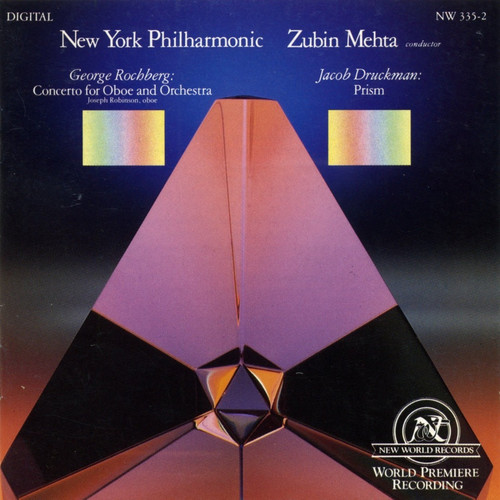
Concerto For Oboe And Orchestra / Prism
George Rochberg seems an unlikely revolutionary, yet it was he, more than anyone else, who dealt the crushing blow to serialist orthodoxy. A student of Gian Carlo Menotti at the Curtis Institute in Philadelphia, Rochberg began as a modern mainstream composer. He later became involved with serialism, but with Contra mortem et tempus (1965), written after the death of his son, Rochberg hesitatingly but irrevocably re-embraced not only tonality but the whole universe of emotional states commonly as…