Iannis Xenakis
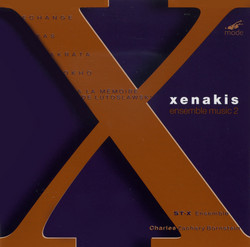
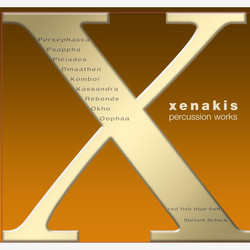
Iannis Xenakis (1922 to 2001) came to music from mathematics and architecture. Wounded in the Greek resistance and sentenced to death, he fled to Paris in 1947 and worked for twelve years with Le Corbusier, designing the Philips Pavilion for the 1958 Brussels fair, where his tape piece Concret PH played inside Varèse's Poème électronique. Metastaseis (1954), with its glissandi drawn as straight lines on graph paper, announced a music of masses and probabilities; he called it stochastic and used game theory, group theory and, from 1961, the computer to compose.

Iannis Xenakis (1922 to 2001) came to music from mathematics and architecture. Wounded in the Greek resistance and sentenced to death, he fled to Paris in 1947 and worked for twelve years with Le Corbusier, designing the Philips Pavilion for the 1958 Brussels fair, where his tape piece Concret PH played inside Varèse's Poème électronique. Metastaseis (1954), with its glissandi drawn as straight lines on graph paper, announced a music of masses and probabilities; he called it stochastic and used game theory, group theory and, from 1961, the computer to compose.