Maurizio Bianchi
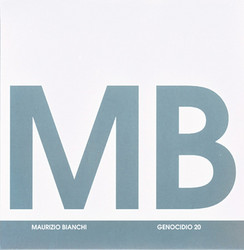
Maurizio Bianchi built the sound of Italian industrial music with a tape recorder, a few electronic boxes and a moral purpose: as he put it, "to produce technological sounds and in such a way to work on complete realising of the modern decadence". Born in Milan in 1955, he started in 1979 under the name Sacher-Pelz, then as MB released a stream of cassettes and albums, among them Symphony for a Genocide (1981), cold, slow, grinding pieces that later generations of noise and dark ambient musicians took as a starting point. In 1984 he became religious and stopped completely, and for years his tiny editions were traded among collectors.

Maurizio Bianchi built the sound of Italian industrial music with a tape recorder, a few electronic boxes and a moral purpose: as he put it, "to produce technological sounds and in such a way to work on complete realising of the modern decadence". Born in Milan in 1955, he started in 1979 under the name Sacher-Pelz, then as MB released a stream of cassettes and albums, among them Symphony for a Genocide (1981), cold, slow, grinding pieces that later generations of noise and dark ambient musicians took as a starting point. In 1984 he became religious and stopped completely, and for years his tiny editions were traded among collectors.