We use cookies on our website to provide you with the best experience.Most of these are essential and already present. We do require your explicit consent to save your cart and browsing history between visits.Read about cookies we use here.
Your cart and preferences will not be saved if you leave the site.
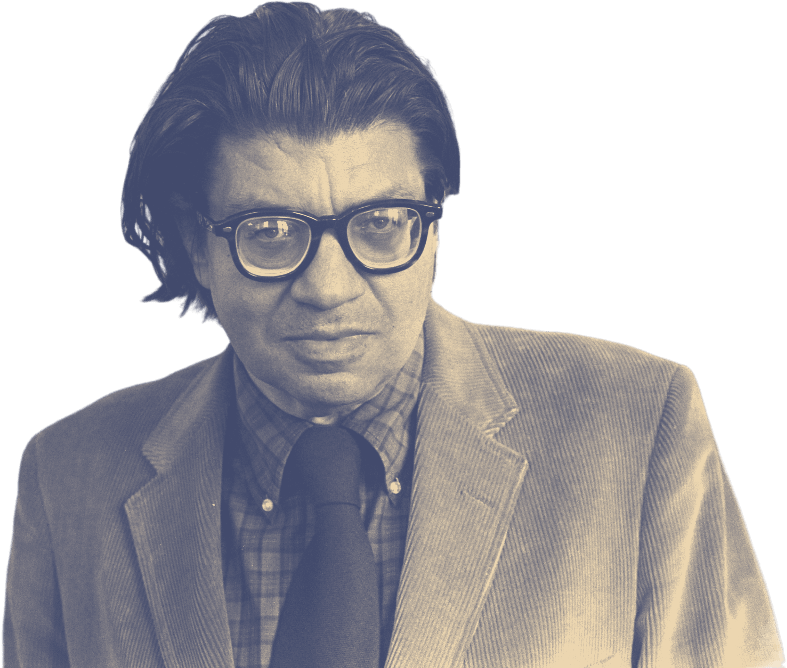
Morton Feldman (January 12, 1926 – September 3, 1987) was an American composer, born in New York City. A major figure in 20th-century music, Feldman went through several compositional phases. He was a pioneer in aleatoric music and indeterminate music, and in music requiring improvisation. His works are characterized by quietness, slowness, and often by their extreme length, especially in his later music.
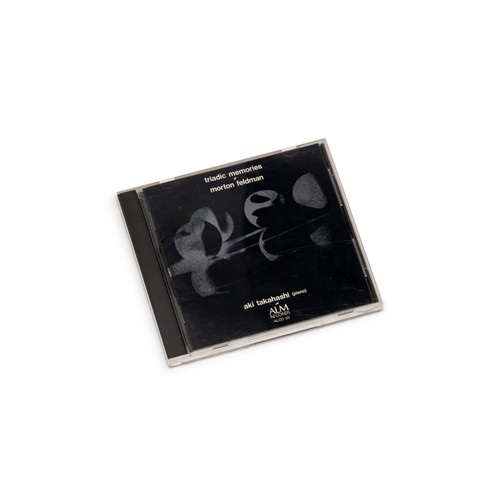
*300 copies limited edition* "Feldman used to say that music is not so much an ‘art-form’ as a ‘memory-form’. Scientific research informs us that personal memories are not stored in one stable unchanging state, but that each time we retrieve a memory, it is slightly modified. We hear the opening four-note gesture of this work, it soon passes, but the resulting resonance from the sustaining pedal remains a little longer, and then only a delicate memory trace is left. This opening gesture is heard…
*300 copies limited edition* "Technique and art both take time, so nothing durable happens by accident. But, is durability enough once appearance and disappearance become important? Can ebb and flow be set in stone? Or cut to vinyl? Or digitised? Perhaps we have only become habituated to the possibility. A pianist depresses a key, strings are hammered. At what point does the sound begin? It is not quite right to say that, in this moment, there was no sound but that now, in this moment, there is.…
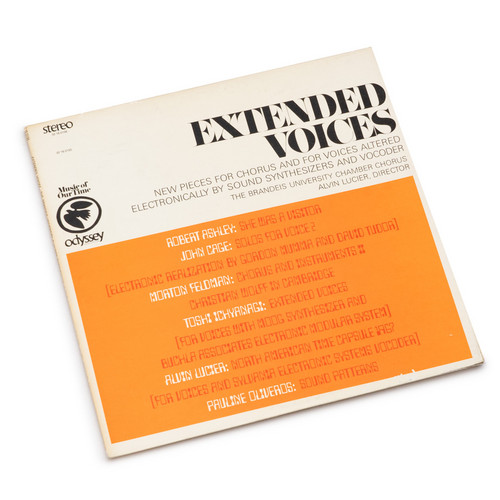
1970 re-press of the 1967 fantastic, mind-blowing and essential compilation of pieces for chorus and for voices altered electronically by sound synthesizers and vocoder, conducted by Alvin Lucier and released on Odyseey's "Music Of Our Time" avant-garde music series curated by David Behrman.
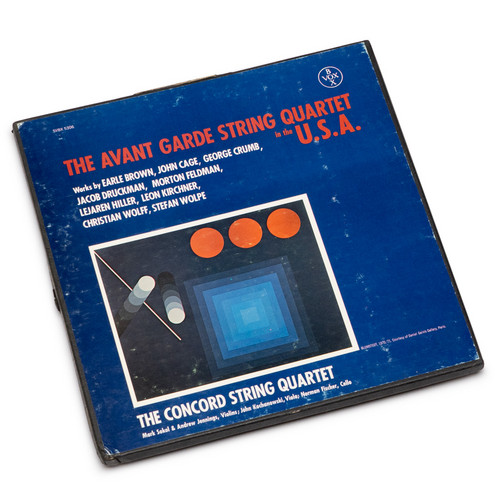
Cage's beautiful and unusual 1950 string quartet in a monumental compilation released as a 3LP box set by Vox in 1973 with a who's who of the American avant-garde, including Crumb's and Kirchner's outstanding quartets with electric amplification and electronics, with impeccable performances by the Concord String Quartet. With insert.
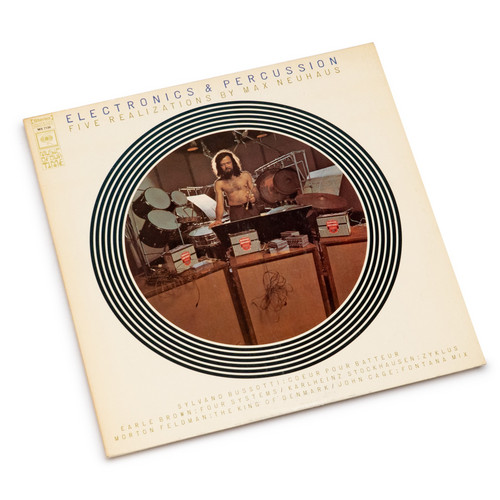
1970's re-press of the 1968 LP with five superb realizations for percussion and electronics of as many classic avant-garde compositions, including Cage's Fontana Mix-Feed, spanning from 1958 to 1965, released on Columbia's "Music Of Our Time" avant-garde music series curated by David Behrman.
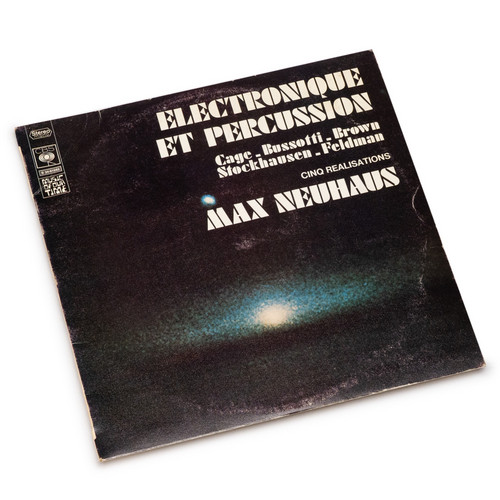
French edition of the 1968 LP with five superb realizations for percussion and electronics of as many classic avant-garde compositions, including Cage's Fontana Mix-Feed, spanning from 1958 to 1965, released on CBS' "Music Of Our Time" avant-garde music series curated by David Behrman.
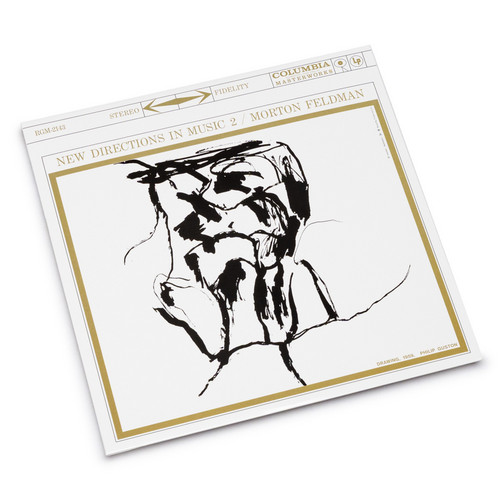
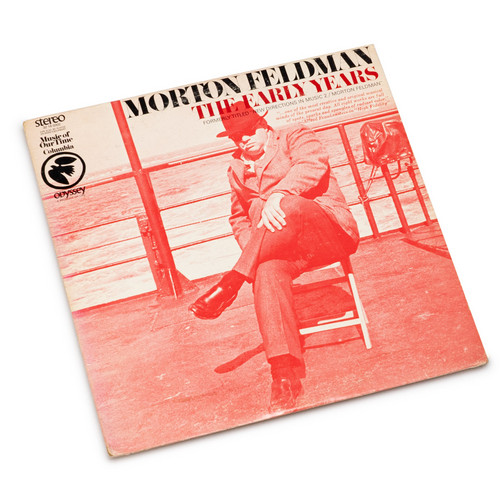
1968 re-issue on Odyssey's "Music Of Our Time" avant-garde music series produced by David Behrman of the 1959 LP New Directions In Music 2 with historical recordings of the composers' early pieces from the 1950's performed by David Tudor and the composer himseld among others.
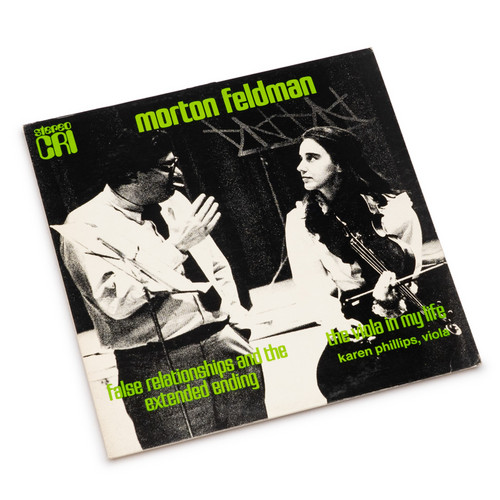
Two breathtakingly beautiful meditative copmpositions for small ensemble from the late 1960's and early 70's, performed by David Tudor and Karen Phillips among others, and released by CRI in 1971. Essential.
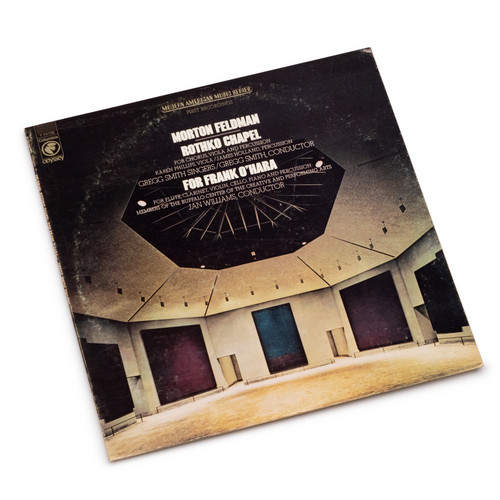
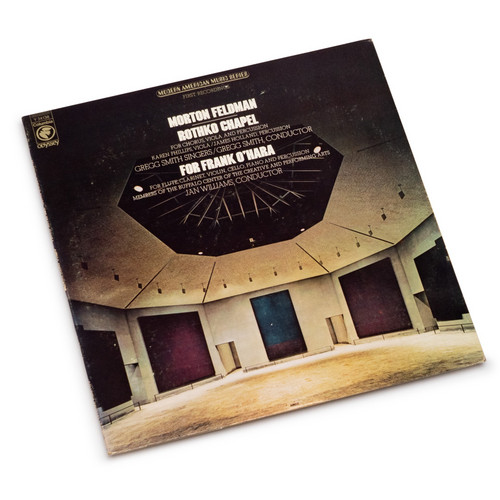
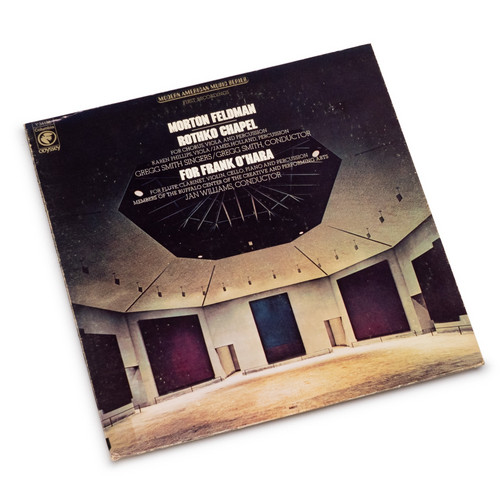
Two of the composer's most beautiful and beloved immersive compositions from the early 1970's, respectively for chorus, viola and percussion, and for flute, clarinet, violin, cello, piano and percussion, released on Columbia Odyssey's "Modern American Music Series" in 1976. Essential.
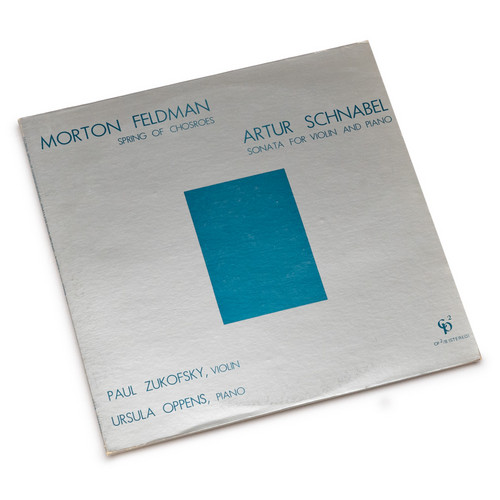
Feldman minimal 1977 composition for violin and piano backed with Schnabel's 1931 avant-garde piece for the same instruments, performed by Paul Zukofsky and Ursula Oppens and released by CP² Recordings in 1981.
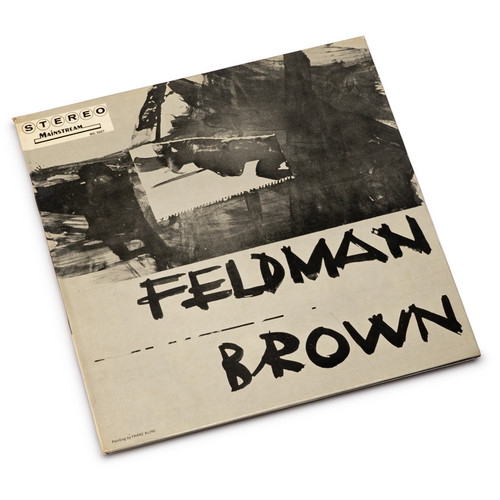
1970 re-issue on Mainstream's "Contemporary Sound Series" of the 1962 lLP on Time's superb "Series 2000" curated by Earle Brown with Feldman's seminal early 1960's partly indetermined compositions for solo instruments and Brown's experimental 1950's pieces for small ensembles, performed by David Tudor among others.
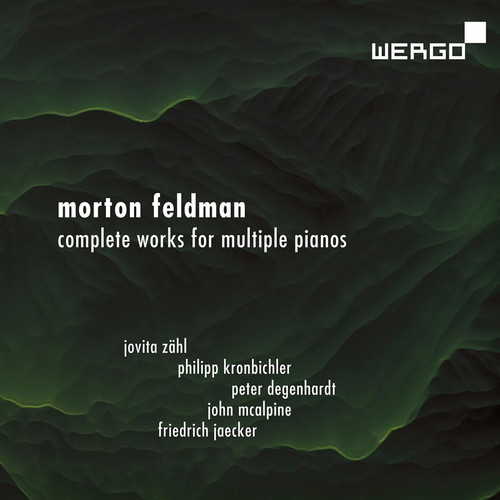
In Complete Works for Multiple Piano, Morton Feldman’s quietly radical writing for three or more hands is heard as a three‑hour continuum of hushed, hovering sonorities, where time dilates and the piano becomes a shared, breathing instrument.
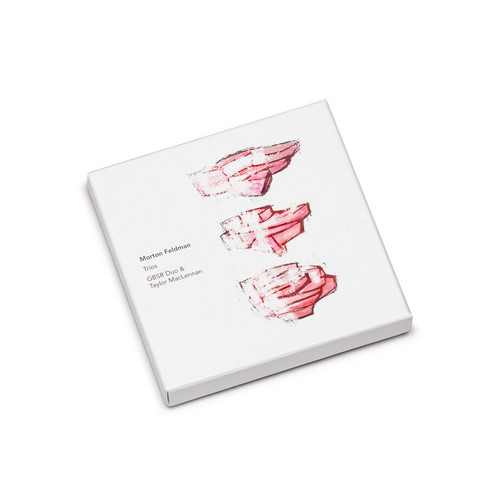
In the final decade of his life, Morton Feldman turned his attention to the trio format with an intensity that would yield some of the most profound and uncompromising music of the twentieth century. Between 1978 and 1984, he composed three monumental works for flute, piano and percussion that together constitute an immense meditation on time, memory and the irreducible strangeness of sound itself. This landmark 6CD box set from Another Timbre presents all three pieces — totalling six and a half…
Morton Feldman’s Rothko Chapel is a hushed yet monumental soundscape that resonates with the spiritual austerity of Mark Rothko’s paintings. Combining solo viola, voices, celesta, and percussion, the LP explores silence and timbre with a reverence that transforms listening into a meditative experience, while the composition For Frank O'Hara offers a tender lyrical counterpoint to its profound stillness.
Morton Feldman's Intermission 6 (1953) is a sparse piano piece that typically lasts between 3 and 12 minutes in standard performances. Finnish experimental musician Antti Tolvi has created a radical 72-minute realization that extends the work's meditation on silence and resonance to an unprecedented duration. Tolvi discovered the piece through Philip Thomas's five-CD Feldman Piano box set on Another Timbre, becoming fascinated by Intermission 6 as "the piece which has the most silence in it, and…