Paul Hindemith
Paul Hindemith (1895-1963) was a German composer, violist, conductor, teacher and theorist, born in Hanau. In the 1920s he was a leading figure of the Neue Sachlichkeit, writing in a contrapuntal style that drew on Bach. He also wrote music for amateurs and everyday use (Gebrauchsmusik), and composed a large body of chamber music for the viola and other instruments. Hindemith played viola in the Amar Quartet, whose first cellist was his brother Rudolf.
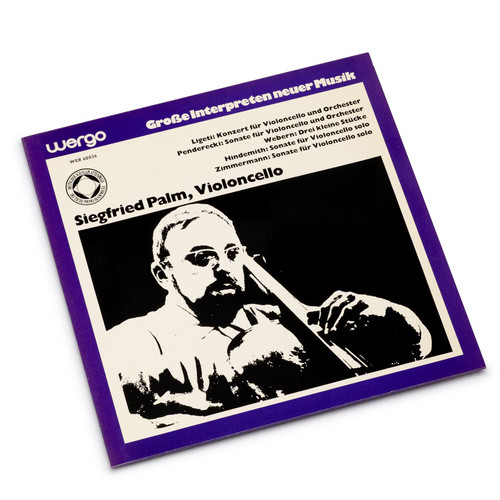
Konzert Für Violoncello Und Orchester / Sonate Für Violoncello Und Orchester / Drei Kleine Stücke / Sonate Für Violoncello Solo / Sonate Für Violoncello Solo(LP)
Late 1970's re-issue on Wergo's "Große Interpreten neuer Musik" series of the 1969 album of masterful interpretations by the German virtuoso of landmark avant-garde compositions for cello solo or cello and orchestra spanning from 1914 to 1966.

Fragments From A Show (LP)
Contemporary brass music by five composers performed by The Brass Ring, released by Crystal Records in 1986.
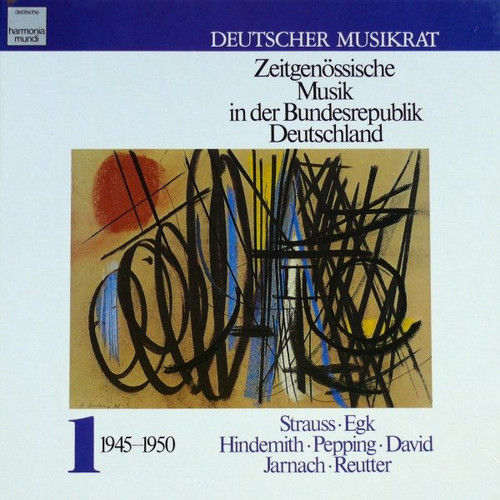
Zeitgenössische Musik In Der Bundesrepublik Deutschland 1 (1945-1950) (3LP box)
First volume of the massive and exhaustive 3LP box series of "Contemporary Music from West Germany" released in the early 80's by Deutscher Musikrat, presenting pieces composed between 1945 and 1952 by Richard Strauss, Werner Egk, Paul Hindemith, Ern…
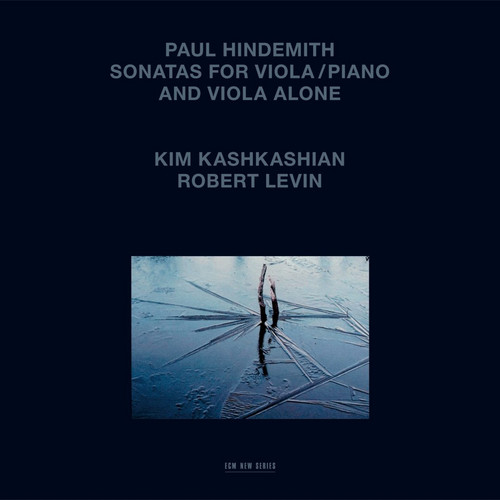
Sonatas For Viola / Piano And Viola Alone
*2025 stock* Pianist-composer Vijay Iyer follows his 2021 ECM disc Uneasy — the first to showcase his trio featuring bassist Linda May Han Oh and drummer Tyshawn Sorey — with Compassion, another album in league with these two gifted partners. The New…
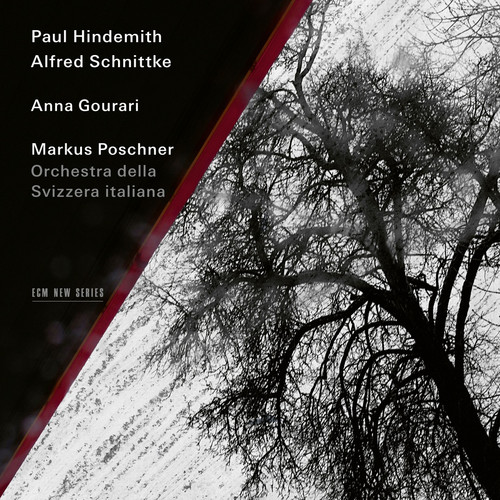
Paul Hindemith, Alfred Schnittke, Anna Gourari, Markus Poschner, Orchestra Della Svizzera Italiana Lugano
Paul Hindemith / Alfred SchnittkeAfter three acclaimed solo piano programmes for the label, here Anna Gourari widens the instrumental spectrum with the Lugano-based Orchestra della Svizzera italiana under Markus Poschner’s direction in striking performances of Alfred Schnittke’s Con…
Musik für Saxophone
Paul Hindemith's works with saxophone, including the Trio op. 47 and the Konzertstück, plus pieces arranged by Christoph Enzel, played by the clair-obscur saxophone quartet with Barbara Buntrock, Robert Kolinsky and Florian von Radowitz. Recorded in …
Werke für zwei Pianisten
Hindemith's works for piano four hands and two pianos, including his four-hand Mathis der Maler symphony, Rag Time (wohltemperiert), the Walzer op. 6 and the sonatas of 1938 and 1942, played by Andreas Grau and Götz Schumacher.
Six Chansons / Fünfstimmige Madrigale / Five Songs on old Texts / Kanons a cappella
A cappella choral works by Paul Hindemith: Six Chansons after Rilke (1939), the Zwölf Madrigale on Weinheber texts (1958), Five Songs on Old Texts (1937) and nine canons, sung by the Rundfunkchor Berlin under Stefan Parkman, recorded 1996.
Streichquartett Nr. 2 F-Moll, op. 10 / Streichquartett Nr. 6 in Es
Hindemith's String Quartets No. 2 in F minor, op. 10, and No. 6 in E flat (1943), played by the Juilliard String Quartet (Mann, Smirnoff, Rhodes, Krosnick), recorded in New York in June 1996 for the Edition Paul Hindemith.
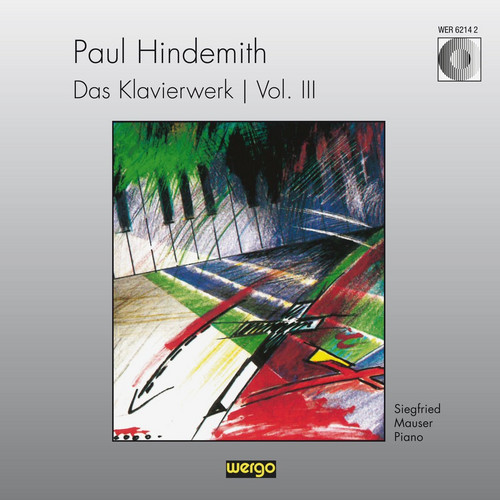
Das Klavierwerk - Vol. III
Volume III of Siegfried Mauser's Hindemith piano series: the Third Sonata (1936), short pieces from 1920-22, the Kleine Klaviermusik op. 45 no. 4, Wir bauen eine Stadt (1930) and a sonata movement from 1941.
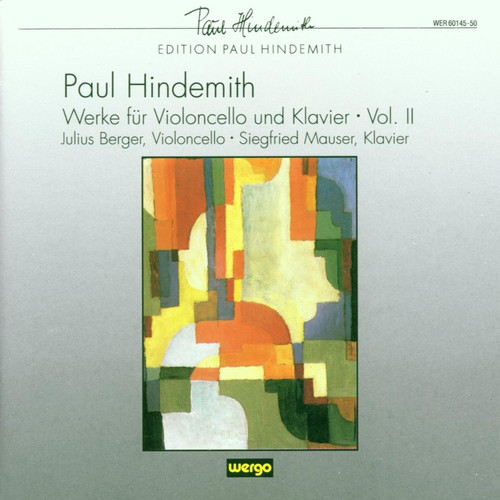
Werke für Violoncello und Klavier - Vol. II
Hindemith's late music for cello and piano: the Sonata (1948), Drei leichte Stücke (1938), Kleine Sonate (1942) and the variations A Frog He Went A-Courting (1941). Julius Berger and Siegfried Mauser, recorded in Munich 1988-89.
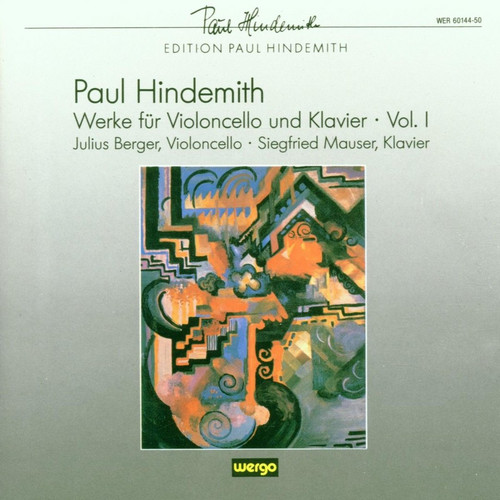
Werke für Violoncello und Klavier - Vol. I
Hindemith's Three Pieces for cello and piano, Op. 8 (1917), and the Cello Sonata, Op. 11 No. 3 (1919-21), played by Julius Berger and Siegfried Mauser. Volume I of their Hindemith cello and piano series.
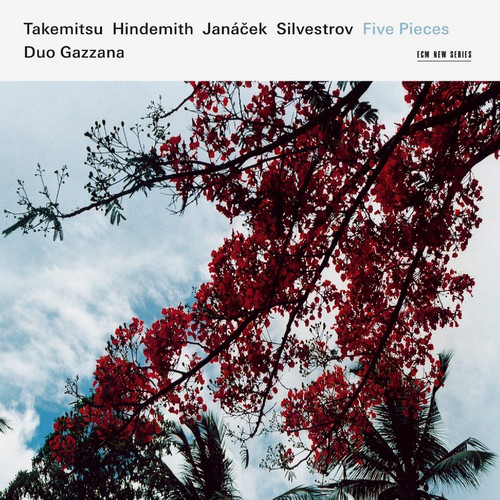
Five Pieces - Takemitsu / Hindemith / Janáček / Silvestrov
Debut album of the Italian sisters Natascia (violin) and Raffaella Gazzana (piano), playing Takemitsu's Distance de fée, Hindemith's Sonata in E, Janáček's Sonata and Silvestrov's Five Pieces, recorded in March 2011 at the RSI Auditorio in Lugano.