Back in stock
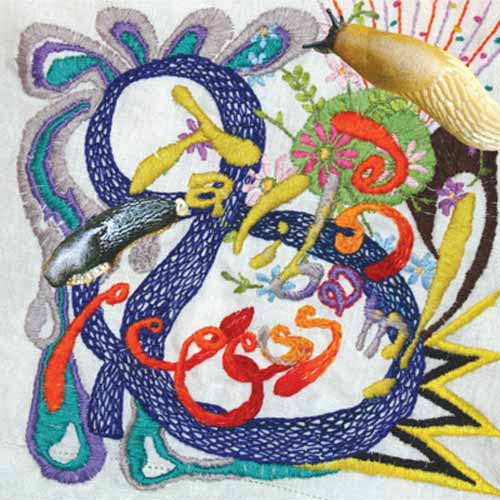
Peeesseye + Talibam!
Talibam! (Kevin Shea on drums, Matt Mottel on keyboards) and Peeesseye (Jaime Fennelly on electronics, Chris Forsyth on guitars and Fritz Welch on drums) have been pals and Evolving Ear labelmates for a while now, so it was only a matter of time before they all got together and let it rip. And rip this certainly does, driven on by the double-barrelled percussion attack, underpinned by Fennelly's drones and scribbled all over by Mottel and Forsyth, whose wild gonzo soloing is a happy and healthy …
Trumpet/Amplifier
RESTOCKED: Last copies, reduced price...Everyone's well into big circles at the moment. Check the new Autechre album, Sunn's Monoliths and Dimensions, that No Age 12" and now this. Circles are pretty cool I guess, but personally I'm more diggin' the net form of the dodecahedron at the moment. What this guy's doing reminds me a wee bit of Florian Hecker, albeit with a completely different tool set. Here he spends half the LP exploring the pure sound capabilities of the trumpet in a series of craz…
Throw Down Your Hammer And Sing / Sheldon Siegel
Split LP by Throw Down Your Hammer And Sing and Sheldon Siegel. Throw Down Your Hammer And Sing is the trio of Nate Wooley, Fred Lonberg-Holm and Jason Roebke, Sheldon Siegel is the trio of Erik Heestermans, Gerard Hermanand Gino Coomans. Two sides of grainy textures and truly happening improv. This album was a co-production of Smeraldina-Rima and croxhapox. The artwork was made by Berlin-based artist Hannelore Van Dijck resulting in two different LP-sleeves, each sporting two different drawings…
Souls Stream
Amazingly beautiful limited edition of 500 screen printed LPs of this classic, individually handcoloured by artist Manor Grunewald. A master of reeds and horns, Joe McPhee is a bonafide free jazz icon who refuses to play the elder statesman in spite of his half-century-plus career. McPhee continues to hone his improvisatory skills by venturing far from his upstate New York home to perform with cutting-edge instrumentalists the world over. The phenomenal Norwegian drummer Paal Nilssen-Love is one…
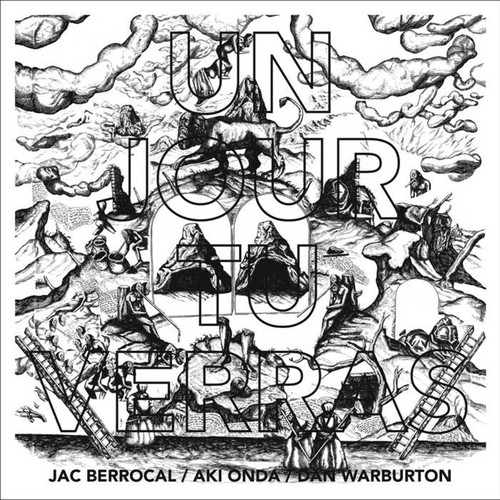
Un Jour Tu Verras
Limited edition of 300 screen printed LPs, individually handcoloured by artist Wouter Vanhaelemeesch. Loyal followers of the late Paris Transatlantic will definitely recall the tour diary of a 2005 live adventure shared by Dan Warburton (and his violin) with blasphemous trumpeter Jac Berrocal and cassette wizard Aki Onda. To those not familiar with that story I suggest to give it a serious read. At least one can get a picture of what happens when artists not warmly greeted by the stylish cliques…
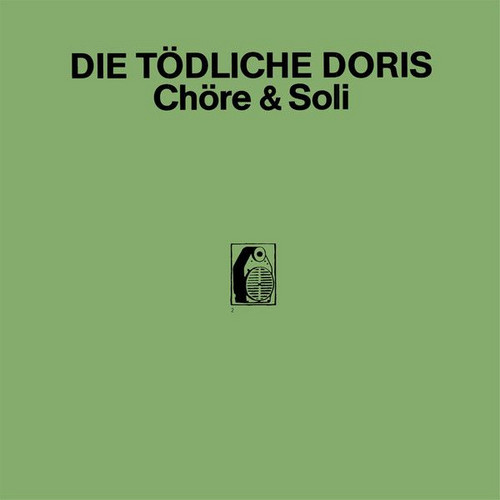
Chöre & Soli
** 500 copies** Die Tödliche Doris was born out of West Berlin’s lively post-punk community in the early ‘80s. Along with Einstürzende Neubauten, Malaria, Sprung Aus Den Wolken and Frieder Butzmann, Die Tödliche Doris ranks amongst the Geniale Dilletanten – which roughly translates as “ingenious dilettantes” – who sought to democratize cultural productions beyond the grip of both Western capitalism and GDR socialism. The Geniale Dilletanten became synonymous with a free-for-all approach to music…
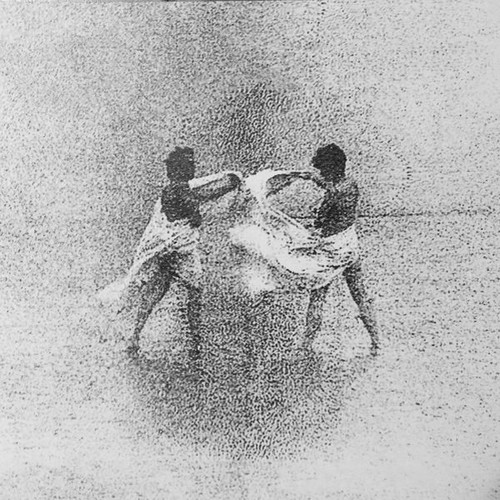
Two Daughters Recordings 1979-1981
** Much needed repress, 400 copies only ** With hindsight, the scene which emerged in Britain during the late 1970s and 80s, birthing seminal projects like Throbbing Gristle, Psychic TV, Coil, Dome, Cabaret Voltaire, Nurse with Wound, Current 93, and a great many more, is among the most fascinating junctures of music which has occurred during the last 50 years. Often cast under the banner of industrial music, a term which defies its true breadth and divinity, it's impossible to overstate the ran…
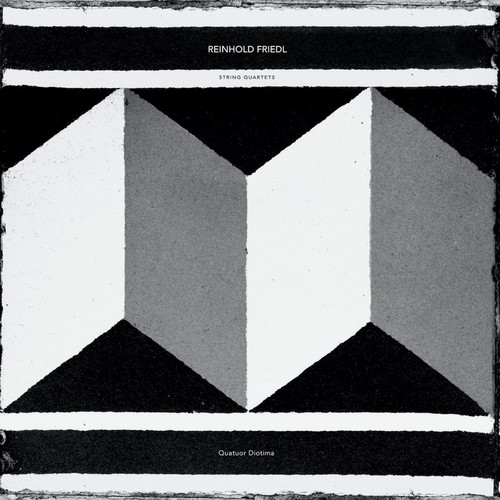
String Quartets
String Quartet 1, 2 et 3 composed by Reinhold Friedl (Zeitkratzer) and performed by Quatuor Diotima.Reinhold Friedl’s string quartets do not pretend to be string quartets, they are anti-Goethe. There is no sophisticated conversation of four elder gentlemen, sitting in armchairs. The music is physical work for the performers and intended to be physical pleasure for the listeners. All three quartets are based on the same idea: smooth transformations from a given texture into another one. The rando…
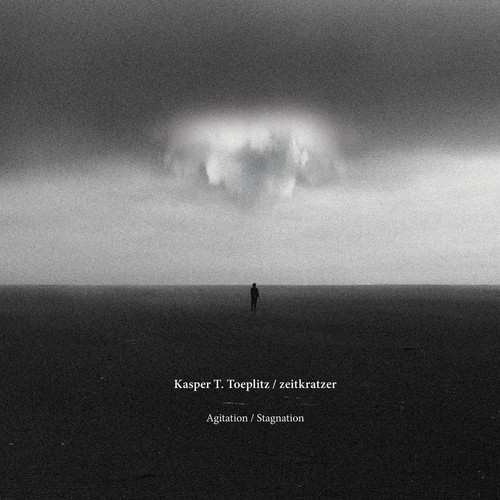
Agitation | Stagnation
Double CD, the first one containing Zeitkratzer's instrumental interpretation of Kasper Toeplitz's electronic score from Disc 2. Though these works are intended to be heard separately, the two discs can also be played simultaneously"The idea behind the composition for the Zeitkratzer ensemble, "Agitation / Stagnation", was from the very beginning to work in the pure sonic domain, and not to give to the musicians a score written on paper (be it in traditional notation or some more fancy graphic w…
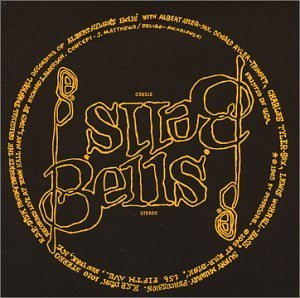
Bells
"Albert Ayler's Bells is a 20 min revolution in jazz, recorded live at Town Hall NYC, 1965. With Albert and Donald Ayler on sax and trumpet respectfully the brothers are aided by altoist Charles Tyler, Lewis Worrell on bass and Sonny Murray on drums. The ESP label originally released 'Bells' as a one-sided transparent vinyl disc- a move that shocked the jazz avant-garde world at the time and matched the subversive and profound musical statement within. As Dan Morganstein wrote in Downbeat, July …
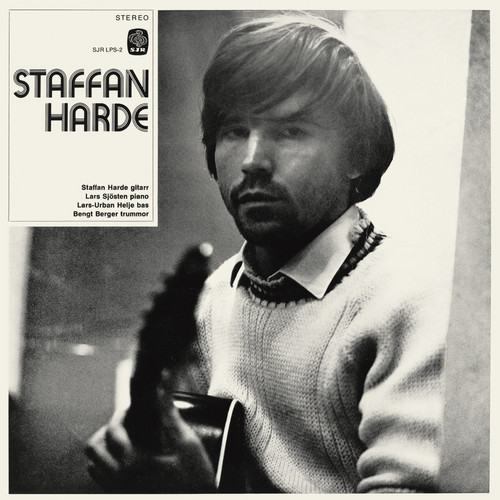
Staffan Harde
2015 release. A reissue of Staffan Harde's self-titled album, originally released on Svenska Jazzriksförbunded Records (SJR) in 1972. Based on the tiny Swedish fishing island of Smogen, guitarist Staffan Harde created a wholly unique and wondrous approach to his instrument, documented assiduously on hand-made reel-to-reel tapes and this lone LP from 1972, which features Harde solo and with small groups. His accomplices included pianist Lars Sjösten, bassist Lars-Urban Helje, and the acclaimed pe…
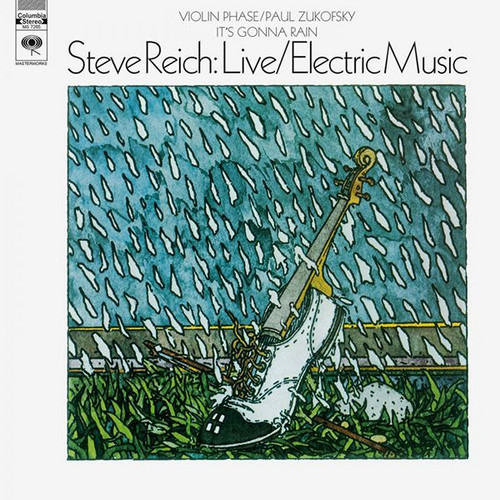
Live / Electric Music
A Landmark in Minimalism and Process Music. 180 gram audiophile vinyl, remastered. The influence Steve Reich had on contemporary music can hardly be put into words. As one of the great innovators, he started playing around with tape loops and created rhythmic and tonal effects while recording the sounds of rain, it formed the basis of his ambitious project called " It's Gonna Rain". The great depth and complexity make this an outstanding song in his repertoire - an incredible tape loop piece tha…
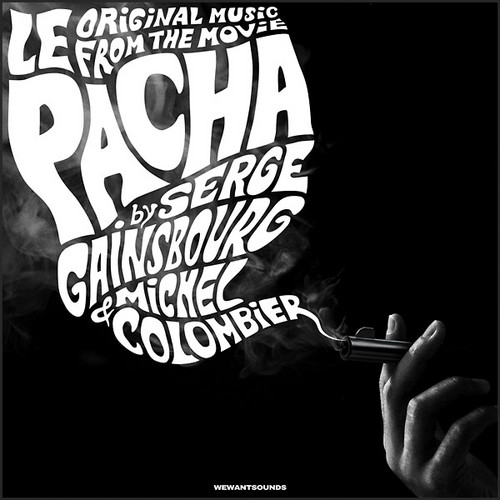
Le Pacha OST
Wewantsounds present a reissue of Serge Gainsbourg's cult score for the 1968 French film Le Pacha. These tracks were composed by Serge Gainsbourg at the height of his '60s cool when he was briefly going out with Brigitte Bardot and the couple was on the verge of recording the infamous first version of Je T'aime... Moi Non Plus (1969). All the tracks here are arranged by famed arranger Michel Colombier, who had been responsible for some of Gainsbourg's best songs (Bonnie & Clyde and Harley Davids…
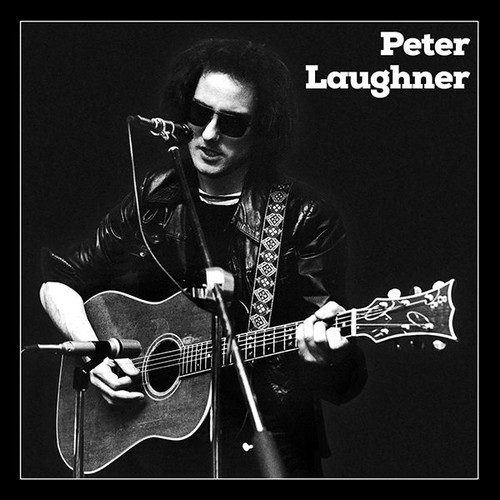
Peter Laughner box set
**Special edition containing a bonus 7" record sold ONLY during the pre-sale, that ends this Sunday. Shipping after August 15th** For a decade or more, the rumors of a Peter Laughner retrospective box set have been hotly debated and speculated, with many fans wondering if in fact such a release would ever see the light of day. At long last Smog Veil Records, in conjunction with the estate of Peter Laughner and his many collaborators, is very pleased to announce the impending release of Peter Lau…
Climatery
Miguel A. Ruiz is a veteran experimental/electronic musician from Madrid, Spainthat has worked under numerous monikers since early eighties as TécnicaMaterial, Orfeón Gargarín, Codachrom, Dekatron II, Michel Des Airlines, Funeral Souvenir, etc. Some of these projects still active today. Entering the world of Ruiz is a wonder to the mind and ears, each project yields authentic masterpieces of experimental electronic music. "Climatery" was originally recorded in the summer of 1986 and was publish…
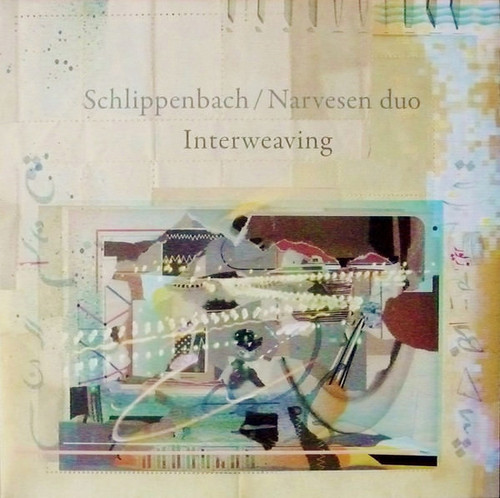
Interweaving
**Edition of 300 copies** Interweaving pairs the legendary Alexander von Schlippenbach on grand piano and Dag Magnus Narvesen on drums, who is 45 years his junior. The two first worked together when Schlippenbach was a guest of Norway’s Kitchen Ensemble (one of many descendants of GUO) in 2013 and the precedent for this project is Schlippenbach’s longtime duo with Swedish drummer Sven-Åke Johansson. This is a highly percussive Schlippenbach in tandem with Narvesen’s skittering accompaniment, or …
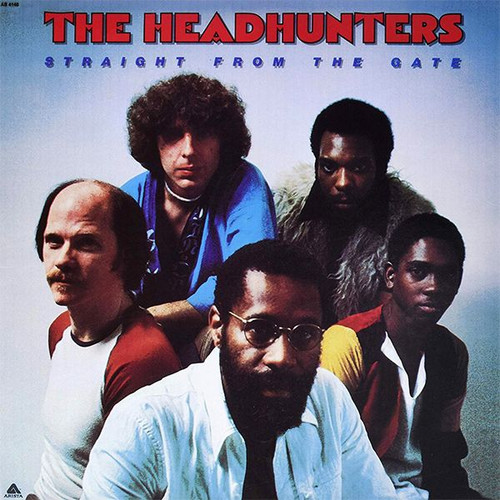
Straight From the Gate
**2019 stock, reduced price** The Headhunters' Straight From the Gate was their second album and was released in 1977. Originally started as a jazz-fusion band fronted by Herbie Hancock, members Paul Jackson, Bennie Maupin, Michael Clark, Paul Potyen, Derrick Youman and Obsidion Blackbiyrd delved further into jazz-rock and fusion sounds and recorded the album at The Automatt studios in San Francisco. The Headhunters use a wide range of instruments. From the electric piano, to tenor and soprano s…
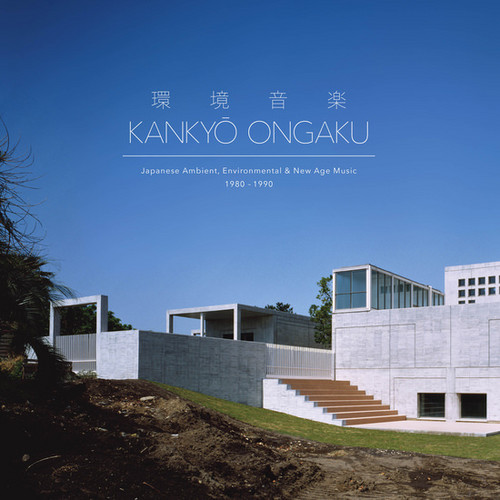
Japanese Ambient, Environmental & New Age Music 1980-90
Light In The Attic’s Japan Archival Series continues with Kankyō Ongaku: Japanese Ambient, Environmental & New Age Music 1980-1990, an unprecedented overview of the country’s vital minimal, ambient, avant-garde, and New Age music – what can collectively be described as kankyō ongaku, or environmental music. The collection features internationally acclaimed artists such as Haruomi Hosono, Ryuichi Sakamoto and Joe Hisaishi, as well as other pioneers like Hiroshi Yoshimura, Yoshio Ojima and Satoshi…
Sold Out
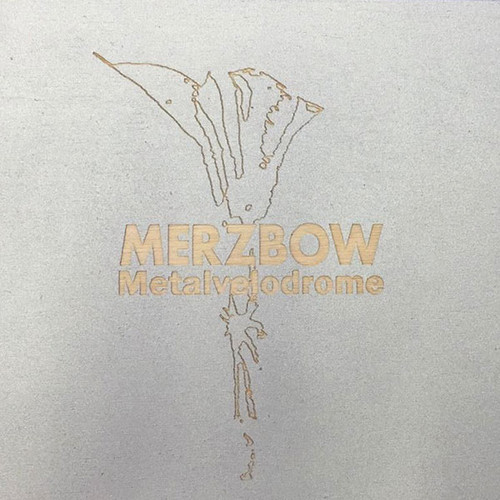
Metalvelodrome
**500 copies** Merzbow stands as the most important artist in noise music. The moniker of Japanese artist Masami Akita was born in Tokyo in 1979. Inspired by dadaism and surrealism, Akita took the name for his project from German artist Kurt Schwitters's pre-war architectural assemblage The Cathedral of Erotic Misery or Merzbau. Just as Schwitters attacked the entrenched artistic traditions of his time with his revolutionary avant-garde collages, so too would Akita challenge the contemporary con…
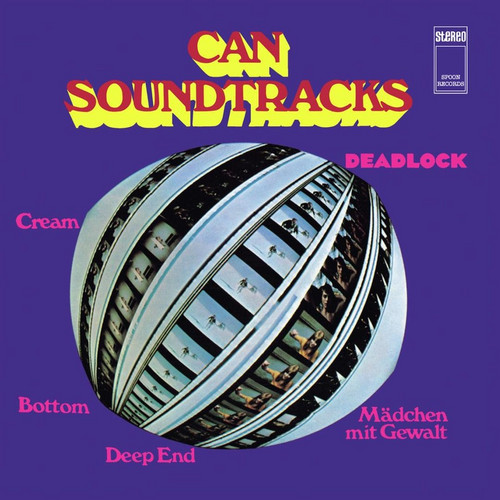
Soundtracks
Soundtracks is a compilation album, first released in 1970, consisting of tracks written for film. The album marks the departure of the band's original vocalist Malcolm Mooney, who sings on two tracks, to be replaced by new member Damo Suzuki. "She Brings the Rain", originally appearing in the 1969 film Bottom – Ein großer, graublauer Vogel by Thomas Schamoni, was later featured in Wim Wenders' 1994 film Lisbon Story, the 2000 Oskar Roehler film Die Unberührbare and Tran Anh Hung's film Norwegia…
Sold Out