Back in stock

vs Be Invisible Now
That's a long and repetitive hypnotic mantra to elevate Your cerebral remains to an higher plan, - all built on four suites, two per Artist, USA meets Italy, both persuasive and sinister, like soundscoring a four-stages trip for the outer space. Justin Wright records an airy synth sample similar to a quiet respiratory movement, - then He makes a loop of it, to death, and it weaves a infinite carpet of sounds where an acoustic guitar advances solemnly, in a crescendo of fuzzy solo and symphonic m…

How To Increase Light In The Ear
While the previous Chasm Achanés was based on low and rumbling frequencies, Maggiore and Brasini research is now focused on high pitched waves, through which they create a continuous movement of overtones and resonances. Tiny mechanical cracks are heard through the frequency bliss of the first track, a last resemblance of humanity into this otherwordly atmosphere.The second track has a continuous click, almost a clock, hidden under the microtones of three different frequencies which create an…

Cleverly Mystique
Last Expo 70 recording at Wright's home studio that produced "Black Ohms" / "White Ohms" , this recording captured similar moods and themes as those albums. A collection of more nods to early Krautrock and New Age minimalism with bouncing melodies and shorter themed tracks. "Cleverly Mystique" was captured back in 2011.
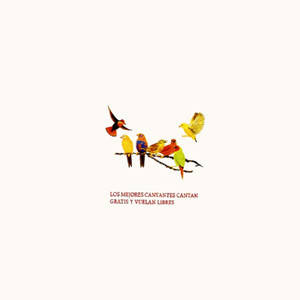
The bird of paradise
Limited to 200 copies only, and long out of print nowadays, Walter Marchetti's Bird of Paradise: Hunting in the City. Performance time: from dawn to dusk. Leave your home, with a cool head, and carrying a briefcase full of birdcalls, of the kind used by hunters, as well as a portable tape recorder, slung across your back on a carrying strap. You will use it, at the proper time, to play a tape, which has also been placed in the briefcase. Once outside, you begin your performance of 'The Hunt' by…
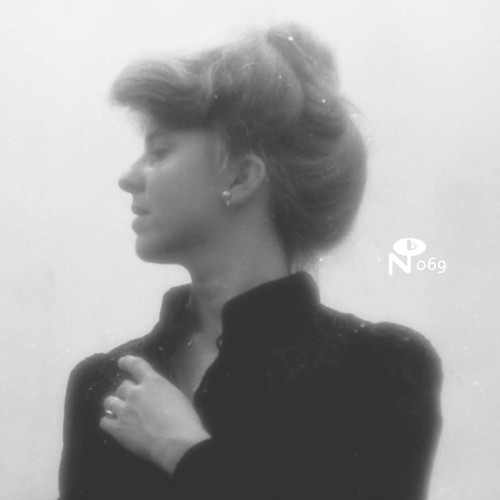
Hearing Music
Deeply enchanting, original new age flute and electronic compositions with an elegant, classical minimalism. A total must have for fans of Maggi Payne or Iasos. Flowering from studies with at the esteemed Mills College CCM and with Robert Ashley and Terry Riley in the ‘70s, the breathtaking and little-known recordings in Hearing Music are testament to the lush, earthly beauty of Joanna Brooks’ privately issued new age tapes made between 1981 and 1985 in The Bay Area, west coast USA.
Channelling…
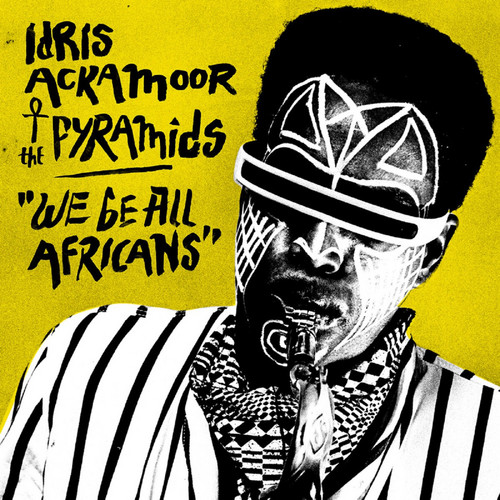
We Be All Africans
Strut are proud to present the brand new studio album from West Coast jazz mavericks, The Pyramids, led by their inspirational bandleader, Idris Ackamoor. Alto saxophonist Ackamoor first met Margo Simmons (flute) and Kimathi Asante (electric bass) whilst students together at Antioch College, Yellow Springs, Ohio where one of their teachers was renowned pianist, Cecil Taylor. After founding the band in Paris in 1972, performing in Holland and embarking on a “cultural odyssey” across Afric…
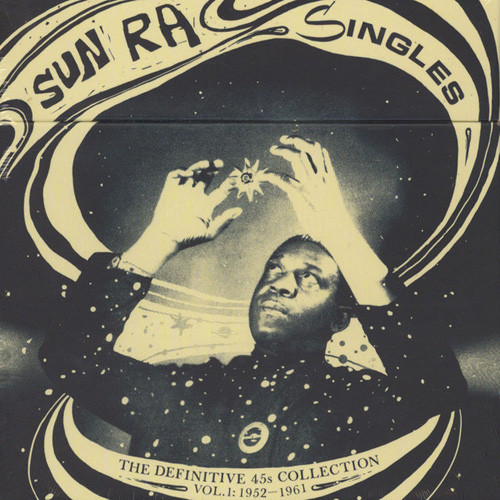
Singles (The Definitive 45's Collection 1952–1991)
The immense output of Sun Ra and his many backing bands, coupled with the limited production of many of his releases has long defied dedicated collectors. Parallel to a vast list of LP releases, Sun Ra released numerous 45 RPM singles; one-off meteorites from his prolific cosmic journey. Working closely with Sun Ra LLC and Art Yard Records, it is with great pride that Strut presents a definitive collection of the rare singles released by Sun Ra across his illustrious career, spanning 1952…
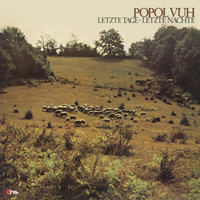
Letzte Tage, Letzte Nachte
Letzte Tage, Letzte Nächte is probably the most "rock" sounding work of Popol Vuh's production. Recorded by the classic trio of Fricke, Fichelscher and Yun, plus Ted de Jong on tamboura and Amon Düül members Al Gromer on sitar and Renate Knaup on additional vocals, its sounds seem to be more based on power than on ambient. Strong guitar passages emphasize this, with Fischelscher's playing being harder than the Conny Veit ethereal parts on earlier records. The title track is also the firs…
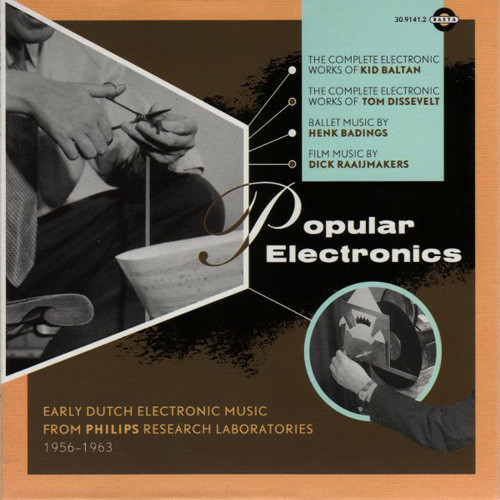
Early Dutch Electronic Music from Philips
One of the most essential collections of early electronic music ever compiled!! Raymond Scott's 'Manhattan Research Inc' boxset from 2000 is one of the finest reissues to have appeared in the last ten years. This new set from Basta is the unofficial follow up, easily their most perfectly realised project to date consisting of 4 cd's, seven booklets, posters, stickers, transcriptions and a time chart all contained within a high gloss stiff card box. It focuses on the early electronic music works …

Seligpreisung
2015 restock. The fourth LP by Popol Vuh was originally released on Kosmische Musik in 1973. It follows the religious theme of its predecessor and features the line up of Florian Fricke with Conny Veit on guitars, Daniel Fischelscher on guitars and drums (he was the drummer of Düül II), Robert Eliscu on oboe, Djong Yun on vocals and Klaus Wiesse on tamboura. Reissued from the master tapes in quality vinyl pressing, full glory laminated gatefold cover and featuring an insert with liners and photo…
Fragments
Agitation Free are one of the most highly acclaimed bands in the field of krautrock music. This fourth vinyl edition (after the successful releases of Malesh, 2nd, and Last) comes from Made in Germany and is limited to 1000 numbered copies.
Quatermass
Seminal musique concrete recordings from the early 60s that were first issued on CD in '92/'93. This CDs offer all of Dockstader's principal solo works, including unreleased works and material that has been out of print on LP for over a decade (spread over 3 LPs on the Owl label). Dockstader deserves shelf space next to Schaeffer, Henry, Stockhausen, Varése, etc. -- historically vital, minutely detailed experimental electronic music and tape composition. "My choice of the term 'Organized Sound' …

Apocalypse
Tod Dockstader's musique concrete turns out to have a surprising relevance to music created decades later; he's been described as "one of the godfathers of Nurse With Wound, and a distant cousin of rap and techno" (Option). Craig Anderton writes that Dockstader was one of the few to master "the art of assembling tape-recorded sounds and painstakingly splicing, cutting, dubbing, manipulating and mixing to create final compositions," then adds: "If you think that sounds similar to the procedures u…
Crystal
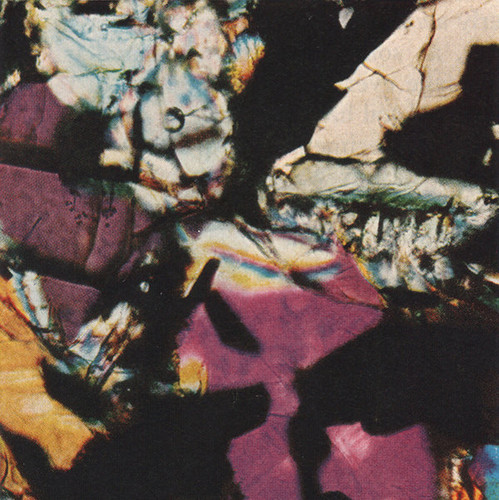
**Edition of 350 copies pressed on clear vinyl** Crystal is the third release and first vinyl LP outing by composer Tom James Scott. Sonically, the pieces presented on Crystal contrast as structures of space and density, dividing and inhabiting the space of the format. While Scott's previous releases used acoustic instrumentation to explore aspects of melodic form and song structure, 'Crystal' sees a shift towards a more electronic means of sound production. 'Skire' - the opening track - employs…
Calluna
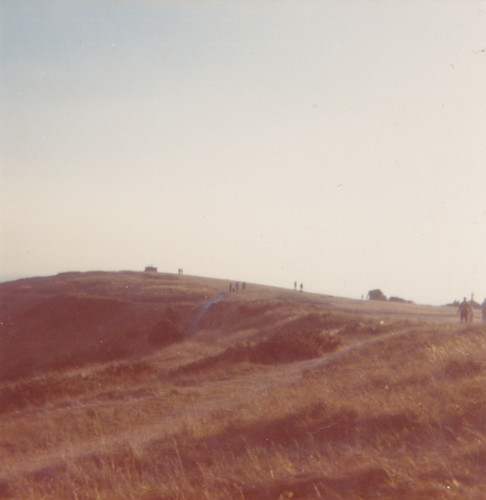
Calluna is the second collaborative release from Andrew Chalk & Tom James Scott, and was completed following the duo's first live performance in summer 2014. Recorded over a longer time period than Wild Flowers (2013), Calluna sees the haze of their debut lifted to reveal a clearer, more expansive sound world. Scott's sparse unadorned piano notes occasionally cluster into more elaborate, decorative phrases, delicately underpinned and enhanced by Chalk's slow, carefully placed additions. Edited f…

Magnetic Systems
From the same vibrant cinematic landscape of '70s studio supergroups as Goblin, The Pawnshop, The Feedback, and The Braen's Machine comes the Magnetic System, the Italian incognito dream-team composed of Milano prog keyboardist Vince Tempera, Cinevox sibling Franco Bixio, and video nasty maestro Fabio Frizzi (whose career it launched). Bridging giallo jazz-bass-driven prog and the arrival of home studios and synthesizers, the film music of the Magnetic System marked a sea change in Italian gen…
Musics: a British Magazine of Improvised Music & Art 1975-1979
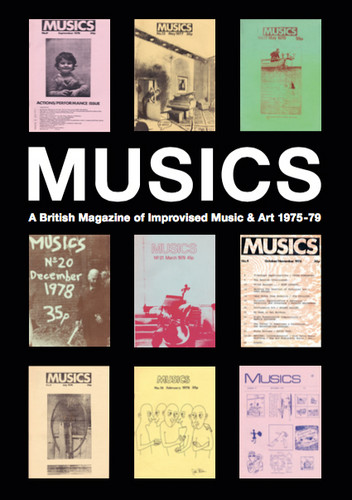
Musics was published from 1975 to 1979, by musicians and artists on the London scene of free improvisation, focusing on the most innovative participants of their generation. Steve Beresford, David Toop, Annabel Nicholson, Evan Parker, David Cunningham, Lindsay Cooper, Eddie Prevost, John Russell, Derek Bailey, Val Wilmer, Hugh Davies, Peter Riley and many, many others contributed to the writing, graphics and photography.
Musics was a blueprint for the interdisciplinary activities of sou…

Fly To Brazil
Strerath is a pianist of European calibre and he has won numerous prizes since 1967. The Walter Strerath Trio played at many Jazz Festivals in Europe and they were invited to play at Newport in the early 1970s. On this 1975 session they explore the music of Brazil. The Bossa Nova is sort of a feed-back of North-American jazz with its drive, blues and beat compared to Brazilian samba with its “joie de vivre” and optimism. The Walter Strerath Trio commands this synthesis between North and So…
Mars Archives Volume Two: 11000 Volts to Tunnel
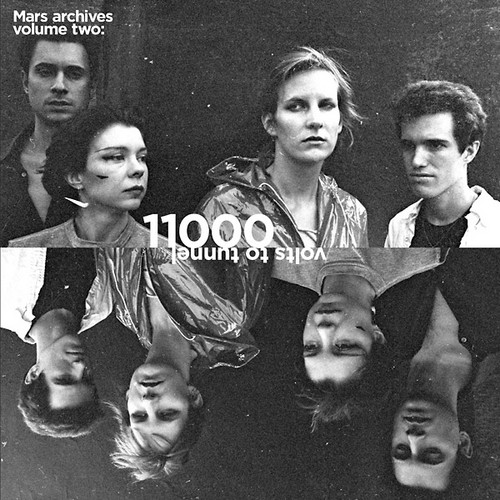
"The second amazing volume (of three), compiled by Mark Cunningham after culling every known live tape of Mars, documents the band in its first fully-matured form. Recorded at CBGB and Max's in the early months of 1978, this captures the sound of Mars around the time their first single, '3E/11000 Volts,' was released by the French Rebel label (a precursor of ZE). They're still playing their early songs, and working out the material that would be on No New York (LR 102CD/LP). Two of the trac…
Bells Studies
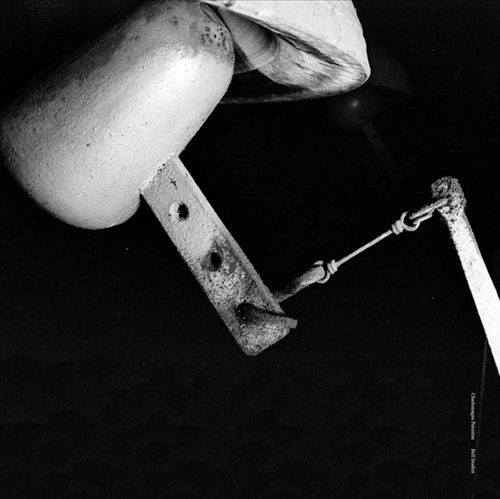
Edition of 400 copies. Includes original photos from the recording sessions. High up in a tower, accessible only by a spiral staircase that led to a concrete platform above the whole city, Charlemagne Palestine's "HellsBells" became the sonic mainstay of 53rd Street and 5th Avenue, NYC, from 1963 to 1970. In 1963, while attending The High School of Music & Art in New York, the 15-year-old Palestine was asked if he'd be interested in playing a 26-bell carillon at the St. Thomas Episcopal C…