Music from Germany
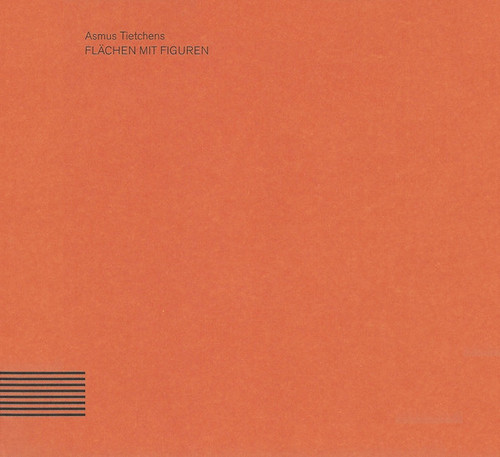
Flächen Mit Figuren
Beautifully minimal new work by Asmus Tietchens using layers and stretch out sound fields as a compositional basis and placing miniatures inside them. 54 minutes, 8 tracks, handnumbered edition in nice paper sleeve 300 copies.
Orchestral Works & Chamber Music
Music and the freedom of art: Wolfgang Rihm's aim is not to produce empty sound structures but to hit the bull's eye with direct and unexpected force.
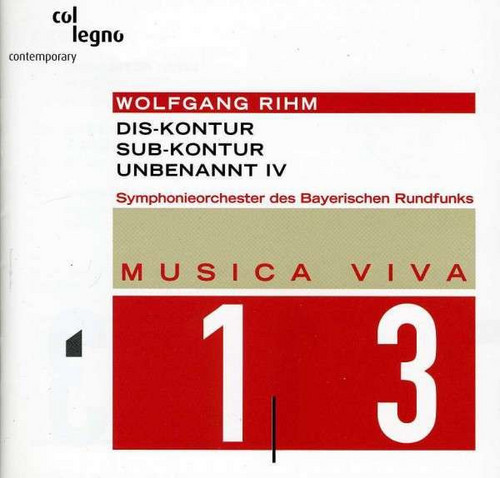
Musica Viva 13
In his Dis-Kontur and Sub-Kontur, the young Rihm strongly revolted against the emotional coolness he en-countered in the style of the musical avant-garde.
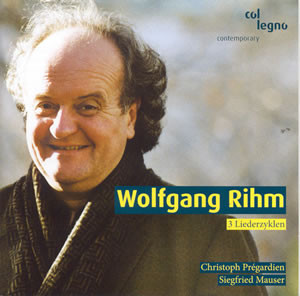
3 Liederzyklen
In the three song cycles of this recording, Wolfgang Rihm stays faithful to the text and its meaning while paying close attention to melodic line. In choosing to do so, Rihm has a deep lineage in the great tradition of Romantic art song that stretches back to the distinguished names of Schönberg, Berg, Brahms and Schumann. Approaching the text both from the perspective of the singer and from that of the accompanying pianist, Rihm is able to reach tremendous heights of expression. While the eleve…
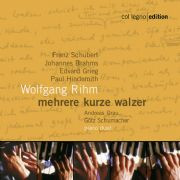
mehrere kurze walzer
Franz Schubert may not have been an expert dancer, but he certainly was an extremely skilled composer of dance music. Most of his numerous dances – often miniatures comprising only a few chords – were improvisations created for special occasions, such as house parties. And many of these impromptu waltzes were noted down by Schubert later, including several pieces for piano four hands. Brahms, who held Schubert's music in high esteem, remained faithful to his own majestic musical language in his …
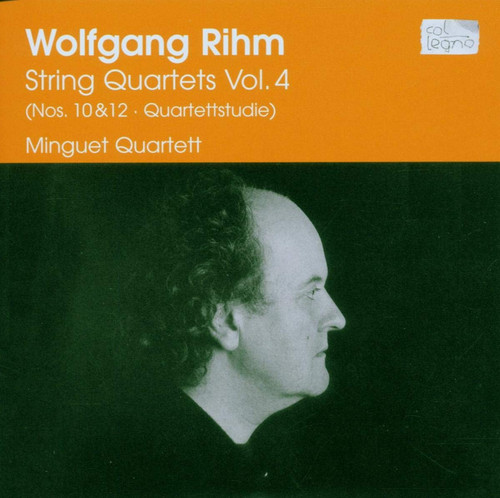
String Quartets Vol 4
The most recent of his compositions which Rihm called “string quartets” date back a few years already, with a gap in the enumeration still waiting to be filled (the eleventh quartet is missing). Even a cursory comparison of the three works’ beginnings reveals Rihm’s “ability to find new and distinctly characteristic solutions for each piece, which, each in their own way, put a stamp on what is to follow.” (R. Frisius) The gentle pizzicati of Quartet No. 10 and the muted, shadowy chord of No. 12 …
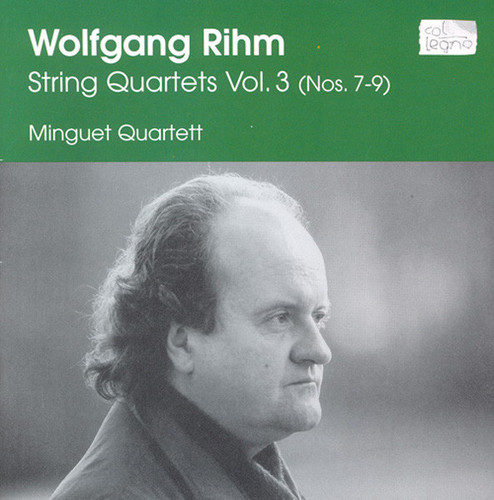
String Quartets Vol. 3 (Nos. 7-9)
String Quartets Nos. 7, 8 and 9 suggest that Rihm has finally left behind the neo-romantic expressive pathos of earlier compositions: “Real or virtual allusions to the past are rarely to be found any more – and the same holds of the luscious and revelling strings. Remnants of tonal harmony are, with a few exceptions, almost completely obliterated. … Instead, new constellations come to the fore, emancipated from traditional conceptions of sound – heeding, in particular, the principle of polarity …
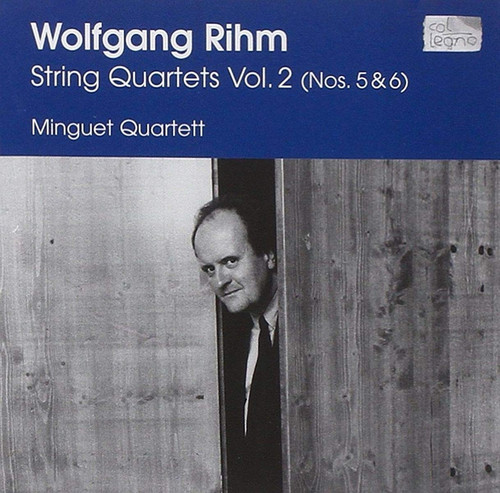
String Quartets Vol. 2 (Nos. 5 & 6)
That the two single-movement string quartets No. 5 (“Ohne Titel”) and No. 6 (“Blaubuch”), composed in 1981/83 and 1984, belong to the most passionate of Rihm’s quartets is due to their restless vigor. This impulsive approach is of course always present in his music. But even the tempo indications “fast, restless” and “fast und free” suggest a certain stringency - which is fully realized in the pieces. A sense of inner disquiet pulls the listener like a maelstrom into a sea of commotion, of stru…
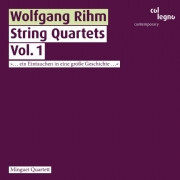
String Quartets Vol.1
This CD with … the first four string quartets reflects the interesting path of Rihm’s artistic development. The Minguet Quartet approaches the first two, shorter, works with audibly high concentration without relinquishing, in the frenzy of high-energy playing, their own cultivated sound born from quartet tradition. Here, Rihm’s third quartet, with its not unproblematic subtitle ‘Im Innersten’ (‘at the innermost core’), does not become self-indulgent navel-gazing, the display of sounding extremi…
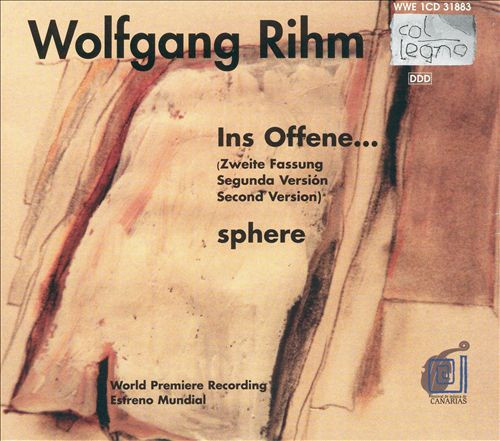
Ins Offene... / sphere
Enclosing the listener in sonic space: This is what Beat Furrer carried to extremes in his FAMA (col legno 20612), about 15 years after Rihm, by actually placing his audience in a “building of sound”. For Wolfgang Rihm, a sonic space was something less concrete and more indirect: “Organically sprawling strings of sound should be woven around the listener, circling her from different directions. In this way, the listener is not left to her own devices while opening up to it; the piece itself come…
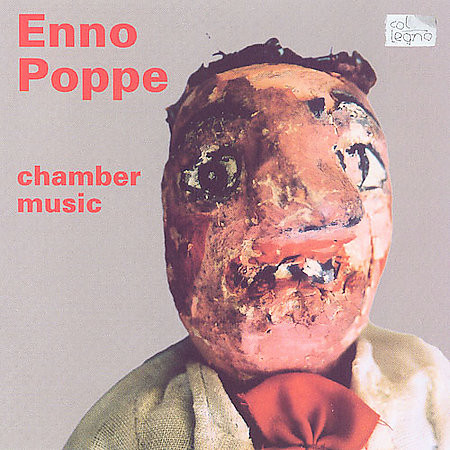
Chamber Music
Against spontaneity and con-sistency: Poppe manages the feat of being both a systematic and a revolutionary composer, one who plays by the rules and beats them at the same time.
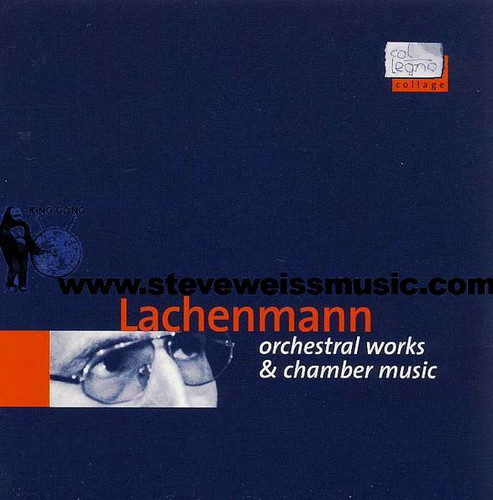
Orchestral Works & Chamber Music
Hardly any other composer has ever been as far removed from conservatism as Helmut Lachenmann. In all his oeuvre his listeners are never permitted to lean back comfortably even for a moment in expectation of the well-known and familiar. Again and again Lachenmann succeeded, and still succeeds, in shaking the "aesthetic apparatus," the system of conventional formulas and phrases established throughout decades and centuries, to its very foundations. Intérieur I (1966), a piece for percussion solo,…
Piano Music
Music as a message without words from far away – from our inner selves. Piano music as metaphor for the thrilling adventures of human existence.
Klaviermusik
The sovereign and immediate approach Lachenmann takes in his Fünf Variationen über ein Thema von F. Schubert (1956) lends Schubert's slight Deutsche Tanz D 643a special and almost heroic flavor. But only five years later, Lachenmann had already travelled a considerable distance since those days as his Echo Andante of 1961 shows. Like Wiegenmusik (1963), the piece has been shaped by Lachenmann's studies with Luigi Nono whose influence and inspiration are clearly audible. A perfect example of the …
Ausklang / Tableau
The title Ausklang (Final Notes, or Fading Away) is intended to be understood literally. Lachenmann's Musik für Klavier und Or-chester is centrally concerned with final notes and sounds fading away. In particular, it is concerned with piano sounds created with certain techniques (playing silently at the keyboard, special ways of operating the piano pedals, etc.). It is also concerned with the fading away of sound as the sounds of the piano are being picked up by the orchestra just as they are ab…
Gran Torso / Salut für Caudwell
In 1988 the first issue of these recordings of Gran Torso and Salut für Caudwell was awarded the Preis der Deutschen Schallplattenkritik (German Record Critics' Award); and neither compositions nor recordings have lost any of their value up to today. In Gran Torso, Lachenmann tried to explore the “mechanic and energetic conditions of sound production”. This resulted in singular, unusual sounds which simultaneously exploded the barriers of audibility, playing technique and sound as such. The guit…
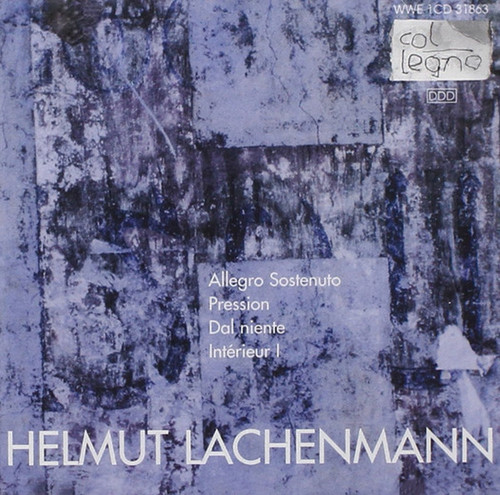
Allegro Sostenuto / Pression / Dal Niente / Intérieur I
Both Sostenuto and Dal niente were composed for the clarinetist Eduard Brunner. “As in the earlier Ausklang for piano and orchestra, the musical material is determined by the interplay of the experiences of resonance on the one hand and motion on the other. Both aspects of sound encounter one another in the conception of structure as a multiply ambivalent ‘arpeggio’, i.e. as a process of construction, deconstruction and reconstruction – experienced in temporal succession – which is conveyed both…
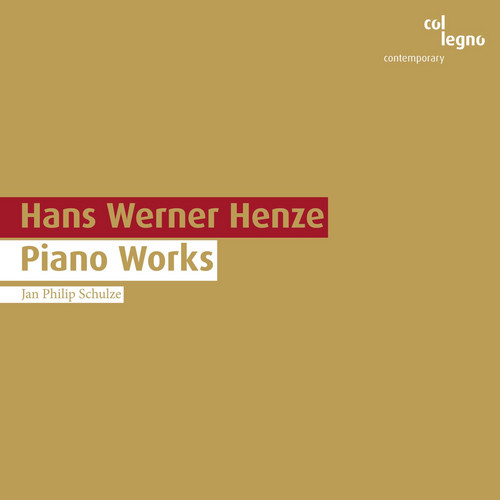
Piano Works
Jan Philip Schulze has been playing Henze’s piano works “in his sleep,” as he says. Indeed he has worked with the composer intensively on every piece, yet during the recording sessions he was noticeably surprised, while listening back to recordings, to find himself confronted by the work afresh, discovering new sides to it which he had previously experienced differently.

Gathering Blue
On blue-colored vinyl. A work of blissful delight. Aidan Baker provides four sides of enchantment in this long-in-the-making 2LP set. Gathering Blue provides new original material plus a stunning cover of the Joy Division track '24 Hours' as well as an extended work-out of the amazing remix of 'The Cicada Sings Our Love Song' by Building Castles Out Of Matchsticks, which was originally released in 2005 on the ultra-limited and long-deleted Arcolepsy Records CD Remixes. This really is Aidan Baker…

The Fat Is Gone
Recorded live at Molde International Jazz Festival in 2006. The meeting between the godfather of free-jazz & the innovators of the modern free-jazz scene in Scandinavia, Mats Gustafsson & Paal Nilssen-Love, resulted in this mastodon of an album. This is the European free-jazz underground at its best. A devastating, blasting, raw, ferocious sonic assault on all senses. And beautiful, painfully beautiful.