Music from Japan

The West
Constellation Tatsu welcomes back Bifuu_ZONE, which means "a zone of gentle breeze" for a record that resists drama, instead favouring small tonal events that take you to a place you never knew existed but somehow feels familiar. Notes linger, erode and soften as stillness becomes the primary pull, sound unfolding patiently. The presence of the saxophone adds a human warmth as breath brushes against restrained electronic forms. Rather than inviting escape, the album grounds you in a park on a su…

Zouroku No Kibyou
The first album by the most extreme noise project to ever come out of Osaka, now in a second deluxe edition that borders on insanity: natural birch wooden box, hand-numbered to 99 copies, color print lid reproducing the iconic cover art by manga master Hideshi Hino. Inside: the LP, a 40-page book of raw concert photos, a cassette of six rare studio tracks from April and June 1980 - Hijokaidan's primal first breaths - four postcards, a massive poster, a live photo book, liner notes by Jojo Hirosh…

Remblandt Assemblage
One of the most essential early documents of Japanese noise, originally recorded and mixed at home in 1980 and released in 1981 on cassette by Lowest Music & Arts, now given the physical treatment it always deserved: a 2LP set housed in a natural birch wooden box with laser print, hand-numbered edition of just 99 copies. Ninety-nine! With a double-sided 42 x 60 cm poster, heavy card insert reproducing the original master tape cover, and black cardboard strip with album credits. An art object, pl…

Nuts Is 5000Yen
Spore Spawn "Nuts is 5000yen” is a hand-crafted, ultra-limited edition record cut one by one on high-quality blanks. Each copy preserves the raw, off-kilter energy of Spore Spawn in a uniquely physical form, with slight variations that make every disc subtly different.
“Nuts is 5000yen” captures the project’s twisted sense of humor and experimental edge, blending noisy textures, warped melodies, and unpredictable structures into a brief but intense listening experience. The lo-fi, direct-to-disc…

Tapestry Of Noise
** 2026 Stock ** If Laptop Noise looks forward into the blinding glare of the digital, Tapestry of Noise looks outward and backward, unspooling an expansive grid of analogue and hybrid recordings that show how Merzbow’s classic language was woven together in the first place. Slowdown’s 6CD expansion assembles long, previously scattered or hard‑to‑access works into a single, overwhelming fabric that moves from twitching tape‑loop delirium to fully seared harsh‑noise architectures.
Early discs re…

Laptop Noise
** 2026 Stock ** Laptop Noise zeroes in on the period where Merzbow’s long‑running practice of junk‑metal abuse, feedback and tape saturation is rechannelled through the seemingly modest frame of a computer. Across six discs, this edition amplifies the original’s premise into a deep survey of his fully digital soundworld: long‑form works where full‑spectrum distortion, high‑frequency shrapnel and seething low‑end swarm are carved into towering blocks, then eroded into swarms of microscopic detai…

Below the Surface, There Is a Gift
*50 copies limited edition* Ambient artist Pallette's album Below the Surface, There Is a Gift, is available via rohs! records (ROHS!073CD). Launched on October 23, 2025, this collection invites listeners into serene depths of introspection and solace.
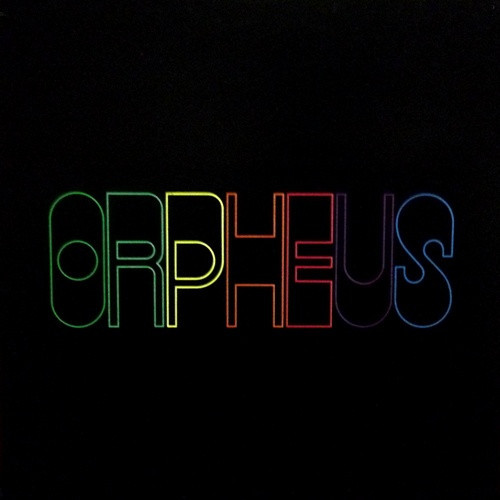
Black Orpheus
The legendary Isao Suzuki Trio's iconic 1976 album Black Orpheus, a cornerstone of Japanese jazz, receives a stunning 180g vinyl reissue, bringing its soulful modal and soul-jazz grooves back to life for a new generation of listeners.
Originally released on Three Blind Mice (TBM-63) and recorded on February 20, 1976, at Aoi Studio in Tokyo, Black Orpheus showcases bassist and cellist Isao Suzuki leading a powerhouse trio with pianist Tsuyoshi Yamamoto on piano and electric piano, and drummer Don…

Black Tape II
Black Tape II is only the second widely available release by Ohkami No Jikan (The Time of the Wolf), one of the more esoteric groups of the 1990’s Tokyo underground. Recorded in 1992, it illuminates a largely undocumented facet of Nanjo Asahito’s psychedelic cosmology, distinct form his better known work with High Rise, Musica Transonic and Toho Sara. Aside from a handful of limited, handmade cassettes and CD-Rs on his La Musica label, there’s only been one Ohkami No Jikan album, Mort Nuit, that…

Projection: The Complete Inspiration and Power Live at Shinjuku Art Theater
A miraculous discovery! The complete live performance at "Inspiration & Power 14" at Shinjuku Art Theater in 1973. Uncut live performance of Masayuki Takayanagi's New Direction For The Arts Discography at "Inspiration & Power 14" held at the Shinjuku Art Theater in 1973. This CD contains all the performances of the day, although only the last part of the concert was included in the album of the same title.
Recently, a cassette tape was discovered among the belongings of Masayuki Takayanagi, an…

いっかいこっきりの「日向ぼっこの空間」/ Only Just Once, Space in the sun
2026 stock Space in the Sun was one of Akio Suzuki’s major sound projects, a unique construction completed in 1988 and located on the merdian line, which took around 18 months to build. Its purpose was to allow Suzuki to spend one day, on the autumnal equinox, purifying his sense of hearing in nature. This release comprises a 44 page book containing plans and materials from the time alongside texts, and two CDs of environmental recordings created on site at Space in the Sun. To date only tiny fr…

Kachouzu
On Kachouzu, Merzbow compresses his late‑period harshness into four short movements, a 2×6″ lathe‑cut blast where metallic textures, searing feedback and dense midrange roar behave less like tracks than like successive cross‑sections of the same noise storm.

Pendulum
**200 copies, sold out at the label** New single from the undisputed god of Japanese noise. Masami Akita - the man behind Merzbow - returns with two tracks recorded in February 2024 at Munemihouse, his legendary home studio in Tokyo. Two sides of pure sonic assault that swing just as the title suggests - "Pendulum, Part 1" and "Pendulum, Part 2" - masses of frequencies in constant motion, pendulums of noise crossing the sonic spectrum with the violence and precision that only Akita can orchestra…
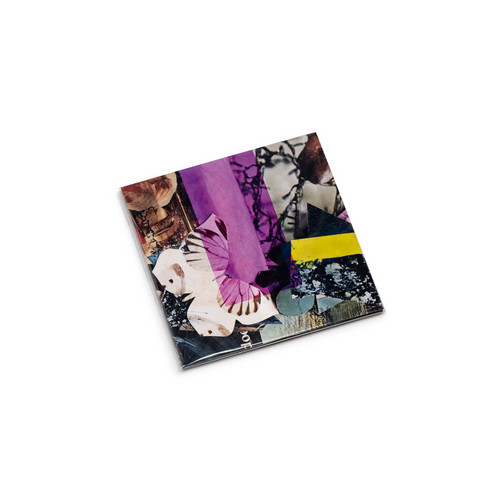
Gman+
Gman+ gathers some of the most elusive material from Merzbow’s 2011–2012 period and welds it into a single, punishing disc, four tracks that function as both archival rescue and self‑contained statement. The collection pulls together work originally issued in limited form, recasting it as a crucial chapter in the same cycle that produced Kumo No Zettaichi, Sugamo Flower, Bit Bluesand Kotorhizome. Across “Gman”, “HJYUGTF2”, “Hakutouwashi” and “Lop 13”, Masami Akita works out a language of layered…
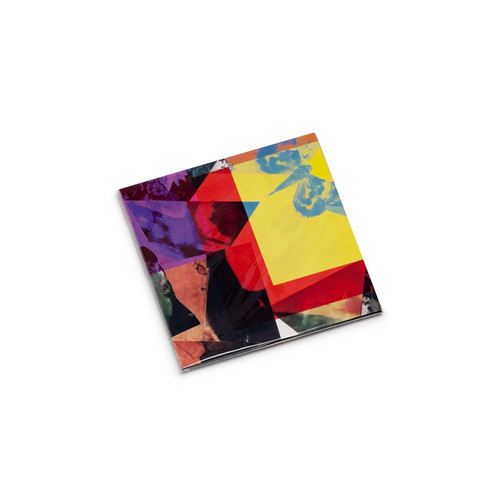
Kotorhizome
Kotorhizome catches Merzbow in a phase where noise stops behaving like a vertical wall and starts acting more like an underground network. Recorded between 2011 and 2012 and released later as part of the Slowdown archive cycle, the album is built from a deceptively modest setup: small koto, synth, and drone box woven into three extended pieces. The title fuses “koto” with “rhizome,” hinting at what the music does structurally - traditional string resonance is fed into electronics and allowed to …
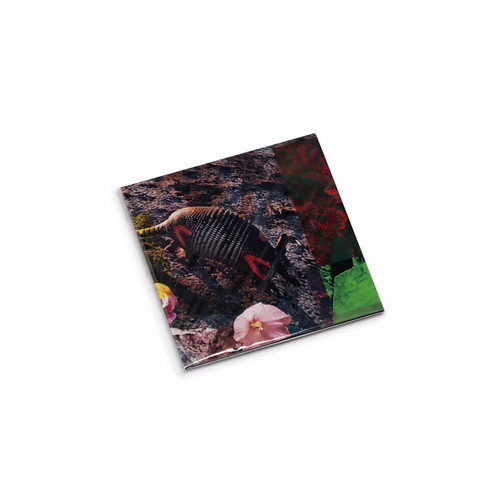
Bit Blues
Bit Blues sits in the middle of Merzbow’s Horizon cycle like a scorched signpost, three tracks cut from performances recorded at Munemihouse in 2011 and 2012 and later remastered in 2021. All the music is by Masami Akita, working with a small, intensely exploited setup that favours dense, bit‑crushed textures and overdriven loops over the more sprawling configurations of earlier decades. The title points in two directions at once: “bit” as in digital grain and reduced resolution; “blues” as in a…
Sugamo Flower
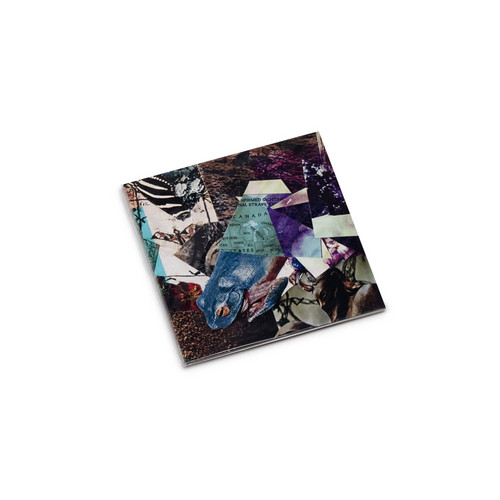
Sugamo Flower compresses a particular 2011 moment in Merzbow’s practice into two long tracks that feel like one continuous, mutating organism. Both pieces are sourced from performances recorded that year, later repurposed as material for “Sugamo Flower Festival” on the split LP Freak Hallucinations with Actuary (2012), which gives the album a double life: document of an event and quarry for subsequent work. Central to the sound is the return of the Korg AX30 multi‑effect pedal, a unit Masami Aki…
雲の絶対値 Kumo No Zettaichi
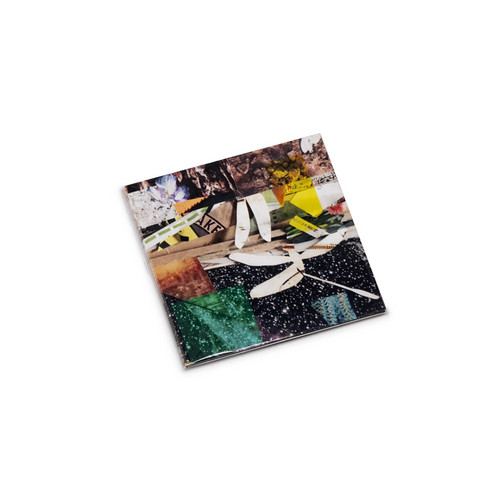
On Kumo No Zettaichi, Merzbow trades drum violence for a hall of hovering machines, two 2011 pieces where small drone boxes, oscillators, and minikoto threads knot into a dense but strangely weightless sky of electric weather. It is harsh ambient as charged cloud bank rather than blunt impact.
Arijigoku (Test Mix)
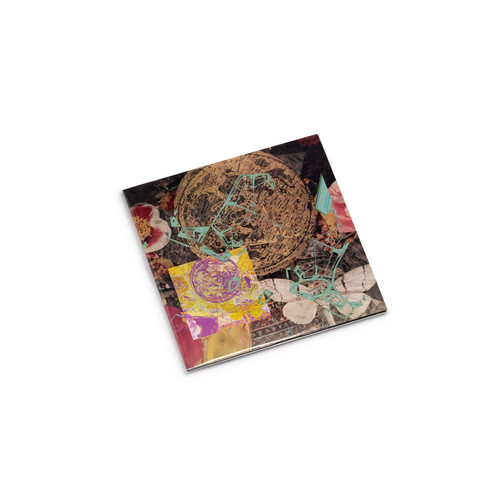
On Arijigoku, Merzbow drags live drums and high-saturation electronics into the same pit, a 2008 vortex where blast-beat turbulence and molten noise spiral together like a ritual gone feral. It is harsh music with a striking sense of propulsion, less wall than constantly collapsing tunnel.
Yono's Journey
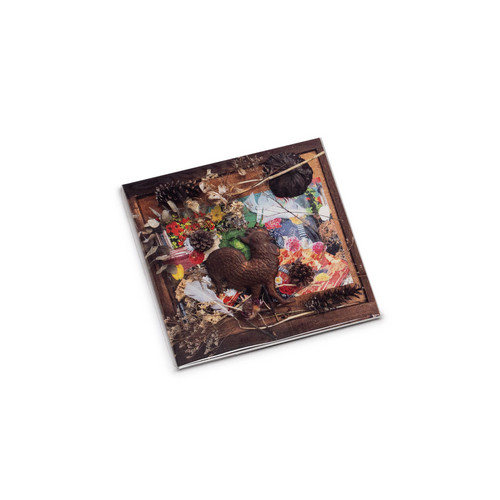
Yono's Journey invites listeners to travel through Akita's sonic landscapes, perhaps following an animal guide. Merzbow turns a 2007 home-recorded session into a three-part storm, where hyper-saturated feedback and low-end throb fold into each other like a moving landslide. It is Japanoise as pure velocity: no narrative, just impact reshaping the inner ear.