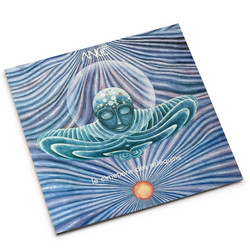
This is one of the cornerstones of French progressive music. Originally issued in 1975, Émile Jacotey is the fourth LP by Ange, the band from Belfort that stood, by the middle of the decade, as the undisputed leaders of the French rock scene - and it remains among the most singular concept albums the era produced anywhere in Europe.
The album's great achievement lies in how it binds together two major cultural currents of 1970s France: the national passion for progressive rock, and what came to be called régionalisme - the movement, born in the wake of May '68, of distrust toward the country's hyper-centralization and renewed attention to its rural margins. There is no separatist program here, no liberation front for the Haute-Saône. Instead, Ange turned toward a figure already vanishing from the French landscape: the peasant, a man who never left his village, yet carried within him a tradition and a way of life whose authenticity spoke directly to the aspirations of the counterculture.
That figure has a name and a voice. While touring England, Christian Décamps received a newspaper clipping from L'Est Républicain describing an old blacksmith from the village of Saulnot named Émile Jacotey, a keeper of local legends. Décamps sought him out and recorded forty-five minutes of conversation - fragments of which surface across the album, the old man's voice threading through the songs like a document from another time, anchoring the band's symphonic flights to the soil from which they grew.
Musically, Émile Jacotey follows the path traced by its predecessors - the theatrical vocals, the dense organ and Mellotron architecture, the dramatic shifts between pastoral quiet and hard-edged attack heard on Ode à Émile - but with a surplus of sincerity that sets it apart. Ange never disowned their neo-rural origins, and here that fidelity becomes the album's very subject. Alongside Au-delà du Délire and Par les Fils de Mandrin, it forms the central panel of the band's great mid-70s triptych, and arguably its most human chapter.