Originally issued by Philips in 1973, Le Cimetière des Arlequins is the second LP by Ange, and the record that transformed a young band from Belfort into the defining voice of French progressive music. A gold record in its homeland, it remains one of the great theatrical statements of the European 1970s - a world of discordant organ, Mellotron, and feverish narration that owes as much to the chanson tradition as it does to the symphonic ambitions of its English contemporaries.
The album announces itself with a gesture of remarkable audacity: a reworking of Jacques Brel's Ces Gens-Là. Where Brel sketched a petit-bourgeois family with venomous precision, the brothers Christian and Francis Décamps drag the same words into another world entirely - the narrator descending into madness as each character passes before him, the song's bitterness curdling into hallucination. It was this track that launched the album into the French charts, but it is only the doorway into something far stranger.
Recorded at Studio des Dames in Paris, with one excursion to Michel Magne's Château d'Hérouville, the album finds the classic lineup - Christian Décamps on piano, organ, and lead vocals, Francis Décamps on keyboards and Mellotron, Jean-Michel Brézovar on guitars and flute, Daniel Haas on bass, and Gérald Jelsch on drums - in full command of its language. The sound is pastoral and menacing in equal measure: organ tones with a peculiar, viscous grain, sudden shifts from aggression to fantasy, and Décamps' voice carrying the weight of a one-man theater troupe. Comparisons to Genesis fronted by Peter Hammill have followed the album for decades, but they only go so far - the sensibility here is unmistakably French, rooted in text, gesture, and the grotesque.
Everything culminates in the closing title track, nearly nine minutes that gather the album's threads into a procession through the cemetery of the harlequins - one of the most haunting finales in the progressive canon, originally pressed with a locked groove that refused to let the listener leave.
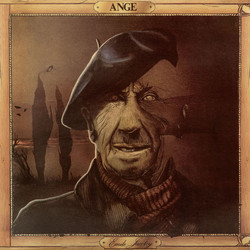
Alongside Au-delà du Délire and Émile Jacotey, this is an essential chapter in the story of Ange, and a record that stands at the very source of French progressive music.