** 2026 Repess ** Exotica invites you to hear Sun Ra sideways, not as free‑jazz firebrand or stern cosmic philosopher, but as a secret mood‑music architect whose fascination with Hollywood fantasy helped power his Afrofuturist flight. The compilation starts from a provocation: when we say “Exotica,” we think Martin Denny, Arthur Lyman, Les Baxter, Esquivel - not Sun Ra. And yet, in late‑1950s Chicago, Ra was carefully studying that very world of “jungle” reveries and “mood music.” As John Szwed has shown, he tuned into the lush strings of David Rose, the animal cries and echo chambers of Denny, and especially the technicolor orchestrations of Les Baxter, with their timpani and marimbas, choral moans and imaginary geographies. What mid‑century listeners treated as air‑conditioned decor, Ra treated as raw material: music “rich with imagination and suggestion” that he could bend toward his own outer‑space mythology.
The parallels with Baxter are striking. Both men wrote music that resisted gravity, filling LPs with Atlantis, pyramids, Aztec rituals, phantom ports and distant planets. Baxter’s Space Escapademapped “Saturday Night on Saturn,” “Moonscape” and “A Look Back at Earth” years before Ra’s space‑age image fully crystallised; his Music Out of the Moon practically defined outer‑space Exotica. Both were early adopters of the Moog in 1969, prodding its circuits toward dream states. Ra even folded Baxter’s world in directly: his 1957 debut Jazz by Sun Ra includes Harry Revel’s “Possession,” first heard via Baxter’s Perfume Set to Music. This isn’t a one‑way line of influence so much as a feedback loop: a Black bandleader from Birmingham, Alabama, absorbing and transforming fantasies crafted by a white Texan mood‑music maestro, who in turn was riffing on “primitive” rites as imagined by Hollywood. Out of that circuit comes something derivative and original at once.
For Sun Ra, the stakes of Exotica were different. Born Herman Poole Blount in a violently segregated Birmingham and later confined to Chicago’s South Side, he knew that geography could be a trap. In that context, the space‑age rhetoric of the 1950s wasn’t just fashion; it was a toolkit for imagining a way out. As Paul Youngquist has argued, one of Ra’s responses to Black urban confinement was to deploy Exotica’s promise of elsewhere - its “anywhere but here” – toward progressive ends, opening “wider vistas, new horizons” for those whom the post‑war boom bypassed. Mainstream Exotica offered suburban listeners sonic package tours to tiki bars and make‑believe isles; Sun Ra used similar techniques – lush voicings, unusual percussion, dreamlike harmonies – to suggest interplanetary routes out of Jim Crow reality. The escape is still escapist, but the destination is different: not a colonial resort, but an alternate cosmos.
Sonically, though, Ra’s Exotica could never pass in a hi‑fi showroom. Classic Exotica records were “clean”: immaculate studio acoustics, precision arrangements, heavily managed atmospheres. Ra’s Saturn sides are famously scuffed - instruments out of tune, horns flaring past the mic, tape distortion, room noise, sudden edits, wrong notes left in because the moment mattered more than polish. Where Baxter offered what David Toop once described as “package tours in sound” for “sedentary tourists” who wanted to flirt with taboo emotions without leaving the suburbs, Ra sold one‑way tickets on rickety spacecraft built from whatever gear he could afford. The surface may be “flawed,” but underneath is something Exotica rarely risked: volatility, humour, spiritual urgency, a sense that the band is discovering the landscape as they play it.
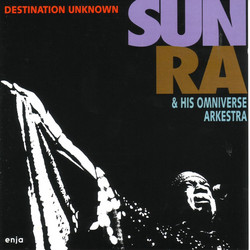
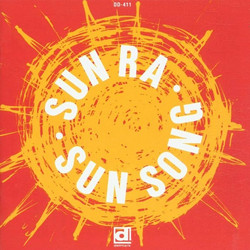
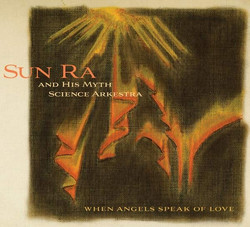
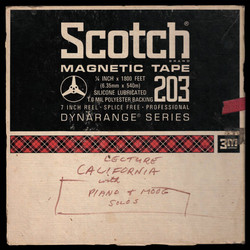
Curated and produced by Irwin Chusid for Modern Harmonic from recordings Ra made for his own Saturn imprint between 1956 and 1968, Exotica pulls together those moments where the Arkestra drifts closest to the tiki bar without ever quite going inside. You hear vibraphone shimmer and gentle Latin‑tinged vamps, languid horn themes, ballads that feel like they’re peering out across imaginary lagoons - but also eerie organ clouds, off‑kilter percussion, spectral chants. It’s mood music constantly disturbed by the possibility of rupture. Transferred and restored from archival sources by Michael D. Anderson and mastered by Bob Irwin, the collection retains the grain of the original tapes while giving these pieces the dynamic space they never had on battered Saturn pressings.
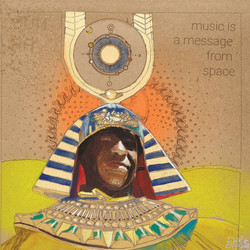
The packaging underlines the reframing. Chesley Bonestell’s space painting “Antares,” restored and adapted by Laura Lindgren, places Sun Ra’s Exotica firmly in orbit, while Chusid’s notes argue for a broader map of the genre - one that can accommodate “uneasy listening” from Chicago rowhouses alongside hi‑fi fantasies from Hollywood. What emerges is not a polite cocktail soundtrack but a strange, compelling hybrid: part lounge mirage, part cosmic ritual, all Sun Ra. It suggests that Exotica’s true potential was never just in selling sonic vacations, but in teaching listeners how to imagine other worlds - and that no one took that lesson further, or made it stranger, than Ra himself.