Sun Ra
Jazz By Sun Ra Vol.1 (LP)
FormatLPLabelSam Records, TransitionGenreJazz & Improvisation
Out of stock
Tracked express shipping from Italy, no customs or import VAT in the EU. Shipping costs
Did you know that the short-lived Transition label released the first LPs, or first sessions as leaders of three of the greatest performers in modern jazz? Donald Byrd – Byrd Jazz – Transition TRLP 5; Sun Ra – Jazz by Sun Ra Vol. 1 – Transition TRLP 10; Cecil Taylor – Jazz Advance – Transition TRLP 19. Tom Wilson, its founder and manager, was undoubtedly a man of taste more than a businessman as the label had to close its doors after only two years of activity (1955-57). He went on to produce pop and rock artists such as Frank Zappa, Simon and Garfunkel, The Velvet Underground and Bob Dylan, to name but a few. Fortunately, most of the recordings he produced for Transition—including unreleased material—were later acquired by other labels or the musicians themselves and some of them had been given a second chance to be heard.
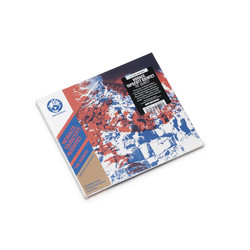
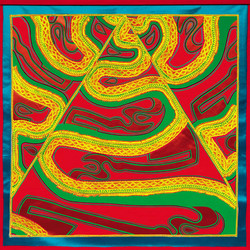
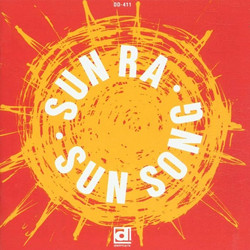
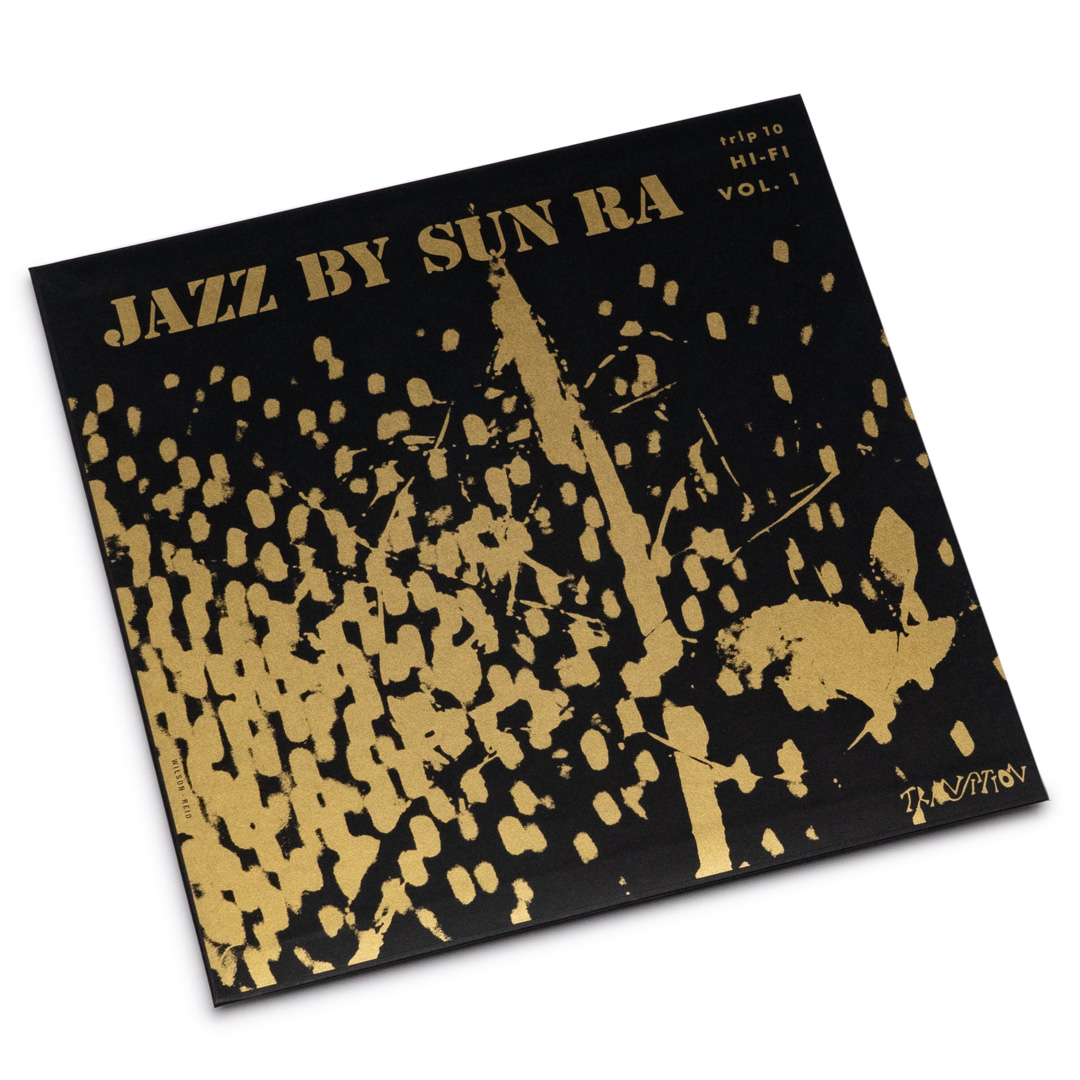
At the end of the 1960s Bob Koester released the tracks Sun Ra had recorded for Transition on two Delmark LPs, Sun Song [DL-411, 1967] the reissue of Transition TRLP-10, and the partially unreleased Sound of Joy [DS-414, 1968]. The latter should certainly have seen the light of day under the reference TRLP-28 if Transition had had a better fate, which is why we chose to use the same cover art as TRLP-10 but in a silver tone for our screen printing.
Even if Jazz by Sun Ra Vol. 1 is known to be the first Sun Ra LP, the musician was an active performer since the late 1940s, and had already recorded with his own "Arkestra" numerous titles that can be found on Saturn releases. Nonetheless, it seems that Sun Ra had never had such extensive resources at his disposal as Tom Wilson provided for these two recording sessions. During the first session on 12 July 1957, the Arkestra, at the time made up of eight musicians, grew to eleven with the addition of Dave Young (tp), James Scales (as) and Richard Davis (b) to the regulars Pat Patrick, John Gilmore, Robert Barry and Jim Herndon. Similarly, the sound quality of these recordings, made at Universal Recording in Chicago, is a notch above Saturn productions from the same period.
Aside from these purely discographic considerations, the music on these two albums is thoroughly enjoyable and surprisingly accessible compared to other Sun Ra albums. Yet accessibility here doesn't mean conventionality—these recordings reveal Sun Ra already operating at the forward edge of jazz's evolution, bridging the gap between hard bop sophistication and the cosmic free jazz explorations that would define his later work. The musician develops all the musical ideas he had previously experimented with: advanced time signatures coupled with harmonic scales based on his mathematical equations, anticipating the modal and structural innovations that would reshape jazz in the decades to come. Not to forget the lush elegance within the delicate, if not intricate arrangements heard on many themes—a modernist sensibility wrapped in beauty.
As he himself explains in the original liner notes: "I always strive to write the sounds I hear both inwardly and outwardly. I use the simple rules of harmony as a basis but I employ my own rule as well. My rule is that every note written or played must be a living note. In order to achieve this, I use notes like words in a sentence, making each series of sounds a separate thought. My watchword is precision. I never forget that a sound "sound" is just as important as a sound doctrine in a non-musical field. We rehearse everyday on new sounds and new approaches to projection. Projection is very important. Dynamics, melodies that have a story to tell, chords that alert the ear, contrapuntal rhythms, all combine in my creations to make a new form of modern jazz."
These notes, reproduced in their entirety, are one of the rare opportunities that Sun Ra sought to explain not only his influences, but his methods of composition and modes of execution as well. What emerges is a portrait of an artist already thinking beyond the boundaries of his time, using mathematics and cosmic philosophy as compositional tools, treating sound as both spiritual and scientific inquiry. Jazz by Sun Ra Vol. 1 and Vol. 2 represent arguably the most accessible work in the Sun Ra catalogue, as well as one of the most thoroughly and repeatedly listenable—a perfect entry point into the Arkestra's universe, where discipline and freedom, tradition and innovation, earthbound swing and interstellar vision coexist in perfect balance.
This edition
Deluxe edition, Tip-on jacket, 24 pp booklet
Release notes
Front sleeve reads: Hi-Fi VOL. 1 Recorded on July 12, 1956; the date is noted on the record labels. Limited Edition 1000 copies. Mastering by François Lê Xuân, Studio 101. Cut by Kevin Gray at Cohearent Audio. Pressed by Garcia & Co, Marciac, France. Tip-On jacket screen-printed by Pozzoli, Italy. 24-page booklet. Produced by François Lê Xuân and Fred Thomas for Sam Records/Saga. Under licence from Delmark Records. Each record has been visually checked to prevent defects. This edition…
| A1 | Brainville | 4:29 | |
| A2 | Call For All Demons | 4:30 | |
| A3 | Transition | 3:40 | |
| A4 | Possession | 5:00 | |
| A5 | Street Named Hell | 3:55 | |
| B1 | Lullaby For Realville | 4:40 | |
| B2 | Future | 3:15 | |
| B3 | New Horizons | 3:05 | |
| B4 | Fall Off The Log | 4:00 | |
| B5 | Sun Song | 3:40 |
- James Scales
- Alto Saxophone
- Reid
- Artwork
- Wilson
- Artwork
- Pat Patrick
- Baritone Saxophone, Bells [Indian]
- Richard Evans
- Bass
- François Lê Xuân
- Co-producer, Mastered By
- Fred Thomas
- Co-producer
- Robert Barry
- Drums, Bells
- Wilburn Green
- Electric Bass, Tambourine
- Kevin Gray
- Lacquer Cut By
- Sun Ra
- Piano, Organ [Hammond], Written-By (A1 to A3, A5, B2 to B5)
- John Gilmore
- Tenor Saxophone, Wood Block
- Jim Herndon
- Timpani, Timbales [Timbali], Bells
- Julian Priester
- Trombone, Chimes [Cathedral]
- Dave Young
- Trumpet, Bells
- Art Hoyle
- Trumpet, Bells [Indian]