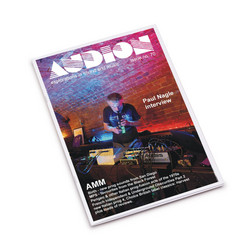
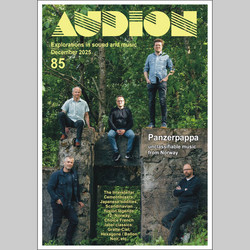
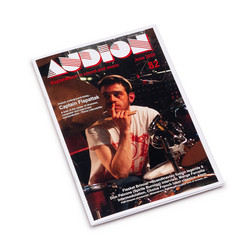
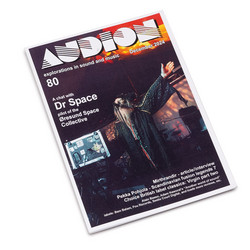
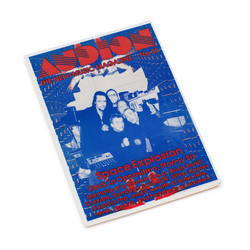
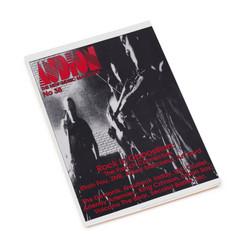
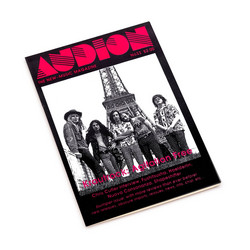
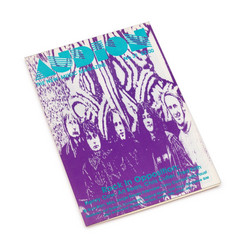
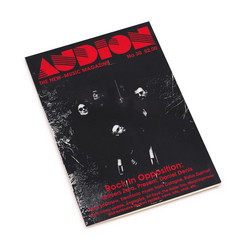
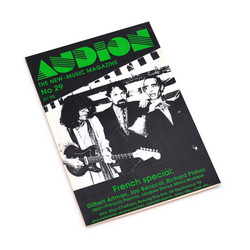
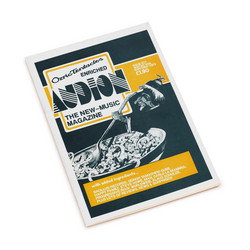
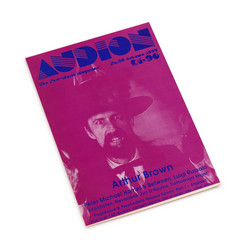
Audion Magazine
Issue 69 (Magazine)
Audion 69 opens on a sustained chord of Italo-symphonic grandeur and slowly fans out across Europe’s most fertile borderlands, using a handful of key case studies to prise open the archive. At its centre is an extended feature on Banco del Mutuo Soccorso, here framed unapologetically as “the Italian masters of classical rock” during their 1970s peak. The article doesn’t simply rehearse the usual praise quotes: it walks album by album through the original run, unpicking how Banco welded conservatory chops to rock urgency, how their shifting line-ups and changing label contexts altered the music’s internal architecture, and why those records still feel explosive when so many of their contemporaries have calcified into mere reference points.
From there Audion 69 pivots into more electronic territory with a focused study of Jeff Carneyand his synthesizer music, treating him not as an isolated cult name but as part of a broader continuum of American minimalism, Berlin-school drift and private-press home-studio experimentation. The text listens closely to texture and pacing, drawing attention to small production decisions that can make the difference between wallpaper ambience and work that genuinely reprograms a room’s atmosphere. A parallel survey of Musica Elettronica Viva – that unruly American-Italian collective – adds another vector, tracing how improvised electronics, free jazz and performance art collided in their work, and how the group’s transatlantic positioning let them slip through the grasp of any single scene or institution.
Geographically, the issue also heads north and west. A substantial piece on Focus re-situates Dutch progressive rock from 1969 to 1977, refusing to treat “Hocus Pocus” as a novelty outlier and instead mapping the ways in which Dutch bands fed off jazz, early music, hard rock and pop, often with a sly, sideways humour. In the second instalment of “Italian Library Music Gems”, Audion 69 returns to the crates, pulling out another batch of production-library LPs whose ostensible purpose (background cues for film, TV and radio) barely contains the wildness of the music: fuzz guitars rubbing against abstract electronics, faux-baroque themes dissolving into groove experiments, and composers using anonymous catalogue numbers as a cover for some of their strangest ideas.
Label archaeology comes into focus via “Choice British Label Classics: Gull”, which digs through the archives of the imprint best known for housing early Judas Priest but also responsible for a clutch of adventurous, hard-to-categorise releases. By placing heavy rock, prog-leaning projects and more wayward signings side by side, the article shows how a supposedly niche label could become a microcosm of the era’s stylistic cross-contamination. Around these anchor pieces, Audion 69 weaves in assorted reviews and shorter features, extending the conversation into adjacent territories without diluting the focus: small-label reissues that shed new light on familiar scenes, contemporary projects that seem to converse with 1970s aesthetics, oddities that resist tidy classification yet feel instantly at home in Audion’s pages.
First published as a pdf-only A4 magazine on 30 May 2022, Audion 69 runs to 40 tightly packed pages. Editor Steve Freeman steers the ship, while Alan Freeman handles the bulk of the writing, research and layout, with additional text by Andy Garibaldi. The result is typical of this phase of Audion’s life: no frills in terms of graphic spectacle, but a high-density, deeply informed read designed to sit open next to a record player or streaming queue, prompting new listening as often as it documents old favourites.