Audion Magazine
Issue 71 (Magazine)
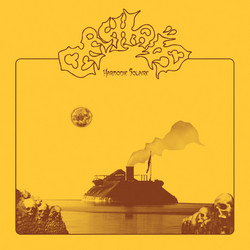
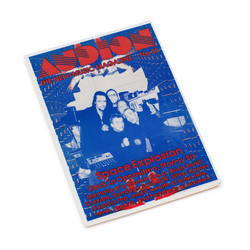
Audion 71 catches Audion Magazine in full cartographic mode, tracing how progressive, psychedelic and experimental tendencies have leaked across borders, labels and generations. The issue opens with a feature on Acid Rooster, cast here as “new space-trekkers from Germany”, picking up the kosmische thread with extended jams that feel closer to orbital slingshots than retro homage. The piece listens closely to their long-form structures, guitar textures and rhythmic drift, showing how they tap into a Neu!/Ash Ra lineage while stubbornly remaining a band of the present tense. From there, the focus slides to Fontanelle and what Audion dubs “the art of ‘jazz that’s not jazz’” - an exploration of groove, texture and restraint that sidesteps both rock bombast and orthodox jazz vocabulary, inhabiting a liminal zone where Fender Rhodes haze, dubby space and post-rock dynamics blur.
Personal histories also anchor the issue. A substantial article on Hasse Horrigmoe threads his work in Tangle Edge and the Øresund Space Collective into a narrative about Scandinavian underground resilience, tracing how one musician can help stitch together scenes devoted to expansive, improvised and psych-inflected music. In parallel, Audion 71 turns to Le Orme, treating them not as a footnote to better-known Italian prog giants but as “the Italian prog legend” in their own right, with careful attention paid to their evolution from beat roots through symphonic peaks and later, more streamlined phases. The piece functions both as a critical reappraisal and a practical guide to navigating a catalogue that has been unevenly documented in English.
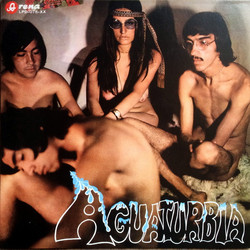
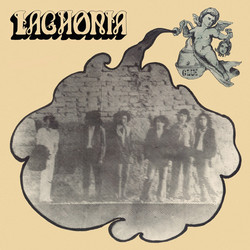
One of the issue’s key moves is geographic: the first instalment of “Prog & Psych from South America” lands in Argentina, beginning a multi-part survey of a region often reduced to a handful of cult names. Here, Audion digs into albums, labels and local conditions, showing how Argentine bands absorbed British and Italian influences while filtering them through particular political and cultural pressures. That South American lens is complemented by a feature on Silvia Tarozzi, presented as a figure of “new old music from Italy” - a composer-performer whose work folds folk memory, contemporary composition and improvisation into something that feels at once archival and newly minted.
The long-running “Choice British Label Classics” series turns its attention to Island Records, not from the vantage point of chart history but through the prism of its stranger corners: prog and psych releases, experimental one-offs, oddities that slipped out under the same logo as far more famous albums. A label spotlight on ECM extends this label-centric approach into the realm of European jazz and beyond, examining how its austere visual identity and crystalline production values sit alongside a catalogue that spans from Nordic jazz to modern composition and off-kilter improv.
All of this is framed by “assorted review features” that sweep through new releases, reissues and archival trawls, written with the magazine’s characteristic mix of deep-collector knowledge and unfussy prose. First published as an A4 pdf on 7 October 2022 and running to 48 pages, Audion 71 is edited by Steve Freeman, with writing, research and layout by Alan Freeman and additional input from Andy Garibaldi. The result is a densely packed, globally minded issue that treats German jam bands, Argentine psych artifacts, Italian visionaries and British and European label histories as parts of a single, ongoing conversation about how adventurous music persists and mutates.