Analogy
Analogy
Tracked express shipping from Italy, no customs or import VAT in the EU. Shipping costs
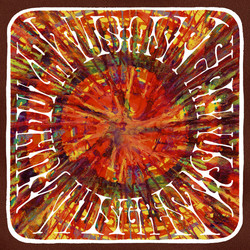
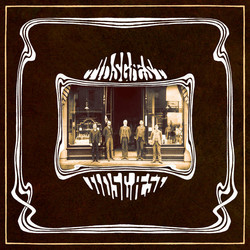
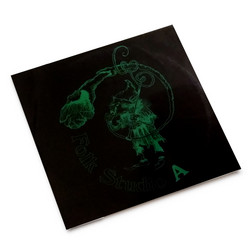
Limited 180gr. One of the rarest records from Italy, here in a faithful reproduction of the original LP artwork. The original pressing ran to approximately a thousand copies, some of them wrapped in a six-panel fold-out poster featuring the five band members naked. The record promptly vanished. Today a clean copy with the poster starts at three thousand euros and climbs without a clear ceiling. The music inside is almost beside the point for the market, which has decided that the cover alone justifies the mythology. It doesn't, or rather: the cover and the music are inseparable from a story that has no obvious category to sit in, and that is precisely where Analogy becomes interesting.
Analogy were not an Italian band. They were German students who had moved to Varese in 1968 to attend an international school, formed successive groups through the turns of the late sixties, played over three hundred concerts across northern Italy and the Swiss border circuit, and in 1972 landed a deal with Produzioni Ventotto in Milan. The lineup on the album: Jutta Nienhaus on vocals, her brother Hermann-Jürgen "Mops" Nienhaus on drums, Martin Thurn on guitars and flute, Wolfgang Schoene on bass, and Nicola Pankoff on Hammond and keyboards, the one Italian-adjacent presence in the group. They played the Caracalla Pop Festival in Rome, the Be-In in Naples, RAI radio sessions, and disappeared back into obscurity almost immediately after. By 1973 Pankoff had left over musical disagreements, replaced by flutist Rocco Abate from the Scala Orchestra in Milan, and the band spent its remaining months working on The Suite, a thirty-minute Renaissance-inflected piece that would only surface on later reissues.
What Analogy documents is a band caught between two worlds it never quite belonged to. The music sits closer to late-sixties heavy psychedelia than to the RPI that was crystallising around it in 1972: Thurn's guitar moves between crystalline fingerpicking and raw fuzz, Pankoff's Hammond builds dark, room-filling atmospheres with a debt to Jon Lord and Ray Manzarek in roughly equal parts, and the rhythm section locks into extended patterns that occasionally drift toward the hypnotic weight of early Amon Düül II. What makes the record genuinely strange is Jutta Nienhaus's voice, which operates in a register all its own: theatrical, lyrical, at times uncomfortably raw, carrying a quality that critics have struggled to place between Nico and Grace Slick without landing convincingly near either. The connection to Franco Battiato is worth noting: Nienhaus and Thurn appeared on his Sulle corde di Aries in 1973, which suggests that Battiato, already moving into his most experimental phase, heard something in their approach worth absorbing.
The reissue history is characteristically labyrinthine. After Produzioni Ventotto went bankrupt, legitimate CD releases were impossible for years. The first authorised version appeared in 2001 on the German label Garden of Delights, from master tapes, with a thirty-six-page booklet and a previously unreleased bonus track recorded the morning after a party during the band's final sessions. Subsequent pressings have restored the poster artwork in various formats. The specific release this reissue corresponds to carries its own provenance: check the matrix etchings carefully, as two distinct 1972 pressings exist with slightly different runout engravings, a distinction that matters considerably to those for whom it matters at all. For everyone else, the music is the destination: a document of creative displacement, of a band that was neither fully German nor Italian, neither krautrock nor RPI, and that in that undecidability made something that refuses to settle.
Release notes
Catalog number appears as: AMS LP 24 on spine and labels AMSLP24-C on back sleeve Conceived for Produzioni Ventotto s.r.l. - Milan All selections published by Effepiquattro - Milan (Italy) Originally published by Effepiquattro 1972 Special thanks to [a4147172] (Ex Bass). Packaged in a single jacket with hype sticker affixed to the shrink wrap on the front.
| A1 | Dark Reflections | 7:00 | |
| A2 | Weeping May Endure | 4:50 | |
| A3 | Indian Meditation | 4:10 | |
| A4 | Tin's Song | 1:40 | |
| B1 | Analogy | 9:45 | |
| B2 | The Year's At The Spring | 4:35 | |
| B3 | Pan-Am Flight 249 | 5:15 |
- Analogy
- Arranged By, Composed By [All Composed By]
- Wolfgang Schoene
- Bass
- Antonio Cagnola
- Concept By
- Alberto Carzaniga
- Cover, Design, Photography By
- H.-J. "Mops" Nienhaus
- Drums
- Martin Thurn
- Electric Guitar, 12-String Acoustic Guitar, Flute, Bongos
- Tonino Paolillo
- Engineer
- Nicola Pankoff
- Keyboards
- Aldo Pagani
- Producer
- A. Tarenzi
- Text By [Italian Version By]
- G. Selleri
- Text By [Italian Version By]
- Jutta Nienhaus
- Vocals