La Rana captures Agustín Pereyra Lucena at a moment of poised clarity, far from Buenos Aires but entirely in his element. Recorded in Oslo in 1980 and credited to the Agustin Pereyra Lucena Quartet, the album finds the Argentinian guitarist and composer distilling years of devotion to Brazilian and Latin American music into a compact, eight‑track set that feels both intimate and expansive. Long a student and friend of figures such as Baden Powell and Vinícius de Moraes, Agustín approaches the repertoire here not as a tourist but as a participant, threading his own originals between carefully chosen songs by Ivan Lins, Antonio Carlos Jobim, João Donato and Powell.
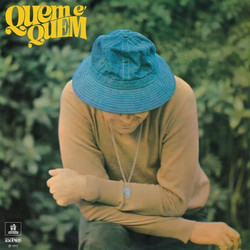
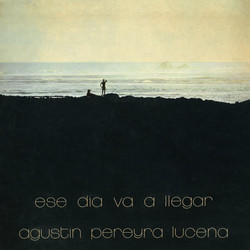
The track list sketches a deliberate arc. The album opens with “3 Horas Da Manha” (Ivan Lins, Waldemar Correia), moving through Jobim’s “Samba Do Avião” and a pair of concise, evocative Lucena/Reuter pieces, “Tema Medieval” and “Despues De Las Seis.” “Tema Barroco” (Guillermo Reuter) adds a brief, almost classical miniature before the title track “La Rana,” Agustín’s idiosyncratic take on João Donato’s “A Rã” from Quem É Quem. “Pra Que Chorar,” by Baden Powell, pays direct homage to his musical hero, and the album closes with Lucena’s own fifteen‑minute “Encuentro De Sombras,” a slow‑building masterpiece that widens the record’s horizon into extended, meditative form.
Forming the quartet around him are fellow Argentinians Guillermo Reuter (bass, piano, vocals, percussion, mixing, arrangements) and Rubén Izarrualde (flute), both bandmates from the group Candeias, alongside Norwegian drummer Finn Sletten on drums, vocals and percussion. This configuration allows La Rana to move lightly between bossa nova, Latin jazz and more chamber‑like textures: Reuter’s bass and piano give harmonic depth and rhythmic anchor, Sletten’s drums and percussion bring a crisp, Nordic clarity to the grooves, and Izarrualde’s flute lines trace airy counter‑melodies over Agustín’s guitar. Lucena himself plays guitar, sings and adds percussion, as well as taking on mixing and production duties, further underscoring how closely the record reflects his personal sensibility.