Incredible String Band, Isao Suzuki
String Band Featuring Isao Suzuki (LP)
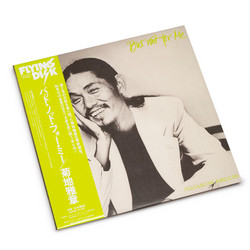
A summit meeting of Japanese and American jazz royalty, pressed to wax under the most demanding conditions imaginable. Originally issued in 1978 by Flying Disk as a direct-to-disc audiophile LP, String Band Featuring Isao Suzuki has long stood among the most sought-after documents of Japan's golden age of jazz recording. Now, as part of Victor's Spin This Now! reissue series, it returns to vinyl in a limited edition faithful to the original, complete with obi and liner notes.
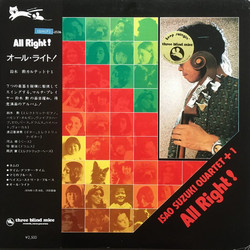
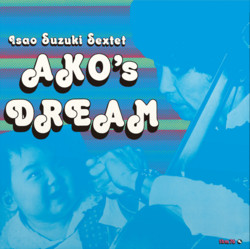
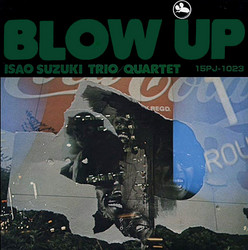
Isao Suzuki needs little introduction. Born in Tokyo in 1933, the bassist and cellist cut his teeth in New York at the close of the 1960s as a member of Art Blakey's Jazz Messengers, before returning home to become one of the defining voices of Japanese jazz - most famously through Blow Up, his 1973 LP for Three Blind Mice, a touchstone of the country's audiophile tradition. For this session, recorded over two days in August 1978 at Victor Studio in Tokyo, Suzuki set himself an audacious challenge: to play piccolo bass alongside Ron Carter, the very man who had pioneered the instrument, with Hank Jones on piano and Roy Haynes on drums completing an American rhythm section of staggering pedigree, and a Japanese string quartet arranged and conducted by Masahiko Satoh, one of the great minds of the country's avant-garde.
The result is a rare balancing act. Suzuki's piccolo bass sings in the upper register, trading lines with Carter's deep, woody pulse - two low-end masters in conversation at opposite ends of the same instrument - while Satoh's strings hover above, taut and shadowed, closer to film noir than to easy-listening sweetening. Horace Silver's Nica's Dream opens the album recast in dark, string-laden tones; Suzuki's own Avenue stretches out across nine minutes of loping swing; Satoh's arrangement of Greensleeves bends the old English melody into strange new shapes; and the second side closes with Jobim and Moraes' Lamento and Carter's own Sheila's Song, both colored by Takeshi Onodera's percussion. Because the original was cut direct to disc - no tape, no edits, the whole side committed in a single continuous take - the music carries an electricity that studio polish rarely allows: the sound of masters working without a net.
A high point of the Japanese jazz boom of the late 1970s, and one of the most vivid-sounding records of its era. Long confined to the collectors' market at punishing prices, String Band Featuring Isao Suzuki finally returns - an essential document of the moment when Tokyo stood at the very center of the jazz recording world.