Bernd Alois ZimmermannFeaturing: Jaki Liebezeit
The Numbered / Improvisations / Tratto (LP)
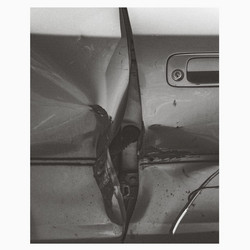
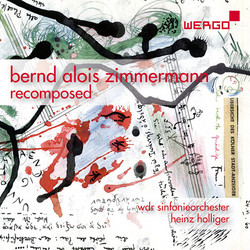
condition (record/cover): NM / NM | One of the indispensable Wergo LPs: Bernd Alois Zimmermann (1918-1970) at his most radical, in the final years before his suicide, with two works for jazz quintet on side one and his only purely electronic composition on side two. The performers on side A are the Manfred Schoof Quintet - Manfred Schoof (trumpet), Gerd Dudek (tenor and soprano saxophones, clarinet, flute), Buschi Niebergall (bass) and Jaki Liebezeit (drums) - the same group that participated in performances of Die Soldaten in 1965 and would go on to play in the premiere of Zimmermann's Requiem für einen jungen Dichter in 1969. Liebezeit, of course, recorded Monster Movie with Can shortly after these sessions.
Die Befristeten (1966-67) - subtitled "Ode an Eleutheria in Form von Totentänzen" (Ode to Freedom in the form of death dances) - was composed as music for a radio play based on Elias Canetti's Die Befristeten (The Numbered), Canetti's play about a society in which everyone knows the date of their death. Zimmermann's score alternates passages of suspended, near-silent tension with sudden eruptions of skeletal free jazz - apparitions that flare up and dissolve into darkness. The Improvisationen über die Jazz-Szene des II. Aktes der Oper "Die Soldaten" takes the notorious jazz episode from Act II, Scene 2 of Zimmermann's opera - itself already a collision of eighteenth-century military drama and twentieth-century nightclub - and opens it up to free improvisation. Both pieces are central documents of the encounter between European composition and free jazz, predating most of what would later be claimed as "third stream" in Europe.
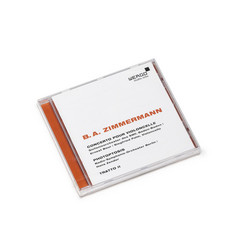
Tratto (1966) fills side two: a composition for electronic sounds in the form of a choreographic study, realized at the Elektronisches Studio der Musikhochschule Köln (technician: G. Rautenbach), dedicated to Heinz Schroeter and Herbert Eimert. It uses exclusively sine tone mixtures - a deliberately archaic sound material by 1966 standards - to produce music of extraordinary slow-moving intensity, built on what Zimmermann called Zeitdehnung (time-stretching), the principle that would dominate his final works. Tratto is among the earliest electronic compositions to work systematically with very low frequencies; the result anticipates the drone and sustained-tone explorations that composers like Eliane Radigue would develop years later. Premiered 29 November 1967, Cologne.
LP with insert. Wergo WER 60 031 (also issued as Heliodor 2549 005). Side A recorded 1966, Rhenus Sound Studio, Cologne.