Various Artists
The Watchers (LP)
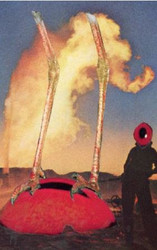
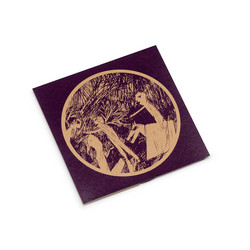
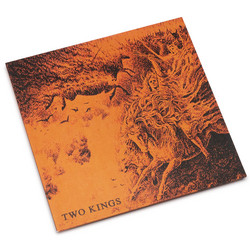
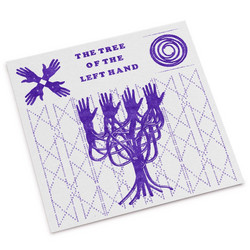
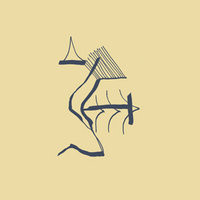
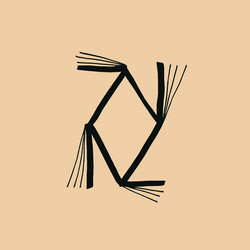
** Edition of 250. Double sided ard insert, featuring 11x new illustrations by Vincent James and abridged Essay by Kelly Loughlin ** The Watchers is a re‑imagined score for one of British cinema’s most intriguing buried artefacts: Richard Foster’s 1969 short film of the same name, shot on the moors above Todmorden in West Yorkshire. Just 26 minutes long and filmed on grainy 16mm black and white by Royal College of Art students, the original work sits at a crossroads of traditions – part student experiment, part proto‑folk horror, part early UFO cinema. As media historian Kelly Loughlin has noted, it can be read as a “semi‑rural folk horror,” and may even feature the earliest depiction of alien abduction in British film. Its themes and textures anticipate motifs that would later surface in Nigel Kneale’s Beasts, David Rudkin’s Penda’s Fen, Children of the Stones and Alan Garner’s Red Shift, yet The Watchers itself has remained obscure, a quiet echo rather than a recognised touchstone.
This new project sets out to change that by shifting the emphasis from image to sound. Eight artists rooted in Todmorden’s contemporary experimental scene – Dan B‑Hill, Julie 7:12, Thorn Wych, Mark S Williamson, Radiophoric Labs, Bridget Hayden, Sam McLoughlin and Edd Sanders – have been invited to inhabit the film’s world and respond to it on their own terms. The resulting compilation doesn’t simply “accompany” Foster’s images; it expands on the film’s atmospheric legacy, pulling at its folkloric undertones and mapping the cultural and psychic terrain it occupies. Each contributor approaches the moorland setting and abduction narrative as a set of sonic questions: what does a semi‑rural haunting sound like? How do you translate the unease of open skies and closed minds, of stone circles and radio static, into tone and texture?
The answers are varied but interlinked. Some tracks lean into drones, tape hiss and treated field recordings, evoking wind over heather, distant machinery, or the hum of something not quite natural just beyond the frame. Others work with brittle folk fragments, half‑remembered melodies and detuned strings that hint at song only to dissolve into abstraction. Electronic pieces draw on radiophonic language – pulses, bleeps, spectral sweeps – that nod to ’70s TV uncanny while feeling resolutely present tense. Throughout, there’s a strong sense of place: Todmorden not just as a backdrop but as an active participant, its current crop of artists riffing on local myth, history and weather, feeding them back into the imagined soundworld of a film made over fifty years ago.
By assembling these eight perspectives into a single album, The Watchers becomes more than a soundtrack commission; it’s a collective act of re‑enchantment and reclamation. The film’s overlooked status is mirrored and countered by the record’s structure: rather than one authoritative “score,” we get a mosaic of responses, each adding a layer to the story of how this small, strange work fits into the broader lineage of British folk horror and UFO folklore. Listened to with or without the film, the compilation stands as a dense, evocative journey through moor‑top dread, rural dream logic and the thin seam between folklore and science fiction – an invitation to finally hear what The Watchers has been whispering from the margins all along.