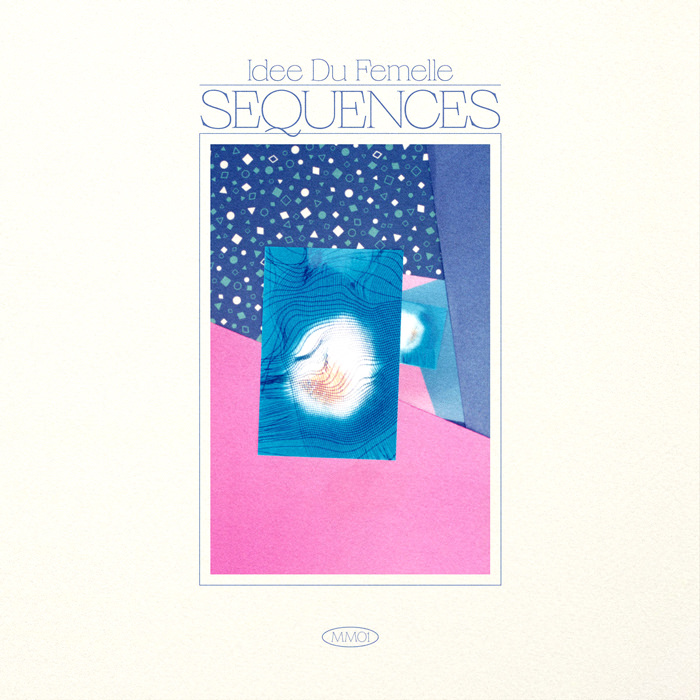
“What may have fallen on deaf ears 33 years ago, will inevitably sing to the more liberated ears of today.”
Breaking out the gates with a shot, Musica Maquina's debut release - the first ever vinyl reissue of Idee Du Femelle's 1988 masterstroke, Sequences - emerges as a long-overdue revelation from the forgotten history of the Spanish underground. A singular, mind-blowing listen that blurs the boundaries between ambient music and electronic experimentalism, laced with joyous tribalism and rippling synths, this one can't help but be one of the most celebrated and historically important reissues of the year.
The history of experimental music from Spain, with its artefacts, has always been difficult to unearth. Very little that occurred during the Francoist dictatorship was documented or slipped past the country’s borders, with international cultural isolation lingering for decades past Franco’s death in 1975. While sinfully under-celebrated, this reality often served Spain’s most adventurous artists well, allowing them to create truly singular sounds that stand far apart from their peers in other parts of the world, a reality that the reissue market has recently done a remarkable job of illuminating. Thus far, we’ve encountered long neglected treasure by artists like Pep Llopis, Joan Bibiloni, Orquesta De Las Nubes, Suso Sáiz, Música Esporádica, Finis Africae, Luis Delgado, Luis Paniagua, and numerous others, helping to entirely rewrite orthodox understandings of musical practice during the 80s and 90s. Now, with their inaugural release, Musica Maquina brings us another absolute gem from this wonderful world, Idee Du Femelle’s impossible to find masterstroke “Sequences” - originally self-released on cassette in 1988 - resting at the incredible and incongruous junctures of ambient, experimental, and new age music.
Idee Du Femelle was the brainchild of Toni Parera, an artist of diverse talents who produced and self-released a handful of cassettes across the 1980s and early 90s, overcoming precarious resources, idiosyncrasies within the music industry, and political, cultural, and social constraints, to create a sinfully overlooked body of work that spanned numerous idioms of electronic music, incorporating and emphasizing aspects of New Age, experimental, Berlin School, and ambient, to create a series of sonic landscapes that seem to have been only possible to create in Spain during the moment that they were made.
Originally issued in 1988, “Sequences” falls roughly midway within Idee Du Femelle’s discography, and has long been regarded, by the few lucky enough to encounter it, as one of the project’s most stunning and noteworthy productions. It is a true creative anomaly. On one hand, it is unquestionably bound to the Spanish experimental underground of the 1980s, the products of which, despite their incredible artistic value, were unable to transcend their subterranean roots and have remained hidden from view for decades. On the other, the actual makeup of the album places it as an entirely free-standing gesture, almost unlike anything else of its time and place; too delicate to be industrial, too gloomy to be pop, too abstract for new age, and too melodic for academic minimalism. What may have fallen on deaf ears 33 years ago, will inevitably sing to the more liberated ears of today.
Covering a vast amount of territory and touchstones within its remarkable cohesiveness - from passages driven by glacial, brooding beats and shifting long-tones that paint images of a darkened world, to long stretches of playful tribalism and repetitive minimal synths and rhythms - “Sequences” emerges from the shadows of history to reveal a missing link between ambient techno, industrial music, and the electronic avant-garde, created by one of the great unsung visionaries to have emerged from Spain during the 1980s.
Transcending time and the odds, not only is Musica Maquina’s first ever vinyl pressing of Idee Du Femelle’s “Sequences” a revelation on monumental terms - reaching rarely achieved historical significance - but it’s an absolute joy in listening, the likes of which are far too rare.
Originally published by Soundohm.