“In his final years, despite persistent health issues, the composer was forging some of the most ambitious ground of his entire career.”
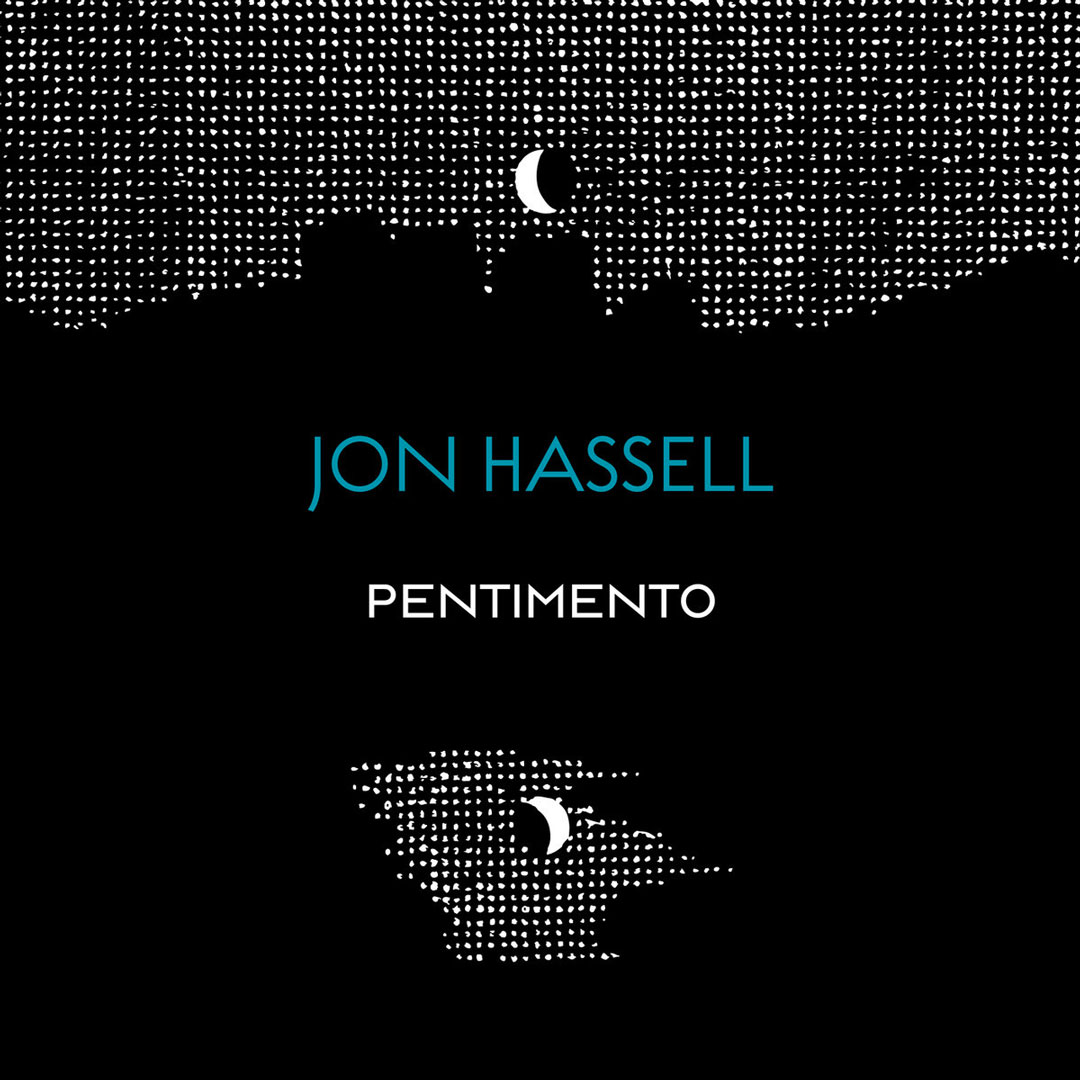
Filling in the missing piece of the puzzle of Jon Hassell's lifelong sonic explorations - the late great visionary of minimalism, ambient music, and 'fourth world' aesthetics - the composer's own Ndeya imprint continues to carry the flame with the simultaneous release of ‘Music Is Invisible (Pentimento Volume Three)’ as a stunning, standalone vinyl edition, and 'The Pentimento Trilogy', comprising the entire scope of the series' visionary journey, across a X3CD Casebound box set, that includes 'Listening To Pictures', 'Seeing Through Sound', and 'Music Is Invisible'. Collectively representing a late-career renaissance for Hassell, harnessing the high-water marks that had defined his career within a newly developed practice of 'painting with sound', producing startlingly experimental sonic abstractions, these albums are among the most striking statements of Hassell's five-decade long career.
In addition to returning sought after and treasured sounds to our ears, the reissue market offers reappraisal and context to an artist's work and career, unlocking important dimensions that might not have been originally understood. This is that much more inspiring and empowering when these initiatives are spearheaded by the artists themselves, as has been the case with the composer Jon Hassell’s Ndeya imprint, launched in 2018. Operating as a platform for his work that largely went unnoticed during its early years, Ndeya rapidly gained attention via a much-needed reissue of 1978’s ‘Vernal Equinox’, among the most celebrated and sought-after of Hassell’s releases. In the process, it helped to shed light on the composer’s more contemporary efforts, issued prior and following, also housed on the label. Among these were the first two parts of his ‘Pentimento’ series - ‘Listening To Pictures’ (2018) and ‘Seeing Through Sound’ (2020) - marking a visionary, late-career renaissance by the pioneer of 'fourth world' music. Thankfully, since Hassell’s untimely passing in 2021, the label has managed to carry on with its original mission, and returns now with a stunning first release of Hassell’s final installment of the ‘Pentimento’ series - ‘Music Is Invisible (Pentimento Volume Three)’ - a stunningly produced vinyl edition, capturing the composer performing live in London with Rick Cox and John von Seggern, in what turned out to be his final concert, as well as ‘The Pentimento Trilogy’ X3CD box set, gathering the entire series together. Visionary and often startling, encountering Hassell in his 80s pushing toward new ground as hard as he first did when he first entered the scene as a member of Terry Riley’s ensemble and within the legendary Dream Syndicate / Theatre Of Eternal Music with Garrett List, Marian Zazeela, and La Monte Young, distilling the ambiences and 'fourth world' temperaments explored with Brian Eno and beyond, into striking, electronics infused experimental tapestries that draw the ear into his enduring sound world. ‘The Pentimento Trilogy’ is issued by Hassell’s own Ndeya imprint as a beautifully produced X3CD Casebound box set, accompanied by a 28-page booklet, while ‘Music Is Invisible (Pentimento Volume Three)’ is pressed on glorious vinyl and contains illuminating liner notes by the composer himself.
Born in 1937, the trumpeter and composer, Jon Hassell studied contemporary classical music at Eastman School of Music in Rochester, New York, where he became enthralled with the potential proposed by the avant-garde, embracing the serialist techniques that would lead to his enrollment in the Cologne Course for New Music where he would study under its founder, Karlheinz Stockhausen, among others for two years. Shortly after returning to the United States in 1967, he met and befriended Terry Riley, joining the pioneering minimalist’s group for the landmark recording of ‘In C’, issued by CBS the following year. It was likely through Riley that Hassell met La Monte Young, leading to his joining the legendary drone collective, Theatre of Eternal Music, within which he would remain for a number of years, including contributing his trumpet tones to the 1974 LP “Dream House 78′ 17″. During this same period, like Young, Riley, and many of their circle, Hassell began studying Hindustani classical music with Pandit Pran Nath, dedicating himself to playing ragas on trumpet, laying the groundwork for the body of music that would begin to emerge under his own name during the late 1970s, among the most striking of which is the monumental ‘Vernal Equinox’, released by Mimi Johnson and Robert Ashley's Lovely Music in 1978.
By the outset of the 1980s, Hassell’s dynamic, hybrid approach to composing - drawing on musical traditions from across the globe, fed through experimental techniques and ideas - continued to develop, first appearing in its evolved form as his 1980 landmark collaboration with Brian Eno, ‘Fourth World Vol. 1 - Possible Musics’ - from which the term “Fourth World” draws its name, followed by an equally influential series of albums on Eno’s Editions EG - ‘Dream Theory In Malaya (Fourth World Volume Two)’ and ‘Aka / Darbari / Java - Magic Realism’ - and his widely celebrated contribution to the ECM catalog, ‘Power Spot’. Over the subsequent years and decades, Hassell would continue to push and expand his singular territory of sonic exploration, often largely outside the public view he had once enjoyed, eventually culminating with a stunning rush of activity at the end of his life, including albums like 'The Living City', 'Psychogeography', and the first two parts of the Pentimento series, ‘Listening To Pictures’ and ‘Seeing Through Sound’, now expanded with the final chapter, ‘Music Is Invisible (Pentimento Volume Three)’, appearing at long last, roughly five years after Hassell's passing in 2021.
Originally released as a digital download in 2017 before finding form on physical formats the following year, ‘Listening To Pictures (Pentimento Volume one)’ was Jon Hassell’s first album of new music in nine years, enveloping listeners in the composer’s enduring Fourth World aesthetic. The album marked the beginning of a late-career renaissance by the pioneer of minimalist and ambient music, finding him in step with, if not ahead of, the sonic landscape of that moment. Comprising eight compositions, the album encounters Hassell creating a feedback loop with the context of modern electronic music that his work had influenced for more than forty years, sculpting hybrid forms drawing from various music traditions and genres into jittering tapestries of samples, loops, and overdubs, inspired by the painterly technique of ‘pentimento’: “teasing out texture by the overlaying of sound upon sound”. Wildly left field, threading the album’s expansive ambiences with a rhythmical drive and dancing sense of pointillism, ‘Listening To Pictures’ stands among Hassell’s most explicitly left-field statements, revealing endless, multidimensional surprises, while simultaneously laying the groundwork for what thematically and conceptually unfolds over the series’ subsequent two releases.
Appearing roughly two years after its predecessor, the second volume in the ‘Pentimento’ series, ‘Seeing Through Sound’, carries forward the innovative concept of “painting with sound”, explored across the length of ‘Listening To Pictures’. Here, however, Hassell steadily enters more abstract and fragmentary realms, touching on the wilder and more experimental territories of IDM as well as those developed to great success by artists like Carl Stone, allowing touchstones drawn from jazz, Indian classical music, and other genres to flicker to the surface and be shattered into states of total abstraction. Across the album’s brilliantly constructed eight pieces, the composer also embraces a stronger gravity toward ambient territories, culminating in a profound sense of spaciousness and often slower pacing, allowing structure to emerge from evolutions that take an entire duration to be fully gleaned. While very much still defined as a “fourth world fusion”, across the album’s length Hassell continues to reveal himself as first and foremost an experimentalist pushing toward a future that was yet to be known.
Tragically, just under a year after the release of ‘Seeing Through Sound’ indicated remarkable things to come in Hassell’s career and output, he passed away from natural causes during late June of 2021, at the age of 84, drawing to a close a remarkable sonic journey that had spanned more than fifty years. Thankfully, his imprint, Ndeya, continues to carry the flame, issuing music that the composer made but never had the time to release. The most recent of these is ‘Music Is Invisible’, the third and final volume of the ‘Pentimento’ series, contained within the X3CD box set, ‘The Pentimento Trilogy’, as well as being released in a standalone vinyl edition. While the last in the series to emerge, the album was in fact laid to tape in 2015, long before ‘Listening To Pictures’ first appeared. It captures Hassell performing live in London, as part of a trio with Rick Cox and John von Seggern, in what would turn out to be his final ever concert. Harnessing the sprawling sense of space and naturally occurring ambiences of St John at Hackney Church where the performance was staged, ‘Music Is Invisible’ splits an incredible middle ground between the concepts of “painting with sound” that defined the fractured electronic tapestries of the ‘Pentimento’ series’ two previous entries and more instrumentally acoustic centered explorations that guided early efforts like ‘Vernal Equinox’ and ‘Fourth World Vol. 1 - Possible Musics’. Rick Cox and John von Seggern construct the sprawling foundations of the album’s four works through electronics and processing, accompanied by the occasional pulsing tones of piano, while Hassell leads the way on trumpet, spinning stunning lines that navigate increasingly complex and choppy waters of abstraction and IDM references, culminating as what stands as one of the most unique and forward thinking sonic statements of Hassell’s remarkable career.
When the first volume of the ‘Pentimento’ series first appeared, it was impossible - nine years having passed since Jon Hassell’s previous release - to know where he was coming from or where he might take us next. Nearly a decade later and five years since his passing, it finally comes into full focus with Ndeya’s simultaneous release of the X3 CD box set, ‘The Pentimento Trilogy’, comprising all three works under a single heading, and the free standing vinyl release of ‘Music Is Invisible (Pentimento Volume Three)’. In his final years, despite persistent health issues, the composer was forging some of the most ambitious ground of his entire career.
Originally published by Soundohm.